Kerala has once again come under the spotlight over drug trafficking after a massive seizure of contraband from a Hamas-like secret underground chamber in a house at Dottappakkulam in Sultan Battery, Wayanad district. The latest seizure comes amid continuing concerns over the state’s role in narcotics smuggling networks operating along India’s western coast and the Arabian Sea.
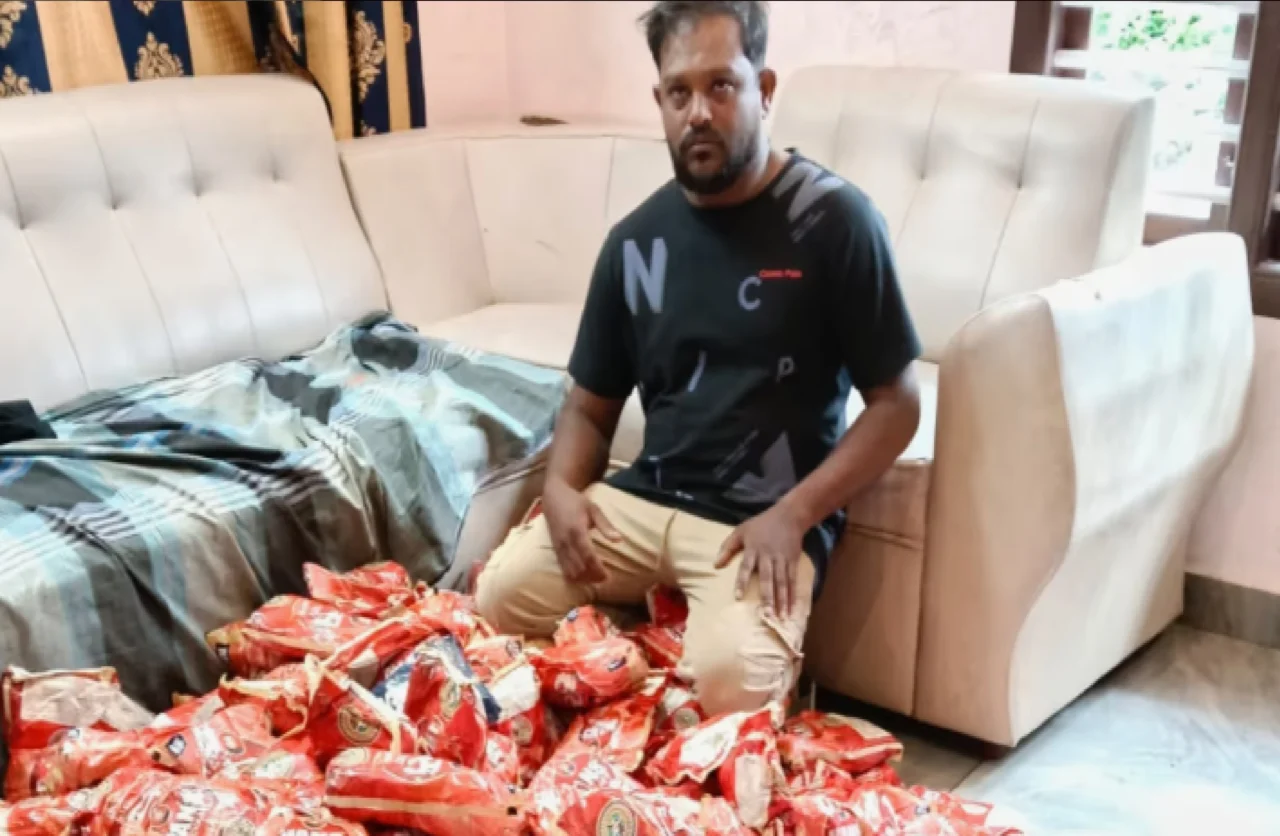
Police seized 6,400 packets of Hans packed in ten gunny bags from a Hamas-like secret underground chamber hidden beneath the bedroom floor of a house. The underground chamber was concealed beneath a cupboard, making it difficult to detect during the search.
A “Masha Allah” sticker was pasted above the entrance to the house. Binachi native Haris has been arrested in connection with the case. Acting on specific intelligence, police conducted the search operation and described it as one of the biggest Hans seizures in Wayanad in recent years. Investigators are now questioning the accused regarding the source of the Hans and the distribution network.
Two aspects of the case have drawn particular attention. First is the Hamas-like secret underground chamber. Secondly, the “Masha Allah” sticker pasted above the entrance. When CPM rebel leader T.P. Chandrasekharan was hacked to death on May 4, 2012, the vehicle reportedly used by the killers bore a “Masha Allah” sticker.
The July 2026 Wayanad seizure adds to a series of major narcotics recoveries reported from Kerala in recent years. Earlier, in August 2023, the Directorate of Revenue Intelligence (DRI) seized 3.5 kg of ganja and 1.75 kg of heroin worth around Rs 44 crore, once again highlighting Kerala’s growing prominence in drug trafficking investigations.
These days, major drug seizures have become a regular phenomenon in the state. Enforcement agencies have repeatedly recovered large quantities of MDMA and other narcotic substances from different parts of Kerala. In May 2026, the Kerala Government launched Operation Toofan: The Narco Hunt to curb the growing drug menace by targeting drug users, peddlers, suppliers and trafficking networks. Despite the crackdown, major seizures have continued to surface across the state.
Security agencies have repeatedly pointed to the Arabian Sea and India’s western coastline as major transit routes for narcotics. In June 2021, security assessments highlighted the growing use of the Maldives, Lakshadweep and the Kerala coast as part of the western maritime corridor used by international drug syndicates to transport narcotics before consignments are moved inland.
History of the drug network along the Kerala coast
In June 2021, security experts warned that the Kerala coast and the Lakshadweep Sea had increasingly emerged as vulnerable corridors for narcotics trafficking and other organised criminal activities.
The west coast sea route stretching through Pakistan, Iran, the Arabian Sea, the Maldives, Lakshadweep and the Kerala coast has long been viewed as strategically significant for international trafficking syndicates. Intelligence assessments released in June 2021 warned that these maritime routes were being used for transporting narcotics and other contraband before consignments were landed along India’s western coast.
The June 2021 assessment also linked the vulnerability of the Kerala coast to its long coastline, busy fishing harbours, extensive maritime activity and proximity to major international shipping lanes.
The recurring seizures by central and state enforcement agencies—from the August 2023 DRI heroin seizure to the July 2026 Wayanad Hans haul—continue to underline the strategic importance of the Kerala coast in India’s fight against international narcotics trafficking and organised crime.