Bhubaneswar: In a major policy decision, the Odisha Cabinet on July 1 approved 12 proposals across eight departments, covering education, infrastructure, fisheries, water resources, digital governance, and public welfare. These decisions underscore the government’s focus on inclusive development, economic growth, job creation, and technology-driven administration. The approvals reaffirm the State’s commitment to long-term planning, improved public services, and strengthening key sectors for sustainable and equitable development across Odisha.
The landmark decision of the day was the approval of ‘Gyanodaya–Shiksharu Samruddhi’, a flagship initiative that actualizes Odisha’s vision of providing free education from Kindergarten (KG) to Postgraduate (PG) levels. This is achieved by extending complete admission fee waivers to eligible students studying in government and government-aided institutions.
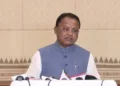
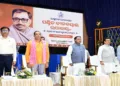
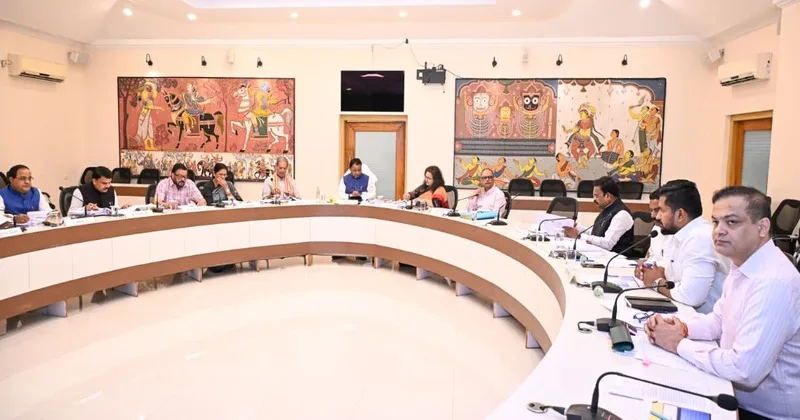
The decisions were made during the 43rd meeting of the State Cabinet, chaired by Chief Minister Mohan Charan Majhi at Lok Seva Bhawan.
Addressing the media after the meeting, the Chief Minister described the education initiative as a historic step towards ensuring that no child in Odisha is denied education due to financial hardship.
“Education is the foundation of an empowered society. Our Government is committed to ensuring that no deserving student is deprived of education due to economic constraints. Today’s Cabinet decision transforms our promise of free education from KG to PG into reality,” Majhi said.
The Odisha State Cabinet, chaired by Hon'ble Chief Minister Shri @MohanMOdisha , has approved Gyanodaya – Shiksharu Samruddhi, a landmark initiative to provide free education from KG to PG in Government and Government-Aided educational institutions. The decision marks a… pic.twitter.com/3BBsgtaTqK
— CMO Odisha (@CMO_Odisha) July 1, 2026
The Cabinet approved proposals relating to eight departments: Higher Education, School and Mass Education, Fisheries and Animal Resources Development, Works, Electronics and Information Technology, Food Supplies and Consumer Welfare, Water Resources, and Revenue and Disaster Management.
Chief Secretary Anu Garg later briefed the media on the remaining Cabinet decisions.
Gyanodaya–Shiksharu Samruddhi: Completing Odisha’s KG-to-PG Education Vision
The Cabinet’s most far-reaching decision was the approval of “Gyanodaya–Shiksharu Samruddhi,” a comprehensive education support scheme that will remove admission fee barriers for lakhs of students across the State.
This initiative fulfills the announcement made by Chief Minister Majhi on June 12, when the BJP Government completed two years in office.
While education from Kindergarten to Class VIII has already been free in Odisha, the newly approved scheme extends financial support to students pursuing education beyond the elementary level, thereby completing the Government’s commitment to universal free education from KG to PG.
https://twitter.com/suryabanshibjp/status/2072351477646139516?s=20
Beginning with the 2026–27 academic session, eligible students enrolled in regular courses in government and government-aided institutions will receive a complete waiver of admission fees.
The scheme will cover students in Classes IX to XII in government and government-aided schools, as well as Undergraduate (UG) students enrolled in government colleges, government-aided colleges, and State Public Universities. It will also benefit Postgraduate (PG) students pursuing regular programs in eligible government institutions.
Officials stated the initiative is designed to ensure that deserving students do not discontinue their education due to financial constraints.
The Government expects the program to improve enrollment rates, reduce school and college dropout levels, strengthen retention, and encourage students from economically weaker sections to pursue higher education.
Who Will Benefit
Government estimates indicate that over 3.2 million students will benefit annually from the scheme.
Officials stated that the initiative would particularly aid economically weaker and socially disadvantaged families by significantly reducing education-related expenses.
The Cabinet approved an estimated expenditure of Rs 895.57 crore for the scheme’s first year, with a total projected outlay of Rs 5,467.55 crore over five years.
Government officials described the program as one of Odisha’s largest investments ever in the education sector.
“This is not merely a fee waiver program; it is an investment in the future of Odisha’s youth and a decisive step towards educational equity,” a senior official remarked.
Institutions Covered Under the Scheme
Benefits will be extended exclusively to eligible students enrolled in regular academic programs offered by government and government-aided institutions.
These include Government High Schools, Government Higher Secondary Schools, Government-aided Schools, State Public Universities, Government Colleges, and Government-aided Colleges. However, the Government has clarified that the scheme will not cover self-financing courses, private unaided institutions, institutions operating under a Public-Private Partnership (PPP) model, or professional and technical courses. Officials explained that these categories are excluded due to their distinct funding structures.
Aligned with National Education Policy
The Government stated that the program complements the objectives of the National Education Policy (NEP) 2020, while supporting Odisha Vision 2036 and Odisha Vision 2047.
By reducing financial barriers, the initiative aims to improve the Gross Enrolment Ratio (GER), strengthen higher education participation, and foster a better-skilled workforce capable of contributing to the State’s long-term development.
The Government believes the scheme will bolster human capital development and help build a knowledge-based economy.
Major Expansion of Mukhyamantri Poshan Yojana
In another significant welfare decision, the Cabinet approved the expansion of the Mukhyamantri Poshan Yojana (MMPY) by extending free Mid-Day Meals to students in Classes IX and X in government and government-aided secondary schools.
The program, launched on April 1, 2025, seeks to improve nutrition levels among adolescents while simultaneously reducing school dropout rates and enhancing learning outcomes.
Officials noted that secondary school students often face nutritional deficiencies that impact attendance and academic performance.
By extending free nutritious meals to older students, the Government anticipates improvements in classroom participation, attendance, and overall educational outcomes.
Nearly 5.7 Million Students to Benefit
The expanded nutrition program will benefit approximately 5.74 million students over a five-year period between 2025 and 2030.
The Government has approved an estimated expenditure of Rs 4,224.46 crore for its implementation.
For the current financial year (2025–26), the State has already spent Rs 665.36 crore, providing nutritious meals to over 1.12 million students across 8,962 schools.
The Cabinet also granted ex-post-facto approval for expenditure already incurred and sanctioned an additional allocation of Rs 3,506.99 crore to continue the program over the next four years.
Officials described the initiative as a crucial investment in adolescent health, emphasizing that improved nutrition directly contributes to better educational outcomes.
Education at the Centre of Government Policy
Collectively, the approval of the KG-to-PG free education scheme and the expansion of the Mukhyamantri Poshan Yojana underscore the Odisha Government’s commitment to creating an integrated education support system—from school enrolment to postgraduate studies.
Officials believe that eliminating admission fees while ensuring nutritional support will substantially improve access to education and reduce economic disparities among students.
The Government affirmed that these initiatives reaffirm its dedication to building an educated, skilled, and empowered generation capable of contributing to Odisha’s long-term social and economic transformation.
Rs 949 Crore Sanctioned for Bhubaneswar–Cuttack Urban Corridor
In a major boost to urban infrastructure, the Cabinet has approved a Rs 949.35 crore project for the comprehensive upgrade of the Jaydev Vihar–Nandankanan corridor in Bhubaneswar. This ambitious project will transform the busy 9.5-kilometer stretch between Kalinga Stadium Gate No. 4 and Raghunathpur Bridge into a modern eight-lane urban arterial road, designed to ease congestion and improve connectivity between Bhubaneswar and Cuttack.
The upgraded corridor will feature an eight-lane main carriageway, supported by service roads, flyovers, underpasses, pedestrian subways, improved drainage systems, and dedicated pedestrian infrastructure. Grade-separated flyovers are proposed at Jaydev Vihar, Kalinga Hospital Square, Damana Square, and KIIT Square to eliminate major traffic bottlenecks and reduce travel time.
The project has also been planned with future urban mobility in mind. It incorporates transit-oriented development, parking facilities, commercial development around key intersections, road safety improvements, and urban beautification measures, making it an important component of Bhubaneswar’s long-term development strategy.
Cabinet Approves Rs 2,295 Crore Odisha Deep Sea Fishing Mission
The Cabinet also approved the Odisha Deep Sea Fishing Mission (2026–2036) with a total investment of Rs 2,295.45 crore, marking one of the state’s largest initiatives for the marine fisheries sector.
This ten-year mission seeks to modernize Odisha’s fishing industry through the introduction of advanced deep-sea fishing vessels, modern navigation equipment, and improved marine technology. The program aims to enhance offshore fishing capacity while ensuring safer and more efficient operations for fishermen.
The mission will be financed through a combination of State Government support, Central Government schemes, Public-Private Partnerships (PPP), institutional finance, and beneficiary contributions.
Officials expect the initiative to generate more than 50,000 direct and indirect employment opportunities across fishing, seafood processing, logistics, exports, marine infrastructure, and allied industries. It will also create new avenues for entrepreneurship in coastal districts.
The mission further provides for the expansion of fishing harbors, fish landing centers, seafood parks, and processing facilities. Integrated cold-chain infrastructure and export-oriented logistics will be developed to minimize post-harvest losses and improve the competitiveness of Odisha’s seafood in domestic and international markets.
By 2036, the government expects the mission to substantially increase marine fish production, strengthen seafood exports, and establish Odisha as a leading marine export hub in eastern India.
Odisha State Data Centre 2.0 Approved
Giving a major push to digital governance, the Cabinet approved the establishment of the Odisha State Data Centre (OSDC) 2.0 at an estimated cost of Rs 268.44 crore, including operation and maintenance for five years.
The existing State Data Centre, operational since 2011, currently hosts more than 600 government applications serving 39 departments. With increasing digital service requirements and aging infrastructure, the government has decided to establish a next-generation, Tier-III compliant data center.
The new facility will provide a secure, scalable, and state-owned digital platform capable of supporting Odisha’s expanding e-governance ecosystem. It will facilitate the migration of existing government applications, strengthen cybersecurity architecture, establish a robust disaster recovery system, and adopt environmentally sustainable, energy-efficient technologies.
Officials said the upgraded data center will significantly enhance the reliability, resilience, and scalability of government digital services while ensuring uninterrupted delivery of citizen-centric programs.
Cabinet Reinforces Vision for Inclusive Growth
The decisions approved by the Odisha Cabinet represent a comprehensive development agenda focused on education, infrastructure, fisheries, digital transformation, and public welfare.
Officials said these initiatives align closely with the objectives of the National Education Policy (NEP) 2020, Odisha Vision 2036, and Odisha Vision 2047. Together, these reforms are expected to strengthen human capital, improve connectivity, expand employment opportunities, modernize public infrastructure, and accelerate Odisha’s transition towards a knowledge-driven and inclusive economy.