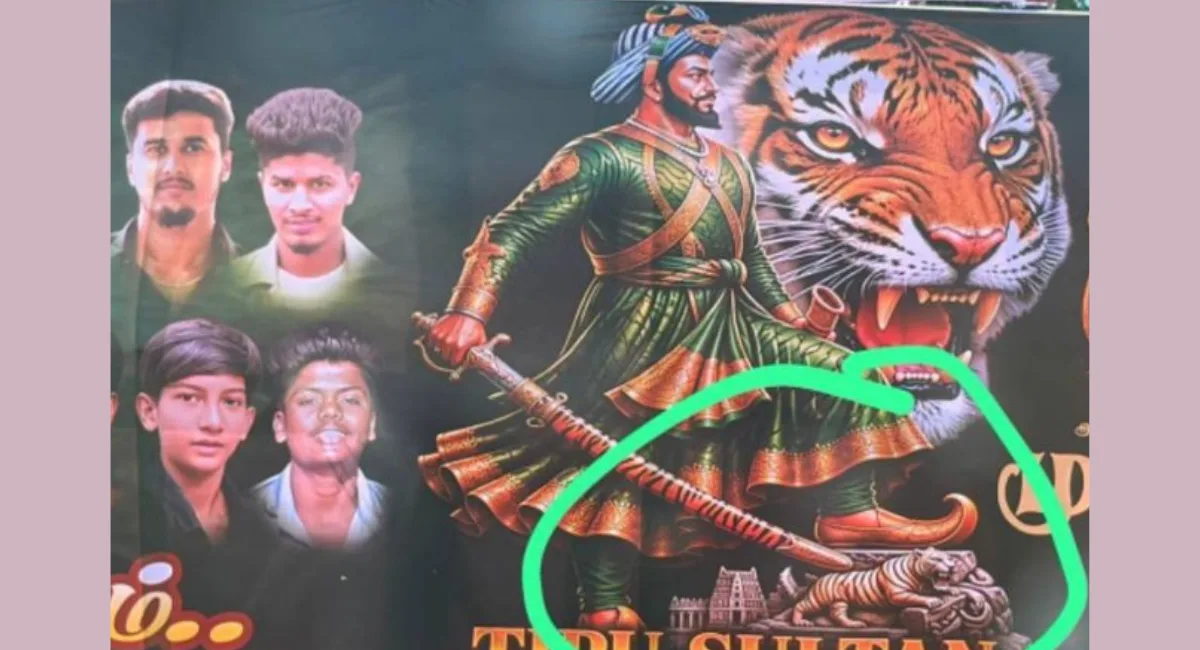
A controversial banner depicting Maratha king Chhatrapati Shivaji kneeling at the feet of the 18th-century Mysuru ruler Tipu Sultan has triggered severe outrage and protests in Tamil Nadu. The inflammatory poster ignited tensions as Hindus condemned it as an insult to Shivaji, leading to immediate police intervention and local unrest.
ஹிந்துக்களை சீண்டும் திப்பு பேனர்😡 pic.twitter.com/rmfnsWlIvh
— MR.Anil (@Saffron_Anil_) June 29, 2026
Reprotedly, the controversial poster was put up in Pochampalli in Krishnagiri district on June 29. It was put up for Tipu Sultan. In that banner, Hindu temples and symbols were presented in a disrespectful manner. The same has gone viral on social media, with many saying it amounts to sacrilege against Hindu temples and Hindus’ religious identities.
ஹிந்துக்களை சீண்டும் திப்பு பேனர்😡 pic.twitter.com/rmfnsWlIvh
— MR.Anil (@Saffron_Anil_) June 29, 2026
A Twitter account named ‘Dharmic Indians’, in a post on X, said: “It was put up on the eve of their Muharram event. Everyone with even the least knowledge knows that Tipu Sultan is an enemy of Hindus. The police should punish those who put up such controversial posters and banners.”
முகரம் பண்டிகைக்கு வைத்த பேனர்..
திப்பு சுல்தான் இந்துக்களின் எதிரி என குறைந்தபட்ச அறிவுடைய எந்த இந்துவிற்கும் புரியும்.
இதைப்போல பேனர் வைத்து அவமதிக்கும் செயலை செய்பவர்களுக்கு காவல்துறை தக்க முறையில் பாடம் எடுக்க வேண்டும். pic.twitter.com/J8DixpVKPC
— Dharmic Indians (@dharmic_indians) June 29, 2026
Following strong opposition, the same has now been removed. It is being hailed as another victory for united Hindu unity.
Hindu Munnani has submitted a complaint seeking the removal of an alleged illegal mosque in Survey No. SF. No. 773/2A at Sangam Nagar on the way to Coimbatore Chettypalayam Road. In a reply to an RTI query, officials stated that no NoC had been issued for the new mosque. Based on that, the authorities should conduct a probe into the construction and subsequent permissions and approvals, and take appropriate action as per law. Hindu Munnani made this request to the Tamil Nadu government, district administration and local authorities.
சட்ட விரோத மசூதியை அகற்ற கோரிக்கை.! pic.twitter.com/AcPEpKl1lU
— MR.Anil (@Saffron_Anil_) June 30, 2026
Hindu Munnani has lodged a complaint with the District Collector stating that two mosques are being constructed in Hindu-majority areas without any approval. It alleged that some private outfits are trying to usurp Chellandiamman temple properties. On behalf of Hindu Munnani, a petition has been submitted to the District Collector to retrieve the temple land and stop the construction of the alleged illegal places of worship.
கோவில் நிலத்தை மீட்க கோரியும், சட்டவிரோத மசூதி கட்டுவதை தடுத்து நிறுத்தக் கோரியும், மாவட்ட ஆட்சித் தலைவரிடம் இந்துமுன்னணி சார்பில் மனு..
கோவை மாவட்டம், போத்தனூர் செட்டிபாளையம் பகுதியில் சங்கமம் நகரில் இந்துக்கள் பெரும்பான்மையாக வசிக்கக்கூடிய பகுதியில் எந்தவிதமான அனுமதியும்… pic.twitter.com/5ftOBeKsIL
— Hindu Munnani (@hindumunnani_tn) June 29, 2026
In another incident, the Kumari District Federation of Hindus has written to the Kanyakumari District Collector and the Commissioner of Nagercoil Corporation, bringing to their attention recent moves to rename places, streets and villages with names associated with another religion. It alleged that some anti-social elements have, on their own, changed the names of places of traditional and historical importance, started referring to them by names associated with their communities, and put up signboards to that effect.
There has been no resolution or approval from any authority. The original names remain in government records. However, the new names would create confusion among the public and visitors. It alleged that the renaming is being done only to confuse the public. It further claimed that this would endanger public peace and communal harmony.
https://twitter.com/hindumunnani_tn/status/2071919178437570798?s=20
For example, in Ozhiginacherri Ottupurai Street, after demolishing a place of worship, a church was built. It is now being referred to as South India Church Hendripuram.
The new name has been written on the road leading to the church. Below that, the signboard still mentions District Library, Ozhiginacherri. It causes confusion for newcomers. The organisation alleged that this is occurring not only in Nagercoil but also in some other parts of the district.
Naming streets, roads and villages without making corresponding changes in government documents is unwarranted, it said. The district administration should restore the original names in such places and take action against those allegedly trying to create communal tension.
அனுப்புனர்: நாஞ்சில்ராஜா
குமரி மாவட்ட ஹிந்துக்கள் கூட்டமைப்பு.பெறுநர்
1, உயர் திரு. மாவட்ட ஆட்சித் தலைவர்
அவர்கள் கன்யாகுமரி மாவட்டம்.2, ஆணையாளர் அவர்கள்
நாகர்கோவில் மாநகராட்சிவணக்கம் !
சமீப காலங்களாக குமரி மாவட்டத்தில் உள்ள பாரம்பரியமிக்க ஊர்களின் பெயர்களையும்… pic.twitter.com/fDGEZF3FnI— Saravanaprasad Balasubramanian (Modi ka Pariwar) (@BS_Prasad) June 29, 2026
Debates and controversies over place and street names have historically revolved more around Christian or Muslim names in the state. The erstwhile DMK government had renamed Waddells Road in Kilpauk, Chennai, as Archbishop Ezra Sargunam Road despite opposition from Hindus.
The Madras High Court has consistently ruled that public roads and streets do not carry any specific religious character. The court has stated that public roads are strictly secular spaces and must be shared equally by all citizens, regardless of their religion, caste or creed.
In January 2026, the High Court made it clear that public roads and streets do not belong to any religion and cannot be occupied by anyone, even in the name of faith.
There have been more such incidents where minorities become the majority and the names of places, roads and streets are changed to reflect their religion despite opposition from locals. Arches and bus stops are also meeting the same fate.