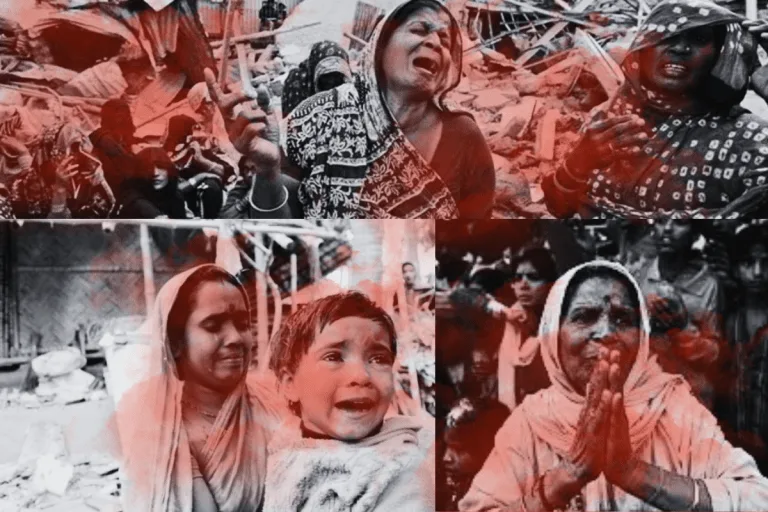
Over the last six decades, Bharat has witnessed a series of violent incidents that left deep scars on communities, regions and the national consciousness. From communal riots and targeted massacres to terror attacks on pilgrims, temples and villages, these incidents collectively represent some of the most devastating episodes of violence affecting Hindus across different parts of the country. Spread across multiple states and regions, these events reveal how civilian populations, religious congregations, pilgrims and entire communities often found themselves caught in the midst of organised violence, terrorism and communal unrest.
The period between 1964 and 2024 encompasses incidents ranging from large-scale riots in metropolitan centres to brutal massacres in remote villages of Jammu and Kashmir. In many of these incidents, Hindu civilians, Kashmiri Pandits, pilgrims and devotees became victims of attacks that resulted in deaths, injuries, displacement and long-lasting trauma. Several of these attacks targeted religious gatherings, temples, pilgrimage routes and minority Hindu populations living in vulnerable regions, while others unfolded amid communal tensions, political instability or insurgency-related violence.
Particularly significant are the repeated attacks on Hindu religious institutions and pilgrimages, including the Amarnath Yatra, Sankat Mochan Temple, Akshardham Temple and Raghunath Temple. These incidents underscore how places of worship and faith-based gatherings were repeatedly targeted, causing not only casualties but also widespread fear among devotees and local communities. Likewise, the exodus of Kashmiri Pandits and a succession of massacres in Jammu and Kashmir remain among the most consequential humanitarian tragedies in post-Independence India.
The incidents documented over these decades also reveal recurring patterns of mass displacement, destruction of homes and livelihoods, communal polarisation and prolonged legal and investigative processes. In many cases, survivors and affected families spent years seeking justice, while security agencies conducted extensive investigations to identify perpetrators and establish accountability.
Beyond their immediate human cost, these incidents continue to influence contemporary discussions surrounding internal security, communal harmony, terrorism, minority rights, religious freedom and national integration. They remain significant reference points in public discourse and collective memory, shaping debates on governance, law enforcement, national security and the protection of vulnerable communities.
Repeated Attacks on Hindus, Pilgrims and Religious Sites
The report presents a series of incidents from the 1990s to 2024 in Jammu and Kashmir and other parts of India in which the Hindu community, Kashmiri Pandits and Hindu pilgrims were targeted. It places the 1990 exodus of Kashmiri Pandits, the 1998 Wandhama and Prankote massacres, the 2000 Amarnath Yatra attack, the 2002 attacks on the Raghunath Temple and Qasim Nagar, the 2003 Nadimarg massacre, the 2006 Doda killings, the 2017 Amarnath Yatra attack and the 2024 Reasi bus attack within a single sequence of incidents. According to the report, temples, pilgrimages, villages and Kashmiri Pandit families were targeted, creating fear in the Kashmir Valley and Jammu region and contributing to large-scale displacement and a sense of insecurity.
The report also examines incidents in Muzaffarnagar (2013), Canning (2013), Delhi (2020), Moradabad (1980) and Kolkata (1964). It states that violence erupted following rumours, local disputes, political provocation or communal tensions, and that Hindu localities, homes, shops and civilians were among those affected during these incidents.
The report further identifies what it describes as a recurring pattern across incidents ranging from the Sankat Mochan Temple in Varanasi to the Akshardham Temple in Gujarat, the Raghunath Temple in Jammu, the Amarnath Yatra, the train carrying Ram devotees at Godhra and the recent Reasi attack. The report alleges that attackers selected locations where large numbers of Hindu devotees were present and characterises these incidents as targeting Hindu religious symbols, pilgrimage traditions and collective morale.
The detailed 20 Major Incidents : Hindu Massacre in Bharat (1964-2024), are given below.
1. Reasi Terror Attack on Pilgrim Bus Leaves Nine Dead, 41 Injured
A 53-seater bus carrying Hindu pilgrims from the Shiv Khori cave shrine to Katra for a visit to the Vaishno Devi temple came under a terrorist attack in Jammu and Kashmir’s Reasi district on 9 June 2024.
According to the details of the incident, terrorists affiliated with Lashkar-e-Taiba allegedly ambushed the bus and fired approximately 25 to 30 rounds at the vehicle. Following the firing, the bus went out of control and plunged into a gorge.
Nine passengers travelling in the bus lost their lives in the incident, while 41 others sustained serious injuries.
In the aftermath of the attack, the Jammu and Kashmir Police and the Indian Army released a sketch of one of the suspected terrorists and announced a reward of ₹20 lakh for information leading to his identification.
The investigation into the attack was transferred to the National Investigation Agency (NIA) by the Ministry of Home Affairs on 17 June 2024.
On 19 June 2024, the Indian Army arrested Hakimdin, son of Makhan and a resident of Rajouri, for allegedly assisting the terrorists. According to the investigation, Hakimdin had provided shelter to the terrorists at his residence and had guided them through forest routes to the attack site before the assault on the bus.
2. Delhi Riots of 2020 Leave More Than 15 Hindus Dead, Hundreds Injured
Violence erupted in North-East Delhi from the night of 23 February 2020 and continued until 26 February 2020. According to the incident details, Muslim groups allegedly targeted Hindu localities, resulting in large-scale arson and vandalism.
The violence claimed the lives of more than 15 Hindus, while over 700 people sustained serious injuries.
On 24 February 2020, violent clashes were reported in Jaffrabad and Maujpur. During the violence, Intelligence Bureau (IB) staff member Ankit Sharma and Head Constable Ratan Lal were allegedly killed by rioters.
Prior to the violence, on 22 February 2020, between 500 and 1,000 Muslim protesters, including women, staged a sit-in near the Jaffrabad Metro Station in protest against the Citizenship (Amendment) Act. The protest blocked access to and from the metro station and affected movement along the Seelampur–Jaffrabad–Maujpur route. According to the incident details, violence broke out after discussions between the administration, local residents and protesters regarding the reopening of the blocked route.
The Delhi Police registered a total of 758 FIRs in connection with the riots. According to the details provided, 2,619 people were arrested in relation to the violence, of whom 2,094 were later released on bail.
The list of accused in the riot cases includes Umar Khalid, Tahir Hussain, Safoora Zargar, Ishrat Jahan, Shakil Imam, Athar Khan and Tasleem Ahmad.
3. Terrorist Attack on Amarnath Pilgrims Leaves Eight Dead, 18 Injured
A bus carrying 56 Amarnath pilgrims came under a terrorist attack near Botengo village in Anantnag on the Srinagar–Jammu National Highway on 10 July 2017.
According to the incident details, eight Amarnath pilgrims were killed and 18 others were injured in the attack. The pilgrims were predominantly from the state of Gujarat.
The incident occurred around the anniversary period of the killing of terrorist commander Burhan Wani, who was killed in an encounter with the Indian Army on 8 July 2016. According to the incident details, the attack was carried out during this period, and it is alleged that the attackers sought to keep Burhan Wani alive in public memory as a martyr among sections of the population in Jammu and Kashmir.
The Amarnath Yatra is a 48-day annual Hindu pilgrimage conducted during July and August. The pilgrimage attracts approximately 600,000 or more devotees who travel to the Amarnath Cave Temple in the Himalayas at an altitude of 12,756 feet (3,888 metres), where a naturally formed ice Shivling is located within the shrine.
4. Violence in Canning Leaves Hundreds of Homes Damaged, Thousands Displaced
Violence broke out in Canning, West Bengal, on 19 February 2013 following an incident in which a Muslim imam from Ghutiari Sharif was allegedly robbed and shot by unidentified individuals.
According to the incident details, rumours were subsequently circulated by certain elements alleging that Hindus were responsible for the attack. Following these claims, an armed Muslim crowd, estimated at around 10,000 people, allegedly launched attacks on Hindu residents in Naliakhali.
The attackers allegedly hurled bombs at Hindu homes, poured petrol on residential properties and set them ablaze. Hindu houses and business establishments in Gopalpur, Goladogra and Herobhanga were also reportedly vandalised during the violence.
According to the incident details, more than 200 houses were burnt across several villages located in and around the jurisdictions of the Canning, Jaynagar, Kultali and Basanti police stations. The violence resulted in the displacement of more than 2,000 people, who were forced to leave their homes.
5. Muzaffarnagar Violence Claims 62 Lives Following Kawal Village Dispute
Violence in Muzaffarnagar district was preceded by an incident in Kawal village on 26 August 2013 involving allegations of harassment of a Jat woman. According to the incident details, her brothers, Sachin and Gaurav, had an altercation with Mujassim, who was accused in the matter.
On 27 August 2013, Shah Nawaz and Sachin-Gaurav were involved in a confrontation related to the dispute. Shah Nawaz died after sustaining a knife injury. Subsequently, Sachin and Gaurav were allegedly beaten to death at the main intersection of Kawal village by individuals associated with Shah Nawaz’s side.
In protest against the incident, Muslim leaders allegedly delivered inflammatory speeches and raised slogans after Friday prayers in Mohalla Khalapar on 30 August 2013.
In response, Jat groups and Hindu organisations organised a panchayat on 31 August 2013 at a college ground in Nangla Mandaur village of Sikhera.
According to the incident details, on 7 September 2013, attackers allegedly targeted Jats returning from the Mahapanchayat near the Ganganahar embankment in Jauli village. During the violence, 18 tractors and three motorcycles belonging to farmers were set on fire, and bodies were reportedly thrown into the canal.
The violence resulted in the deaths of 62 people.
6. Varanasi Serial Blasts Target Temple and Railway Station, Killing 18 People
A series of bomb blasts struck Varanasi on 7 March 2006, targeting religious and public locations in the city. According to the incident details, Lashkar-e-Taiba terrorist Waliullah Khan carried out the attacks, which resulted in the deaths of 18 people and injuries to 50 others.
The first explosion occurred at approximately 6:15 PM at the Sankat Mochan Temple in the Lanka police station area of Varanasi. The blast claimed the lives of 10 people and left 40 others injured.
Another explosion took place at the Varanasi Cantonment Railway Station near the Shiv Ganga Express. According to the incident details, 11 people were killed and 20 others were injured in the blast.
During subsequent searches, three live bombs were recovered from the temple premises. One live bomb was recovered from a restaurant, while additional live bombs were recovered from Godowlia and Dashashwamedh Ghat.
The accused, Waliullah Khan, was a resident of Nalkoop Colony in Phulpur, Prayagraj. On 6 June 2022, after a trial that lasted 16 years, the Ghaziabad District and Sessions Court convicted Waliullah Khan, identified in the case as the mastermind behind the attack, and sentenced him to death.
7. Doda Massacre Leaves 22 Hindus Dead; 13 Shepherds Killed in Subsequent Attack
A mass killing took place in Thawa village of Jammu’s Doda district on 30 April 2006, when 10 to 12 terrorists affiliated with Lashkar-e-Taiba allegedly entered the village and targeted Hindu residents.
According to the incident details, the attackers identified residents on the basis of religion and lined up 22 unarmed Hindus before opening fire on them. The victims included a three-year-old girl.
Following the attack in Doda, the terrorists allegedly moved to Lalos village in the Basantgarh area of Udhampur district, where 13 Hindu shepherds were abducted and later shot dead.
According to the incident details, separatist groups in the Kashmir Valley had called for a boycott of elections. The report states that despite the boycott call, Hindus in the Jammu region participated in the electoral process in large numbers and that the massacre occurred in this backdrop.
8. Nadimarg Massacre Claims Lives of 24 Kashmiri Pandits
Twenty-four Kashmiri Pandits, including 11 men, 11 women and two children, were killed in Nadimarg on 23 March 2003 in an attack attributed to terrorists affiliated with Lashkar-e-Taiba.
According to the incident details, the attackers called Kashmiri Hindu residents out by name and assembled them before opening fire. The victims were lined up and shot. The report further states that the attackers publicly tore the clothes of women before carrying out the killings.
The incident details state that the attackers had conducted reconnaissance in the area for several days prior to the massacre and gathered information about Kashmiri Pandit families. It is further alleged that the attackers used army uniforms and assured residents that they would be evacuated from the area before carrying out the attack.
Following an investigation by the Jammu and Kashmir Police, a chargesheet was filed in the case. The Jammu and Kashmir High Court dismissed the chargesheet on 21 December 2011. Subsequently, while hearing a petition filed by the state government, Justice Sanjay Dhar ordered the case to be reopened on 26 August 2022.
9. Godhra Train Burning Leaves 59 Kar Sevaks Dead; Investigation and Court Proceedings Follow
Fifty-nine kar sevaks returning from Ayodhya were killed on 27 February 2002 when the Sabarmati Express was set on fire near Godhra railway station in Gujarat.
According to the incident details, the victims were trapped inside the train and died in the fire. The deceased included 27 women, 22 men and 10 children.
The main suspects, Haji Bilal and Mohammad Hussain Kalota, identified in the report as a Congress worker, were arrested by the Anti-Terrorist Squad on 17 March 2002. The report states that the Prevention of Terrorism Ordinance (POTO) was invoked against the accused on 3 March 2002.
On 18 September 2008, the Nanavati Commission submitted its findings in connection with the Godhra incident and stated that the incident was a pre-planned conspiracy. According to the report, the commission concluded that the S-6 coach of the Sabarmati Express was set on fire after petrol was poured into it by a crowd.
On 1 March 2011, the Gujarat High Court awarded death sentences to 11 convicts and life imprisonment to 20 others in the Godhra case.
Hussain Suleman Mohammad, identified as a principal accused in the case, was arrested by the Godhra Crime Branch from Jhabua district of Madhya Pradesh on 24 July 2015.
On 21 April 2023, the Supreme Court granted bail to eight convicts in the case relating to the burning of coaches of the Sabarmati Express in Godhra in 2002.
10. Terror Attacks on Jammu’s Raghunath Temple Leave 25 Devotees Dead
The Raghunath Temple in Jammu was targeted in a terrorist attack on 30 March 2002, when terrorists affiliated with Lashkar-e-Taiba attacked the temple premises, resulting in the deaths of 11 devotees and injuries to more than 20 others.
A second attack on the temple took place on 24 November 2002. According to the incident details, 14 devotees were killed and 45 others were injured in the attack.
Following the attacks, the temple remained closed to devotees for several years. It was reopened to the public in 2013. Restoration and redevelopment work at the temple was initiated in 2020 under the Srinagar Smart City project. The security of the temple is presently maintained by the Indian Army.
The foundation of the Raghunath Temple was laid in 1835 by Maharaja Gulab Singh in the southern part of the Jammu region. The Dogra rulers regarded Shri Raghunath Ji as their presiding deity. The temple is dedicated to Lord Ram and housed a library containing valuable manuscripts and religious texts. A school also functioned within the temple complex.
11. Chapnari Massacre Claims Lives of 26 Hindu Villagers in Doda
Twenty-six Hindu villagers were killed in Chapnari village of Jammu and Kashmir’s Doda district on 19 June 1998 in an attack attributed to terrorists affiliated with Lashkar-e-Taiba and Hizbul Mujahideen.
According to the incident details, the attack took place while a wedding procession had arrived at the village for a marriage ceremony. The report states that the attackers opened fire on Hindu residents, resulting in the deaths of 26 villagers.
The incident details further state that only the bride survived the attack, while the remaining Hindu residents present at the gathering were killed.
In September 1998, the Indian Army killed Abid Hussain, identified in the report as a Lashkar-e-Taiba terrorist accused in the massacre, during an encounter.
In June 2004, security forces arrested Attullah, identified as a Hizbul Mujahideen terrorist allegedly linked to the Chapnari massacre.
12. Qasim Nagar Massacre Leaves 24 Hindus Dead in Jammu
A terrorist attack in Qasim Nagar, located on the outskirts of Jammu city in Jammu and Kashmir, claimed the lives of 24 Hindus on the night of 13 July 2002.
According to the incident details, terrorists affiliated with Lashkar-e-Taiba opened fire with AK-47 rifles at around 8 PM, killing 24 people. The deceased included 13 women and one child.
Following the attack, the gunmen reportedly fled into the densely forested hills located near the area. The report states that most of those killed were economically disadvantaged labourers who lived in makeshift shelters constructed from discarded apple crates.
Indian security forces arrested Mohammad Abdullah, identified in the report as a Lashkar-e-Taiba operative linked to the massacre, on 3 August 2002.
Subsequently, on 6 September 2002, the Army arrested seven more individuals alleged to be associated with Lashkar-e-Taiba in connection with the incident. The arrested persons were identified as Kabir, Altaf Hussain Shah, Maroof Khan, Shabbir Ahmad, Munir Hussain, Sarfaraz and Mahmood Ahmad.
13. Akshardham Temple Attack in Gandhinagar Leaves 30 Devotees Dead, 80 Injured
The Akshardham Temple in Gandhinagar, Gujarat, was targeted in a terrorist attack on 24 September 2002. According to the incident details, two terrorists affiliated with Lashkar-e-Taiba carried out the attack, resulting in the deaths of 30 devotees and injuries to 80 others.
At approximately 4:45 PM, the attackers attempted to enter the temple complex but were stopped by volunteers of the Bochasanwasi Akshar Purushottam Swaminarayan Sanstha (BAPS) during a security check. According to the incident details, when the attackers were unable to gain access through the main entrance, they opened indiscriminate fire on men, women and children present within the premises, causing multiple casualties.
National Security Guard (NSG) personnel reached the temple complex at around 10:10 PM on the night of the attack. The operation continued through the night, and at approximately 6:45 AM the following morning, commandos killed both attackers, who were hiding near Exhibition Hall No. 3 within the temple complex.
The Gujarat Police subsequently arrested six individuals accused of assisting in the attack. In July 2006, a POTA court sentenced Adam Ajmeri, Shan Miyan alias Chand Khan and Mufti Abdul Qayyum Mansuri to death. Mohammad Salim Sheikh was sentenced to life imprisonment, while Abdulmiyan Qadri received a ten-year prison sentence and Altaf Hussain was sentenced to five years in prison.
In May 2014, a Supreme Court bench comprising Justice A.K. Patnaik and Justice Venkata Gopala Gowda acquitted all six accused, including those who had previously been awarded death sentences.
14. Kishtwar Massacre Leaves 17 Hindu Villagers Dead in Doda District
Seventeen Hindu villagers were killed and four others sustained serious injuries in an attack carried out by terrorists affiliated with Lashkar-e-Taiba in Loodar village near Kishtwar in Jammu and Kashmir’s Doda district on 3 August 2001.
According to the incident details, eight to ten terrorists dressed in army uniforms entered the village during the night. One of the injured survivors, Chaplat Singh, stated that the attackers knocked on doors while communicating with their commander over a wireless device and ordered villagers to stand in a line before opening indiscriminate fire.
Recalling the incident, Chaplat Singh said that he survived after being struck by a bullet and then pretending to be dead.
Those killed in the massacre were identified as Panna Lal, Balwant Singh, Jyoti Ram, Des Raj, Surinder Singh, Puran Lal, Chanchal Singh, Des Raj, Gori Lal, Raj Nath, Bal Krishan, Girdhari Lal, Madan Lal, Ram Nath and Mool Raj. The injured were identified as Mohinder Singh, Chaplat Singh, Mohinder Lal and Dev Raj.
According to the incident details, Mujeeb-ur-Rehman, identified as a Lashkar-e-Taiba terrorist accused in the massacre, was killed in an encounter by Indian security forces on 6 August 2001.
15. Amarnath Yatra Attacks Leave Scores of Pilgrims Dead Across Multiple Incidents
The Amarnath Yatra was targeted in a major terrorist attack in Pahalgam, Jammu and Kashmir, on 1 and 2 August 2000. According to the incident details, terrorists affiliated with Lashkar-e-Taiba (LeT) carried out the attack, resulting in the deaths of between 89 and 105 people and injuries to 62 others.
The report states that on 2 August 2000, 21 Hindu pilgrims were among those killed while travelling to the Amarnath Cave Temple as part of the annual pilgrimage.
The Amarnath pilgrimage was again targeted on 20 July 2001, when terrorists attacked a pilgrim night camp near Sheshnag Lake, close to the Amarnath glacier cave shrine in the Kashmir Valley. According to the incident details, 13 people were killed and 15 others sustained serious injuries in the attack.
In 2006, terrorists once again targeted the Amarnath Yatra by hurling a grenade at a bus carrying pilgrims. The attack resulted in the death of one devotee.
Nearly eleven years later, on 10 July 2017, terrorists opened indiscriminate fire on a bus carrying Amarnath pilgrims. According to the incident details, seven pilgrims were killed and 32 others were injured in the attack.
16. Wandhama Massacre Claims Lives of 23 Kashmiri Pandits in Ganderbal
Twenty-three Kashmiri Pandits were killed in Wandhama village of Jammu and Kashmir’s Ganderbal district on 25 January 1998 in an attack attributed to terrorists affiliated with Lashkar-e-Taiba and Hizbul Mujahideen.
According to the incident details, the victims included nine women and four children. The attack resulted in the deaths of members of the Kashmiri Pandit community residing in the village.
Vinod Kumar Dhar, son of Badri Nath and a survivor of the massacre, stated that the attackers arrived at their residence dressed in clothing resembling that of Indian Army personnel. He testified that the gunmen entered the house, drank tea with the family members and subsequently opened fire on them using Kalashnikov rifles.
According to the incident details, Abdul Hamid Gada, identified as a Hizbul Mujahideen terrorist responsible for the massacre, was killed by Indian security forces in 2000.
17. Prankote Massacre Leaves 29 Hindus Dead in Reasi District
A mass killing took place in Prankote and Dakikot villages of Jammu and Kashmir’s Reasi district on 17 April 1998, when terrorists affiliated with Lashkar-e-Taiba allegedly killed 29 Hindus.
According to the incident details, the victims were targeted after refusing to convert to Islam. The report states that 29 Hindus were killed, including 13 women and children. The attackers also allegedly set fire to the homes of those who were killed.
The incident led to the displacement of local residents from the area. According to the report, more than 1,000 people left their villages and moved to Reasi, Pouni, Thanpal, Chassana and other towns in the district, where they were accommodated in relief camps.
In July 2003, Manzoor Ahmad, identified as one of the principal accused in the case, was convicted by a court and sentenced to life imprisonment.
According to the incident details, Abdul Haq alias Jahangir, identified as the mastermind of the attack, was killed in an encounter by Indian security forces in April 2008.
18. Exodus and Killings of Kashmiri Pandits Mark Turning Point in Kashmir Valley
On the night of 19 January 1990, at approximately 9 PM, terrorists associated with the Jammu and Kashmir Liberation Front (JKLF) allegedly made announcements through loudspeakers across the Kashmir Valley. According to the incident details, large numbers of people, including men, women, children and elderly residents, gathered on the streets and raised slogans including “Bharat Murdabad” and “Kafiron Ki Maut.”
Alongside the regular call to prayer, additional slogans were broadcast from mosques across the Valley. These included “Yahan Kya Chalega, Nizam-e-Mustafa,” “Kashmir Mein Agar Rehna Hai, Allahu Akbar Kehna Hai,” and “Asi Gachi Pakistan, Batav Roas Te Batnev Saan,” which the report translates as a demand for Pakistan along with Hindu women, but without Hindu men.
According to a survey conducted by the Kashmiri Pandit Sangharsh Samiti in 2008 and 2009, 399 Kashmiri Pandits were killed by insurgents between 1990 and 2011. The survey stated that approximately 75 percent of these killings occurred during the first year of the insurgency.
Among the prominent Kashmiri Pandits named in the report as having been killed are Neelkanth Ganjoo (1989), Tika Lal Taploo (1989), Satish Tikoo (1990), Girija Tickoo (1990), Lassa Kaul (1990) and Sarvanand Kaul Premi (1990).
The Kashmiri Pandit population, estimated at around 10 lakh in the early twentieth century, declined significantly over the decades. According to the figures cited in the report, Kashmiri Hindus constituted approximately 15 percent of the population in 1941, while their share had declined to 0.1 percent by 1991. The report also states that fewer than 9,000 Kashmiri Pandits remain in the Valley today.
19. Moradabad Violence of 1980 Revisited After Commission Report Findings
Violence erupted in Moradabad, Uttar Pradesh, on 13 August 1980 during Eid congregations. According to the incident details, Dr. Shamim Ahmad Khan, then the state president of the Muslim League, along with Dr. Ajji and other party workers, allegedly spread rumours that a pig had been released inside the Eidgah by Hindus.
Dr. Shamim Ahmad Khan sought to expand his political support base after having lost two assembly elections and aspiring to contest from the city assembly constituency.
According to the incident details, the rumour triggered panic among approximately 80,000 worshippers gathered for Eid prayers, resulting in chaos and violence. Rioters allegedly attacked the Galshaheed police outpost, setting the structure on fire along with a police personnel present there.
10 Hindus were killed in Barwada village during the violence. It also alleges that several Hindus went missing during the riots and were never traced.
According to the figures cited in the report, at least 83 people were killed and 112 others were injured in the violence.
The details regarding the incident became public 43 years later when the 458-page inquiry report of the Justice M.P. Saxena Commission was tabled before the Uttar Pradesh Legislature on 12 May 2023. According to the report, the commission concluded that the violence was pre-planned and that its primary cause was a dispute between two Muslim leaders.
20. Violence in Kolkata Leaves Hundreds Dead and Injured Amid Communal Unrest
Large-scale violence erupted in Kolkata on 13 January 1964, resulting in significant loss of life and injuries across the city. According to the incident details, approximately 200 people were killed and more than 300 others were injured during the unrest, in which Hindus were targeted.
The events occurred in the aftermath of the disappearance of a relic believed to be a hair of Prophet Muhammad from the Hazratbal shrine in Srinagar, Jammu and Kashmir, on 27 December 1963. According to the report, the incident triggered widespread protests across Jammu and Kashmir and also generated reactions in East Pakistan, now Bangladesh.
During protests linked to the Hazratbal incident, 29 Hindus were killed in East Pakistan. According to the incident details, the developments there were followed by escalating tensions in Kolkata, which eventually led to widespread rioting across the city.
As the violence spread, large parts of Kolkata were affected by communal disturbances, resulting in casualties, injuries and extensive disruption across the city.
Taken together, these twenty incidents present a chronological account of some of the most significant episodes of violence, terrorism, communal unrest and targeted attacks affecting Hindus in Bharat between 1964 and 2024. Spanning six decades, the incidents cover communal riots, terror attacks on temples and pilgrimages, massacres of villagers, attacks on Kashmiri Pandits and episodes of large-scale displacement. Collectively, they highlight the recurring security, social and humanitarian challenges faced by affected communities across different regions of the country.
A striking feature emerging from these incidents is the repeated targeting of religious sites, devotees and pilgrimage routes. Attacks on the Amarnath Yatra, Akshardham Temple, Sankat Mochan Temple and Raghunath Temple demonstrate how places associated with faith and worship frequently became focal points of violence. These attacks extended beyond immediate casualties and often generated fear, insecurity and long-term psychological impacts among devotees and local populations.
The incidents from Jammu and Kashmir, including the exodus of Kashmiri Pandits and massacres in Wandhama, Nadimarg, Doda, Prankote and Kishtwar, remain particularly significant because of their scale and lasting consequences. They contributed to demographic changes, displacement and continuing debates concerning rehabilitation, justice and the preservation of cultural identity.
The broader record of violence documented across Kolkata, Moradabad, Muzaffarnagar, Canning and Delhi further illustrates how communal tensions and unrest have periodically resulted in substantial loss of life, destruction of property and social disruption. Together, these incidents constitute an important part of contemporary Indian history and continue to inform discussions on national security, communal harmony, law enforcement and the protection of vulnerable communities.