Across more than a decade, Pakistan-Occupied Kashmir and adjoining regions have witnessed repeated waves of protests, shutdowns, and violent confrontations between civilians and security forces. What began as localised demands for economic relief and political representation gradually evolved into large-scale mass movements, often met with heavy crackdowns, arrests, and reported use of lethal force.
From Gilgit-Baltistan in 2011 to Rawalakot and Muzaffarabad in 2026, the pattern reflects a consistent cycle: public mobilisation, administrative resistance, escalation of tensions, and violent outcomes that leave behind civilian and security force casualties. The recurring presence of the Joint Awami Action Committee (JAAC) and its 38-point charter of demands has become central to these events, shaping both the political narrative and the state response.
The situation has also drawn attention from human rights observers, with repeated allegations of excessive force, internet shutdowns, mass arrests, and legal action against protest leaders. The scale and frequency of these incidents underline a deepening governance and rights crisis in the region.
Deadly Clashes Erupt in PoK Over Refugee Seat Reservation Row
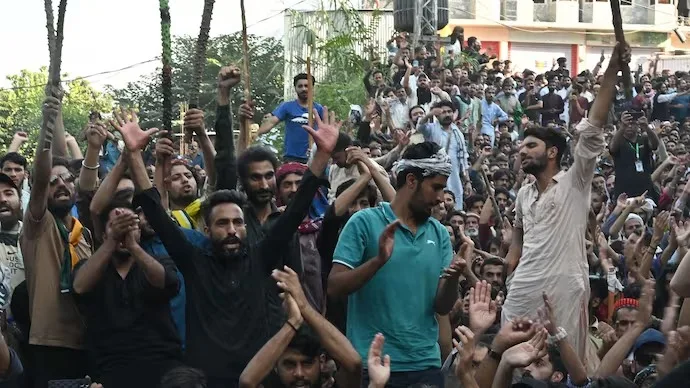
Violent clashes in Rawalakot in Pakistan-occupied Kashmir between June 5 and June 9, 2026, left at least 100 people dead, including children and pregnant women, and more than 400 injured. The unrest was triggered by Pakistan’s decision to reserve 12 of the 45 legislative assembly seats for refugees living outside Kashmir ahead of the July 27 elections. Protesters opposed the move, stating that it diluted the political representation of local residents.
The developments coincided with an intensified crackdown on the Joint Awami Action Committee (JAAC), which had been leading protests against the reservation of 12 assembly seats for refugees. Pakistani Rangers and police opened fire on protesters, further escalating the violence. Tensions intensified during the funeral of a protester when Pakistani army troops attacked locals, resulting in the killing of five security personnel. The incident deepened the crisis and led to further unrest across the region.
Pakistani security forces used live ammunition against protesters and mourners during the disturbances. Authorities deployed around 14,000 troops, suspended internet services, arrested more than 70 people, and banned the JAAC, which had been spearheading the protests. On June 8, a court in Pakistan-occupied Kashmir upheld the refugee-seat arrangement, ruling that it was constitutionally protected.
The latest phase of the tensions followed the decision of authorities in Pakistan-occupied Kashmir to ban the JAAC on June 5, 2026, citing concerns related to public order and security. The JAAC had been demanding the implementation of a 38-point charter that included subsidised flour, affordable electricity, and the abolition of the 12 seats reserved for Kashmiris in the regional legislative assembly.
The controversy centres on 12 assembly seats reserved for refugees from Jammu and Kashmir who settled in Pakistan after the wars of 1947, 1965, and 1971. The JAAC has argued that the reserved seats reduce the political representation of local residents and primarily benefit a small group of influential families. The organisation has demanded the abolition of the seats, making the issue a major point of contention ahead of the July 27, 2026 elections.
India Raises Concerns Over Human Rights Situation in PoJK
The Ministry of External Affairs (MEA) on June 8, 2026, criticised Pakistan over what it described as “brutality” against people in Pakistan-Occupied Kashmir (PoK) and called upon the international community to hold Islamabad accountable for alleged human rights abuses in the region.
MEA spokesperson Randhir Jaiswal stated that Pakistan was resorting to misinformation campaigns to divert attention from developments taking place in the territory under its control. He raised concerns regarding the situation in Pakistan-Occupied Kashmir and reiterated India’s position on the issue.
International Concern Grows Over Crackdown in Pakistan-Occupied Kashmir
International concern over developments in Pakistan-occupied Kashmir intensified as nearly 50 British Members of Parliament wrote to the United Kingdom Foreign Office seeking diplomatic intervention in the region. The MPs referred to reports of communication blackouts, arrests, and rising tensions, and urged the UK government to use diplomatic channels to encourage de-escalation and a peaceful resolution of the situation.
Amid the growing concerns, members of the Kashmiri diaspora staged a protest outside the Pakistani Consulate in Bradford, United Kingdom, on June 9, 2026. The demonstrators accused Pakistani authorities of using excessive force against civilians participating in the ongoing protests in Pakistan-occupied Kashmir.
The protest reflected increasing attention from sections of the international community regarding the developments unfolding in the region and the handling of the protests by Pakistani authorities.
The detailed 11 Incidents: Pakistan’s Deadliest Crackdowns and Civilian Killings in PoJK (2011-2026) are given below.
1. JKJAAC Launches Region-Wide Protest Over 38-Point Charter of Demands
The Jammu Kashmir Joint Awami Action Committee (JKJAAC) on September 28, 2025, launched a region-wide protest movement and called for a shutter-down and wheel-jam strike after talks with the government collapsed.
The protest was centred around the group’s 38-point charter of demands, which focused on both economic relief and political reforms. The demands included lower electricity tariffs, subsidised wheat prices, a greater share of revenue from local hydropower projects, abolition of elite privileges, and the removal of 12 assembly seats reserved for Kashmiri refugees settled in Pakistan.
The strike call marked the beginning of a wider agitation by the JKJAAC over its economic and political demands across the region.
2. Clashes During PoK Protests Leave 15 Dead, Over 200 Injured
At least 12 civilians and three police officers were killed, while more than 200 people were injured during clashes between protesters and Pakistani security forces across Pakistan-Occupied Kashmir in October 2025.
The protests were led by the Joint Awami Action Committee (JAAC) and were driven by a 38-point charter of demands. Among the key demands were the abolition of 12 reserved refugee seats in the legislative assembly, greater political rights, and a series of economic reforms.
As the protests intensified across the region, Pakistani authorities responded by deploying additional troops and suspending internet services in Pakistan-Occupied Kashmir.
The violence marked a significant escalation in the agitation led by the JAAC, with casualties reported among both civilians and police personnel during the confrontations.
3. JKJAAC Activist Shahzeb Habib Killed in Shooting Near Barmang Bridge Amid Crackdown
Tensions escalated in Pakistan-occupied Kashmir on June 5, 2026, after security forces fatally shot Shahzeb Habib, a member of the Jammu Kashmir Joint Awami Action Committee (JKJAAC), near Barmang Bridge in Rawalakot.
The incident took place hours after authorities banned the JKJAAC under anti-terrorism laws and launched a crackdown on the organisation’s leadership and supporters.
According to reports, police stopped a vehicle carrying JKJAAC members, including senior leader Umar Nazir Kashmiri, at a security checkpoint. During the encounter, officers opened fire, critically wounding Shahzeb Habib. He later succumbed to his injuries.
Authorities described the shooting as part of a security operation. JKJAAC supporters and local activists, however, alleged that the killing constituted an excessive use of force and was intended to intimidate the protest movement.
The incident further heightened tensions in the region amid the ongoing crackdown on the JKJAAC and its members.
4. Dozens of JAAC Supporters Arrested Following Ban Ahead of Planned Protest March
Police in Pakistan-occupied Kashmir arrested dozens of supporters of the banned Joint Awami Action Committee (JAAC) on June 6, 2026, a day after authorities outlawed the organisation, citing concerns related to public order and security.
The action followed weeks of tension surrounding the JAAC’s 38-point charter of demands, which included subsidised wheat and electricity prices as well as the abolition of 12 assembly seats reserved for Kashmiri refugees.
The regional government stated that 36 of the 38 demands had already been accepted and invited the organisation for further discussions on the remaining issues. Despite the offer, the JAAC declined to withdraw its planned protest march, leading to heightened security measures across the region.
Amid the developments, the JAAC alleged that two of its members had been injured by police gunfire. Authorities denied the allegation.
The arrests and increased security presence came as tensions continued to rise over the organisation’s demands and its decision to proceed with the planned protest march despite the ban.
5. Rawalakot Clashes Leave 11 Dead and More Than 70 Injured Ahead of Shutdown Call
At least 11 people were killed and more than 70 others injured in clashes between police and supporters of the Joint Awami Action Committee (JAAC) in Rawalakot on June 7, 2026, ahead of a planned region-wide shutdown.
Authorities stated that armed protesters opened fire during the confrontation, resulting in the deaths of four police officers and a bystander. According to officials, six protesters were killed during the subsequent security response.
The violence left a total of more than 70 people injured, including 23 security personnel and 50 protesters.
The clashes marked a significant escalation in tensions surrounding the planned shutdown and the ongoing agitation led by JAAC supporters in Pakistan-occupied Kashmir.
6. Violence During Shahzaib Habib’s Funeral Leaves Five Dead, Triggers Wider Unrest
Violence erupted during the funeral proceedings of Shahzaib Habib in Rawalakot on June 8, 2026, after security forces confronted mourners gathered near the Combined Military Hospital.
Officials reported that five people were killed during the clashes. The confrontation occurred as large numbers of mourners had assembled for the funeral proceedings.
The Joint Awami Action Committee (JAAC) and protesters disputed the official casualty figures, claiming that between 27 and 30 civilians were killed and that more than 200 people were injured during the incident.
The violence further intensified unrest across Pakistan-Occupied Kashmir and was followed by a broader security crackdown in the region.
7. PoK Government Announces Rs 1 Crore Bounty on Four JAAC Leaders
The government of Pakistan-occupied Kashmir has announced a bounty of 1 crore Pakistani rupees for information leading to the arrest of four leaders of the banned Joint Awami Action Committee (JAAC).
The four leaders named by the authorities are Shoukat Nawaz Mir, Umar Nazir Kashmiri, Khawaja Mehran Arshad, and Sardar Aman Khan.
The announcement comes amid an ongoing crackdown following the ban imposed on the JAAC under anti-terrorism laws. Authorities have also initiated sedition proceedings against some leaders of the organisation.
The decision to ban the JAAC and the subsequent legal action against its leaders have drawn criticism from human rights groups and opposition activists.
8. PoK Shuts Down After JAAC Calls Long March Following Deadly Clashes
A region-wide strike brought businesses, markets, and public transport to a halt across Pakistan-occupied Kashmir following a call by the banned Joint Awami Action Committee (JAAC).
The shutdown came two days after deadly clashes in Rawalakot in which seven people were reported dead. It also followed a ruling by the region’s Supreme Court upholding 12 legislative seats reserved for Kashmiri refugees living in Pakistan.
The strike reflected continuing unrest in the region amid ongoing tensions linked to the JAAC-led agitation and recent court and administrative developments.
9. Eidgah Ground Firing in Rawalakot Leaves 16 Dead Amid Ongoing Unrest
On June 11, 2026, Pakistani Army personnel and Rangers allegedly opened fire on thousands of protesters gathered at Eidgah Ground in Rawalakot, Pakistan-occupied Kashmir.
The demonstration was organised by the Jammu Kashmir Joint Awami Action Committee (JAAC) and drew an estimated 60,000 to 70,000 participants who were demanding lower prices for essential goods, affordable electricity, and political reforms.
The firing reportedly left 16 civilians dead and 37 others injured.
The incident came days after earlier clashes in Rawalakot that had already left multiple people dead and hundreds injured. During the ongoing protests, demonstrators also raised slogans including “Ye jo dehshatgardi hai, iske peeche wardi hai”.
The developments added to continuing unrest across the region following earlier waves of violence in Pakistan-occupied Kashmir.
10. Police Firing in Hunza Valley Leaves Two Dead During Compensation Protest
Two protesters, Afzal Baig and his father Sher Ullah Baig, were killed when police opened fire on demonstrators in Aliabad, Hunza Valley, Gilgit-Baltistan on August 11, 2011.
The protest was organised by families displaced by the 2010 Attabad landslide, who were demanding compensation and rehabilitation promised by the government.
Witnesses stated that police used batons, tear gas, and later live ammunition to disperse the crowd during the protest.
The incident led to widespread unrest across the Hunza Valley, with demonstrations and clashes reported following the killings.
In the aftermath, authorities arrested activist Baba Jan and several other campaigners under anti-terrorism laws instead of prosecuting those responsible for the firing. Human rights groups later criticised these prosecutions, describing them as an attempt to suppress dissent and demands for justice.
11. Muzaffarabad Clashes Leave Four Dead During Protest Crackdown
At least four people, including three protesters and one police officer, were killed during violent clashes between demonstrators and security forces in Muzaffarabad, Pakistan-Occupied Kashmir on May 13, 2024.
The confrontation took place as a long march organised by the Joint Awami Action Committee (JAAC) reached the regional capital, where protesters were demanding lower electricity prices, subsidised wheat, and broader economic reforms.
Federal Rangers and police were deployed to contain the demonstrations. During the clashes, security forces used live ammunition to disperse crowds, resulting in the deaths of three protesters, including two who died from gunshot wounds. More than 100 people were reportedly injured in the violence.
Following the incident, authorities closed educational institutions, imposed security restrictions, and suspended mobile data services in parts of the region. The measures drew criticism from rights groups and opposition activists.
The pattern emerging from these incidents reflects a sustained cycle of protest and state response across Pakistan-Occupied Kashmir and adjoining regions. What begins as economic or administrative grievances repeatedly escalates into large-scale confrontations involving civilians, protest groups, and security forces.
Across different years and locations, the recurring themes remain consistent: shutdowns, arrests of protest leaders, suspension of services, and the reported use of lethal force during crowd control operations. The presence of mass movements like JAAC and their repeated clashes with authorities highlight unresolved structural tensions in governance and public representation.