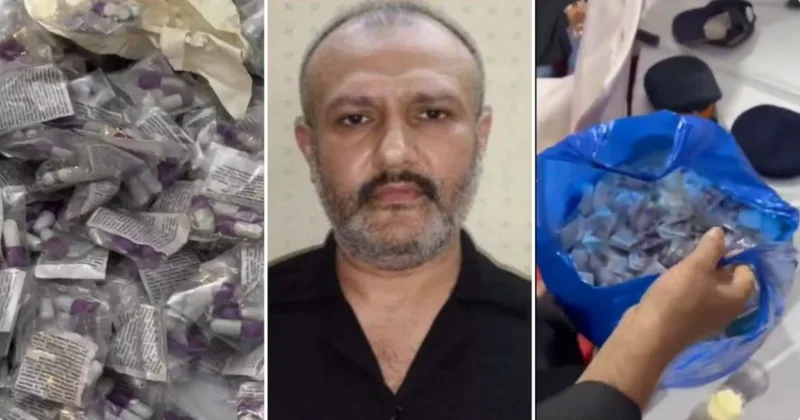
Mumbai: In a dramatic late-night operation on June 27, Mumbai Police averted what could have been one of the deadliest mass poisoning incidents in the city’s recent history.
A 39-year-old businessman from Pune was arrested for allegedly distributing capsules filled with highly toxic rat poison during a large Muharram procession in south Mumbai, with police seizing 14,900 ready-to-use poisoned capsules and uncovering plans for nearly double that number.
#WATCH | Mumbai, Maharashtra: On suspicious individual selling poisonous capsules during Muharram procession, DCP Jayant Meena says, "… Last night, during the Moharram procession in the jurisdiction of Byculla Police Station, Mumbai Police noticed a suspicious man distributing… pic.twitter.com/XmRVo2AKRk
— ANI (@ANI) June 27, 2026
The Arrest and Immediate Discovery
The accused, identified as Faiyaz Nisar Hussain Premji (also spelled Fayyaz or Faiyaz Premji), a resident of Viman Nagar in Pune, was detained in the early hours of June 27, 2026, near the Rehmatabad Cemetery in the Reay Road area.
He was allegedly moving through the crowd of Muharram participants, freely distributing capsules disguised as ordinary painkillers or immunity boosters.
Police swung into action after a participant, identified in some reports as Salman Sayyed, consumed one capsule and soon developed severe vomiting and stomach pain.
Officers traced the source, detained Premji, and recovered the large cache of suspicious capsules from him. A subsequent search of his rented premises in Mumbai’s Dongri area led to the seizure of approximately 50 kilograms of zinc phosphide, the raw toxic chemical used in the capsules.
According to police, Premji had spent several days methodically filling empty capsules, each containing roughly one gram of the poison. He had reportedly ordered around 30,000 empty capsules online and planned to prepare a similar quantity of poisoned ones.
Investigators believe he intended to distribute them widely among the thousands gathered for the annual Muharram procession passing through Byculla and JJ areas.
The Accused: Background and Profile
Premji runs a paint business in Pune and holds a BBA degree. He is described as a Shia Khoja Muslim. He is divorced and does not live with his wife. His mother and sister, who works as a physiotherapist, are currently in Iran.
A key focus of the ongoing investigation is Premji’s extensive international travel. Reports indicate he visited Iran and Iraq multiple times between 2019 and 2025, with as many as 19 trips in the past year alone.
Police are scrutinizing the purpose of these visits, his financial transactions, mobile phone records, digital communications, and contacts to determine whether he acted alone or had support from any individual or larger network.
He had rented accommodation in Mumbai’s Dongri area approximately 15 days before the incident, where he allegedly carried out the capsule-filling operation.
The Deadly Substance: Zinc Phosphide
Zinc phosphide is a widely used rodenticide (rat poison) and agricultural pesticide known for its extreme toxicity to humans. When ingested, it reacts with hydrochloric acid in the stomach to release phosphine gas, a highly lethal compound that disrupts cellular respiration and attacks vital organs.
Toxicity highlights: Even small quantities (as little as a few hundred milligrams to a gram) can prove fatal.
Symptoms appear rapidly: nausea, vomiting, abdominal pain, diarrhoea, dizziness, and headache.
In severe cases, it leads to acute respiratory distress, pulmonary oedema (fluid in the lungs), cardiac failure, liver and kidney damage.
What makes it extremely dangerous: There is no specific antidote. Treatment is primarily supportive, involving decontamination, airway management, and intensive care.
Medical experts note that mass distribution of such capsules in a crowded setting could have caused rapid-onset chaos, with many victims collapsing within minutes to hours. The high mortality potential and lack of immediate specific treatment would have overwhelmed emergency services.
What Was Averted: Scale of the Potential Tragedy
Police officials, including those from Byculla Police Station and the Crime Branch, have described the timely intervention as having prevented a “major tragedy.”
With nearly 15,000 capsules already prepared and plans for 30,000, the attack could have targeted thousands of innocent participants in the densely packed procession.
Some estimates referenced in investigations suggest the potential to affect up to 30,000 people if fully executed. Faiyaz allegedly confessed to deliberately targeting the religious gathering to cause mass casualties. Investigations are probing possible wider links, motives, and his frequent travels to Iran and Iraq.
Beyond immediate deaths and injuries, such an incident could have triggered widespread panic, communal tensions, and long-term fear in the city during a sensitive religious observance.
Mumbai Police have increased security in sensitive areas and appealed to the public not to accept food, medicines, or items from strangers during large gatherings.
Investigation and Legal Action
Premji has been booked under relevant sections of the Bharatiya Nyaya Sanhita (BNS), including provisions related to attempt to murder and administering poison (Sections 109, 110, and 123 among others). He allegedly confessed during initial questioning to targeting the Muharram gathering with the intent to cause mass harm.
The case is being handled with high priority. Forensic analysis of the seized capsules is underway to confirm the exact composition and potency. Mumbai Police, along with the Anti-Terrorism Squad (ATS) and central agencies, are examining all angles, from the supply chain of the chemicals and capsules to possible radicalization or external handlers.
As of now, no other arrests have been reported, but investigators have emphasized they are probing whether this was a lone act or part of a broader conspiracy.
Public Response and Police Appeal
The incident has sent shockwaves across Mumbai and beyond, with citizens expressing relief at the police action while demanding a thorough probe.
Religious leaders and community organizations have also condemned any attempt to target peaceful gatherings.
Mumbai Police have issued a public advisory: Citizens should remain vigilant, avoid accepting edibles or medicines from unknown persons during festivals and processions, and immediately report suspicious activity.
This case highlights both the vigilance of law enforcement and the persistent challenges of securing large public events in a megacity like Mumbai. Further details are expected as the investigation progresses, including clearer motives and any international connections.
The story continues to develop. Authorities have urged restraint in speculation until the full facts emerge from the ongoing probe.