New Delhi: India and the United States are moving closer to concluding what could become one of the most significant bilateral economic agreements in recent years. Yet, even as negotiations advance, New Delhi is reportedly seeking to incorporate a “sunset clause” into the proposed interim trade agreement, reflecting growing concerns over the evolving nature of American trade policy and the long-term durability of negotiated commitments.
The proposal comes at a time when both countries are attempting to deepen economic engagement through greater market access, tariff reductions and expanded cooperation in strategic sectors including energy and technology. However, Indian policymakers are increasingly conscious that trade agreements negotiated under one policy framework may eventually operate under a very different political and legal environment in Washington. Against that backdrop, the inclusion of a sunset clause is being viewed not as an obstacle to the agreement but as a mechanism that would allow both sides to periodically reassess whether the original balance of concessions continues to serve their interests.
A sunset clause is a legal provision that places an expiry date on an agreement unless all participating governments agree to extend it. Unlike traditional trade agreements that remain in force indefinitely unless one party withdraws, a sunset clause requires both sides to review the arrangement after a predetermined period and decide whether it should continue, be modified or be allowed to lapse. The mechanism effectively transforms a permanent treaty into one that must periodically justify its continuation through measurable outcomes.
From permanent commitments to periodic reviews
For decades, free trade agreements were generally negotiated as long-term or permanent arrangements. Governments preferred predictable rules because stable market access encouraged businesses to invest, expand production and build cross-border supply chains with confidence. Long-term certainty was considered one of the principal advantages of trade liberalisation.
A sunset clause changes that approach by introducing a formal review mechanism. Instead of assuming that an agreement should continue indefinitely, the provision requires governments to reassess its performance after a specified period. Supporters argue that such clauses provide flexibility in an international economy where geopolitical developments, industrial policies and supply chains evolve rapidly.
The concept has already found its way into major international trade arrangements. One of the best-known examples is the United States-Mexico-Canada Agreement (USMCA), which replaced the North American Free Trade Agreement. The agreement includes a 16-year sunset provision alongside mandatory reviews every six years. Its first major review is scheduled for July 1, 2026.
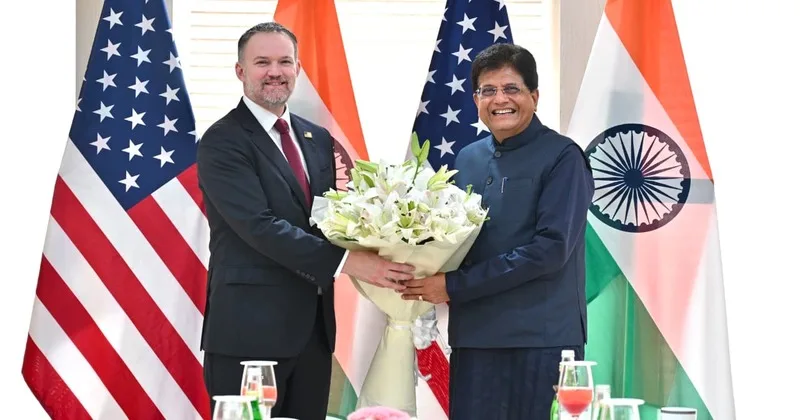
Delighted to meet @USTradeRep Amb Jamieson Greer and @USAmbIndia Amb Sergio Gor today.
India and the United States share a strong and growing economic partnership. We had productive discussions on advancing negotiations towards a balanced and mutually beneficial trade agreement,… pic.twitter.com/B7iaA6jnS9
— Piyush Goyal (@PiyushGoyal) June 23, 2026
More recently, the European Union adopted a similar approach in its tariff arrangement with the United States. The agreement approved by the European Parliament provides that tariff preferences will expire on December 31, 2029, unless both parties mutually agree to renew them. European lawmakers also incorporated safeguards covering sectors including steel, aluminium derivatives, industry and agriculture.
For India, these examples demonstrate that leading economies are increasingly favouring institutional mechanisms that allow governments to revisit trade commitments if political or economic conditions undergo substantial change.
Washington’s changing trade landscape shapes India’s thinking
India’s reported interest in a sunset clause is closely linked to recent developments in the United States, where the legal and policy environment governing tariffs has become increasingly fluid.
Trade negotiations are generally built on assumptions regarding tariff rates, market access and regulatory conditions. However, repeated tariff announcements, suspensions, policy revisions and legal disputes over the past year have altered those assumptions. Indian policymakers are therefore reluctant to assume that today’s trade framework will remain unchanged throughout the lifespan of a long-term agreement.
The concern is less about the agreement itself than about the possibility that its economic foundations could shift after India has already undertaken substantial commitments. A sunset clause would provide both countries with a structured opportunity to revisit the arrangement if future policy changes significantly alter the commercial balance originally negotiated.
One of the developments influencing India’s approach occurred on February 20, when the US Supreme Court delivered a 6-3 ruling that reshaped the legal framework governing tariff-setting authority. The judgement concluded that the executive statute previously used to impose certain reciprocal bilateral tariffs was not authorised, effectively restoring tariff-setting powers to Congress.
The ruling altered assumptions surrounding future tariff policy. Expectations of a relatively predictable tariff structure became less certain following the decision, while the United States continued to rely on alternative trade enforcement mechanisms.
Among the most significant of these are Section 301 investigations, which remain an important feature of American trade policy. In March, the Office of the United States Trade Representative initiated investigations focusing on structural excess capacity and manufacturing-related concerns. The inquiries cover multiple economies and could eventually result in additional trade measures if Washington determines that foreign industrial policies adversely affect American commerce.
For India, this introduces another layer of uncertainty. Even if tariff concessions are negotiated today, future actions resulting from Section 301 investigations or other policy decisions could substantially reduce the commercial value of those concessions. Public hearings connected to these investigations are scheduled for July 7, indicating that the American tariff environment may continue evolving even after a bilateral agreement is signed.
A sunset clause would not restrict Washington’s ability to implement its domestic trade laws. Instead, it would provide India with a formal mechanism to reassess commitments if the original economic bargain changes significantly due to future policy developments.
Balancing new opportunities with domestic industrial interests
The proposed agreement extends well beyond conventional tariff negotiations. Discussions have focused on reducing duties affecting Indian exports while expanding access for a range of American products in the Indian market.
The United States is seeking broader access for products including tree nuts, fresh fruits, soybean oil and animal feed such as sorghum. India, meanwhile, has attempted to preserve protections for politically and economically sensitive sectors including wheat, rice and dairy.
Energy and advanced technology have also emerged as important components of the negotiations. Washington is expected to expand exports of American energy products while seeking greater access for advanced technological equipment, including data-centre hardware and graphics processing units (GPUs). India, in turn, is expected to deepen its integration into American technology supply chains through reduced duties on products such as electronic components, aircraft parts and pharmaceuticals.
Great to be with Minister @PiyushGoyal and @USTradeRep Ambassador Greer today in New Delhi. Ongoing discussions on finalizing the trade deal between the US and India. pic.twitter.com/TyAeMgXBHq
— Ambassador Sergio Gor (@USAmbIndia) June 23, 2026
Another important consideration relates to the impact of expanded imports on India’s domestic manufacturing sector. Greater access to high-quality American industrial goods, advanced machinery, information and communication technology hardware and medical devices could improve productivity, accelerate industrial modernisation and strengthen competitiveness.
At the same time, policymakers are also evaluating how increased imports could affect Indian manufacturers currently expanding under government-backed industrial initiatives. Particular attention has been directed towards enterprises receiving support through the Production Linked Incentive (PLI) schemes. Many of these firms are still scaling up production, investing in new facilities and developing capabilities in strategically important sectors.
If imports increase rapidly following tariff reductions, Indian authorities may wish to assess whether domestic industries are experiencing unintended competitive pressures. A sunset clause could therefore establish a structured review after three to five years, allowing policymakers to examine actual outcomes relating to manufacturing competitiveness, industrial investment and production before determining whether existing commitments should remain unchanged.
Preserving India’s competitive position in the American market
Another major objective for New Delhi is ensuring that Indian exporters receive preferential treatment relative to competing economies across Asia.
The issue carries particular importance for sectors such as textiles, leather, engineering products, chemicals and food processing, where businesses often operate on narrow profit margins. Even relatively small differences in tariff treatment can influence purchasing decisions and determine which countries secure export contracts.
According to reports, India has sought trade terms that would provide its exporters with an advantage over regional competitors, including Vietnam and several ASEAN economies. The concern is that a favourable agreement negotiated today could lose much of its commercial value if Washington subsequently grants better tariff treatment to competing countries.
Although a sunset clause would not eliminate competitive pressures, it would ensure that India possesses a contractual opportunity to revisit the agreement if competing economies eventually receive significantly more favourable access to the American market.
The proposal has gained renewed attention as US Trade Representative Jamieson Greer continues trade discussions in New Delhi. According to Business Standard, India may seek an automatic review mechanism similar to the sunset provision incorporated by the European Parliament into its tariff legislation linked to the EU-US trade arrangement.
The broader objective is straightforward. India seeks the commercial benefits of an interim trade agreement while avoiding a situation in which it remains bound indefinitely to commitments negotiated under policy conditions that may later change. By building a fixed review point into the agreement, New Delhi aims to preserve flexibility in an increasingly uncertain global trading environment while ensuring that future policy shifts in Washington do not permanently alter the balance of negotiated concessions.