Emergency 1975: How Modi helped jailed satyagrahis' families
June 26, 2026
  • Read Ecopy
  • Circulation
  • Advertise
  • Careers
  • About Us
  • Contact Us
Android AppiPhone AppArattai
Organiser
  • ‌
  • Bharat
    • Assam
    • Bihar
    • Chhattisgarh
    • Jharkhand
    • Maharashtra
    • View All States
  • World
    • Asia
    • Europe
    • North America
    • South America
    • Africa
    • Australia
  • Editorial
  • International
  • Opinion
  • RSS @ 100
  • More
    • Op Sindoor
    • Analysis
    • Sports
    • Defence
    • Politics
    • Business
    • Economy
    • Culture
    • Special Report
    • Sci & Tech
    • Entertainment
    • G20
    • Azadi Ka Amrit Mahotsav
    • Vocal4Local
    • Web Stories
    • Education
    • Employment
    • Books
    • Interviews
    • Travel
    • Law
    • Health
    • Obituary
  • Subscribe
    • Subscribe Print Edition
    • Subscribe Ecopy
    • Read Ecopy
  • ‌
  • Bharat
    • Assam
    • Bihar
    • Chhattisgarh
    • Jharkhand
    • Maharashtra
    • View All States
  • World
    • Asia
    • Europe
    • North America
    • South America
    • Africa
    • Australia
  • Editorial
  • International
  • Opinion
  • RSS @ 100
  • More
    • Op Sindoor
    • Analysis
    • Sports
    • Defence
    • Politics
    • Business
    • Economy
    • Culture
    • Special Report
    • Sci & Tech
    • Entertainment
    • G20
    • Azadi Ka Amrit Mahotsav
    • Vocal4Local
    • Web Stories
    • Education
    • Employment
    • Books
    • Interviews
    • Travel
    • Law
    • Health
    • Obituary
  • Subscribe
    • Subscribe Print Edition
    • Subscribe Ecopy
    • Read Ecopy
Organiser
  • Home
  • Bharat
  • World
  • Operation Sindoor
  • Editorial
  • Analysis
  • Opinion
  • Culture
  • Defence
  • International Edition
  • RSS @ 100
  • Magazine
  • Read Ecopy
Home Bharat

Emergency 1975: How young Narendra Modi worked underground to support families of jailed satyagrahis

During the 1975–77 Emergency, while thousands of opposition workers were jailed, a young Narendra Modi worked underground, risking arrest to support the families of imprisoned satyagrahis. Beyond organising resistance, he quietly provided financial aid, emotional support, and even personally delivered food to jailed activists, reflecting the human side of the struggle

WEBDESKWEBDESK
Jun 26, 2026, 04:00 pm IST
in Bharat, RSS in News
Follow on Google News
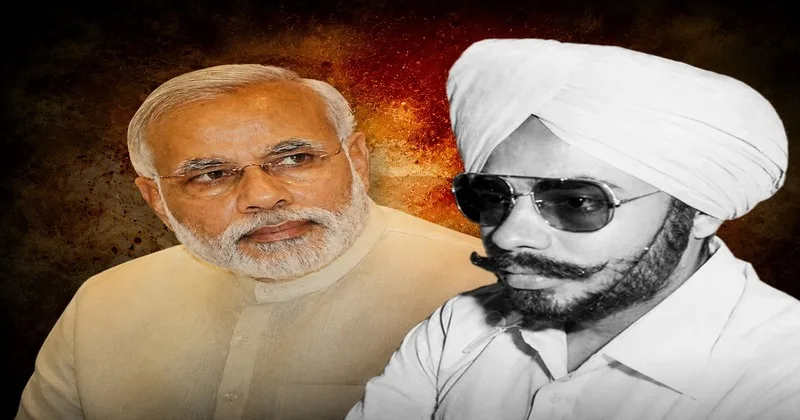
PM Narendra Modi disguised as a Sardar during 1975 Emergency (This is an AI generated image)

PM Narendra Modi disguised as a Sardar during 1975 Emergency (This is an AI generated image)

FacebookTwitterWhatsAppTelegramEmail

The 21-month Emergency imposed by then Prime Minister Indira Gandhi on June 25, 1975, remains one of the most controversial chapters in India’s democratic history. Thousands of RSS workers, journalists and activists were imprisoned, while civil liberties were suspended and censorship became widespread. Amid this crackdown, a young Narendra Modi operated underground, evading arrest while carrying out critical responsibilities for the Rashtriya Swayamsevak Sangh (RSS). Beyond organising resistance, one of his most significant roles was ensuring that the families of jailed satyagrahis did not suffer in silence.

During the Emergency, Narendra Modi went underground and took on a crucial unseen role, caring for the families of jailed satyagrahis. This was one of the key responsibilities he shouldered during those dark years.

RSS Karyakarta Nirmalbhai Motwani recalls meeting Modi as he… pic.twitter.com/LA1e9sLNHs

— Modi Story (@themodistory) June 25, 2026


As the Emergency intensified, many RSS workers were detained under the Maintenance of Internal Security Act (MISA). Narendra Modi, then in his mid-twenties, avoided arrest by constantly changing locations and reportedly using disguises while travelling across Gujarat. His underground work involved arranging secret meetings, distributing literature opposing the Emergency, and maintaining contact with families whose primary earners had been imprisoned.

RSS karyakarta Nirmalbhai Motwani has recalled meeting Modi during this period, describing how the young pracharak moved discreetly from place to place, often in disguise, to avoid the police while continuing organisational work.

Also Read: Food Safety First: Maharashtra govt bans newspapers and recycled printed paper for food packaging over health concerns

While organising resistance was one part of his responsibility, Modi also focused on the humanitarian impact of the Emergency. With thousands of activists behind bars, many families suddenly lost their only source of income. Wives, children and elderly parents were left struggling financially and emotionally.

According to accounts shared by RSS workers, Narendra Modi made it a priority to personally visit such families across Gujarat. He would enquire about their needs, provide financial assistance collected through organisational networks, and assure them that they had not been forgotten.

Visiting Shrimal Bhai’s Family in Junagadh

One such incident involved activist Shrimal Bhai, who had been jailed during the Emergency. PM Modi reportedly travelled to Shrimal Bhai’s residence in Junagadh to check on the family’s well-being. Understanding their financial hardship, he handed over Rs 700, a significant amount at the time, to help them manage household expenses while the family’s breadwinner remained in prison. His visit was not merely about delivering financial aid. It was meant to reassure the family that the movement stood with them despite the difficult circumstances.

Carrying a Lunchbox to Prison

During the visit, Shrimal Bhai’s wife expressed concern about sending home-cooked food to her imprisoned husband. Without hesitation, Narendra Modi reportedly volunteered to carry the lunchbox himself. He personally took the tiffin to Junagadh Jail, ensuring that the imprisoned activist received a meal prepared by his family. The act reflected not only logistical support but also a gesture of empathy during a period when communication between prisoners and their families was severely restricted. For many families affected by the Emergency, such personal interventions provided emotional strength alongside practical assistance.

The Emergency is remembered for mass arrests, censorship, and the suspension of democratic freedoms. Yet behind the political struggle were countless ordinary families coping with the absence of imprisoned loved ones. Accounts such as those shared by RSS karyakarta Nirmalbhai Motwani highlight a lesser-known aspect of that period—how underground workers not only resisted politically but also ensured that families affected by the crackdown received financial and emotional support.

PM Modi’s role extended beyond avoiding arrest or coordinating underground activities. His reported visits to families, financial assistance, and willingness to personally carry food to imprisoned activists remain examples of the quiet compassion that accompanied the broader struggle against the Emergency.
 

Topics: PM ModiIndira Gandhiindian politicsJunagadhEmergency 1975SatyagrahisNirmalbhai MotwaniRSS
ShareTweetSendShareSend
✮ Subscribe Organiser YouTube Channel. ✮
✮ Join Organiser's WhatsApp channel for Nationalist views beyond the news. ✮
Previous News

Manipur: Kuki-Zo Council admits killing of 6 Naga civilians “out of emotion”; Rights body demands NIA probe

Related News

Fifty years after the Emergency, India reflects on a defining test of democracy, freedom and citizen resilience

The Emergency at Fifty: Democracy’s darkest hour, India’s finest test

Emergency Anniversary: Jaishankar says 1975 tested India's Democracy

Samvidhan Hatya Diwas: EAM Jaishankar recalls 1975 Emergency, lauds those who stood up for constitutional values

RSS struggle to defend the Constitution during the Emergency

Samvidhan Hatya Diwas: Revisiting RSS’s role in defending India’s Constitution & democratic freedoms during 1975-77

For the first time, NCERT adds Emergency to class 9 curriculum, highlights suspension of rights and democratic struggles

NCERT includes Emergency chapter in class 9 textbook, describes 1975-77 period as a major challenge to Indian democracy

Sunil Ambekar (Akhil Bharatiya Prachar Pramukh Rashtriya Swayamsevak Sangh addressing the gathering in Patna

The Emergency taught us that a vigilant society is essential to protect democracy: Sunil Ambekar ji

Emergency and RSS- The resistance years: Sangh, society and restoration of democracy

Load More

Latest News

PM Narendra Modi disguised as a Sardar during 1975 Emergency (This is an AI generated image)

Emergency 1975: How young Narendra Modi worked underground to support families of jailed satyagrahis

Members of the Kuki-Zo Council who admitted publicly about the killing of the Naga civilians

Manipur: Kuki-Zo Council admits killing of 6 Naga civilians “out of emotion”; Rights body demands NIA probe

Nation pays tribute to creator of Vande Mataram, Bankim Chandra Chatterjee

Birth Anniversary of Bankim Chandra Chattopadhyay: PM Modi pays tribute to the creator of Vande Mataram

The article published in The Wire

Exposing The Wire’s propaganda against Indian Army & its Hindu hate; Targeting nationalist spirit cloaked as secularism

Under Prime Minister Mette Frederiksen, Denmark is once again pursuing a nationwide ban on the public Islamic call to prayer

“Not a Suburb of Islamabad”: Denmark revives bid to ban Islamic call to prayer in public places

St Anthony's orphanage under Kurnool Diocese (File Photo)

LRPF urges NHRC to probe alleged illegal St Anthony’s orphanage under Kurnool Diocese; cites RTI, FCRA records

Uttar Pradesh CM Yogi Adityanath

Uttar Pradesh: CM Yogi slams Congress on ‘Samvidhan Hatya Diwas,’ says “democracy was strangled to save power”

Maharashtra govt prohibits newspapers and recycled printed paper for food packaging over health risks

Food Safety First: Maharashtra govt bans newspapers and recycled printed paper for food packaging over health concerns

Moin Khan arrested as police probe alleged Pakistan-linked conversion network

Kota Online Conversion Racket Exposed: Moin Khan arrested for trapping Hindu women; 40,000 obscene videos recovered

40 years after Air India Kanishka bombing, CSIS publicly blames Canada-based Khalistani terrorists

Air India Kanishka Bombing: CSIS for first time blames Canada-Based Khalistani terrorists for 1985 airplane explosion

Load More
  • Privacy
  • Terms
  • Cookie Policy
  • Refund and Cancellation
  • Delivery and Shipping

© Bharat Prakashan (Delhi) Limited.
Tech-enabled by Ananthapuri Technologies

  • Home
  • Search Organiser
  • Bharat
    • Assam
    • Bihar
    • Chhattisgarh
    • Jharkhand
    • Maharashtra
    • View All States
  • World
    • Asia
    • Africa
    • North America
    • South America
    • Europe
    • Australia
  • Editorial
  • Operation Sindoor
  • Opinion
  • Analysis
  • Defence
  • Culture
  • Sports
  • Business
  • RSS @ 100
  • Entertainment
  • More ..
    • Sci & Tech
    • Vocal4Local
    • Special Report
    • Education
    • Employment
    • Books
    • Interviews
    • Travel
    • Health
    • Politics
    • Law
    • Economy
    • Obituary
  • Subscribe Magazine
  • Read Ecopy
  • Advertise
  • Circulation
  • Careers
  • About Us
  • Contact Us
  • Policies & Terms
    • Privacy Policy
    • Cookie Policy
    • Refund and Cancellation
    • Terms of Use

© Bharat Prakashan (Delhi) Limited.
Tech-enabled by Ananthapuri Technologies