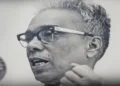
Two months after the Emergency was imposed, Balasaheb Deoras wrote a letter to Indira Gandhi stating that all the allegations levelled against the RSS were false and requesting that the ban on the organisation be lifted. No reply was received to that letter. About three months later, he wrote a second letter. In this letter, he congratulated her on the validation of her election, while also reiterating that the work of social upliftment could not be carried out in an atmosphere of mutual division. He again urged her to abandon her prejudice against the RSS and remove the ban. In addition, two other letters were written to Vinoba Bhave, requesting him to explain the true situation to Prime Minister Indira Gandhi and to make efforts for the removal of the ban on the RSS.
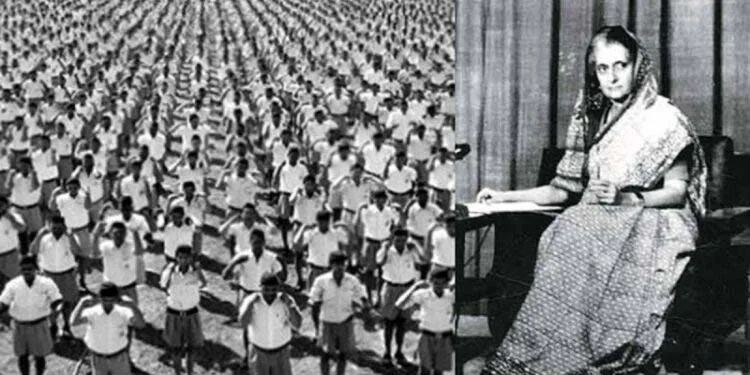
During and after the Emergency, some members of the Bharatiya Lok Dal (BLD) publicised only the opening and concluding paragraphs of these lengthy letters in order to create the impression that the RSS had “compromised.”
Some people also criticised Balasaheb for congratulating Prime Minister Indira Gandhi on the validation of her controversial election. The fact, however, is that the Lok Sangharsh Samiti (LSS), of which the BLD was also a part, had already accepted the validity of Prime Minister Indira Gandhi’s election and had formally withdrawn its demand for her resignation. Furthermore, the BLD had passed a resolution to unilaterally withdraw from the jointly conducted movement.
Explaining the reason for writing these letters, Balasaheb said that there was nothing wrong in doing so. He stated, “Eighty percent of all those imprisoned during the Emergency were RSS Swayamsevaks. Did I not have any responsibility towards them and their families? If I attempted to establish a dialogue with the government for an honourable resolution, what was wrong in that?”
The fact is that Gandhi ji also used to write to the Viceroy soon after the commencement of any movement, so that the channel of dialogue remained open. During the Quit India Movement, he wrote to the Viceroy within a week of being imprisoned. During this same Emergency period, plans for the Sangh Satyagraha were being finalised. Balasaheb’s second letter was dated November 10, 1975, and just four days later, the RSS launched a Satyagraha in which 80,000 Swayamsevaks went to jail across the country, shaking the Emergency Government. Clearly, Balasaheb was not compromising with any individual or principle. He was merely giving the Government an opportunity to retreat in a dignified manner.
Activities of the RSS
Restoration of Democracy: Opposing the dictatorship brought about by the Emergency had become a natural duty for the RSS. Compared to this, the ban imposed on the RSS was a smaller issue. The objective before the RSS leadership during the Emergency was not merely the removal of the ban; the objective was the removal of dictatorship itself. It was for this reason that when the Government later conveyed a conditional proposal with a view to lifting the ban, the RSS leadership firmly rejected it and informed the Government in unequivocal terms that whether the ban on the RSS was removed or not was not a matter of importance for them. The important issue was the restoration of democracy.
Political Situation: The Lok Sangharsh Samiti also sought to make all political parties and service-oriented organisations full participants in this struggle. Except for the Communist Party, all other parties pledged to contribute to the Satyagraha to the best of their ability. The DMK was in power in Tamil Nadu. Therefore, that party expressed its inability to send its workers directly to participate in the Satyagraha. However, it assured support in every other possible manner. Sant Vinoba was also approached. In this way, an atmosphere in favour of the Satyagraha began to develop throughout the country. Other aspects of the preparations for the Satyagraha, such as the creation of literature, care of the families of detainees, arrangements for communication networks, etc, were also addressed.
Responsibility of the RSS: At the very time the Emergency was declared, both Smt Gandhi and the LOK SANGHARSH SAMITI were fully aware that an organised nationwide resistance was possible only with the cooperation and full participation of the Rashtriya Swayamsevak Sangh (RSS). Motivated solely by the selfless objectives of protecting the values of life and restoring democracy, only its karyakartas (workers) could dedicate themselves wholeheartedly to the struggle. Other political parties did not possess either that capacity or such a cadre of karyakartas. They could organise large movements, but only by promoting the interests of the public or of some section of society.
That is why Loknayak Jayaprakash Narayan, before his arrest, entrusted the responsibility of conducting the Lok Sangharsh movement to Nanaji Deshmukh, a full-time karyakarta of the Rashtriya Swayamsevak Sangh. No leader or political party harbouring prejudice against the RSS opposed this decision. All accepted it willingly. Even after the baseless propaganda carried out by Indira Gandhi, no one questioned the propriety of this leadership. Moreover, when the question of leadership arose after Nanaji’s arrest, leaders of all parties insisted that since the principal burden of the struggle had to be borne by the RSS, this responsibility should be entrusted to a person associated with the RSS.
Key RSS Functionaries in Lok Sangharsh Samiti
- In charge of RSS Kshetra (regional) work were Bhaurao Deoras and Moropant Pingle, associates of Madhavrao Ji; RSS functionaries appointed at various levels for the Emergency; heads of mass organisations run by Swayamsevaks; Swayamsevaks participating in the operation of the Lok Sangharsh Samiti; and, in addition, karyakartas who functioned as organisers, assistants, or contact heads on various fronts.
- For the Civil Liberties Front: Rajju Bhaiya (Prof Rajendra Singh); for the Acharya Conference Front: Dr. Aba Thatte; for overseas contacts: Balasaheb Bhide, Chamanlal Ji, Jagdish Mitra Sood, and Kedarnath Sahani.
- For the political sphere: Rambhau Godbole, Sundar Singh Bhandari, Om Prakash Tyagi, and Uttamrao Patil; for the Commonwealth Conference: Jagannathrao Joshi and associated Members of Parliament.
- For the legal front: Dr Appa Ghatate; for literature production: Bhanu Pratap Shukla and Ved Prakash Bhatia in Delhi, and Anantrao Gokhale and Madhu Limaye in Nagpur.
- For publication of literature and Delhi-centred liaison work: Bapurao Moghe.
- For contact with religious leaders: Dadasaheb Apte.
- For liaison with newspapers and magazines: Jagdish Prasad Mathur.
- For women’s activities: Mausiji Kelkar and the sevikas of the Rashtra Sevika Samiti; and in support of all the above, thousands of karyakartas who, risking their lives, worked tirelessly day and night.
Other Prominent Names in the Lok Sangharsh Samiti
- After the arrest of Morarji Bhai and Nanaji Deshmukh, the work carried out by Ravindra Varma as the second General Secretary of the Lok Sangharsh Samiti, and by SM Joshi as its second President, was highly significant. The services rendered by his personal secretary, Bhogibhai, were also very important. The public awakening efforts undertaken openly by Nanasaheb Gore and the underground public awareness work carried out by Karpoori Thakur and Loknath Joshi were likewise significant. Similarly, the overt and covert efforts of Digvijaya Narayan Singh, Surendra Mohan, Mohan Dharia, and Era Sezhiyan were important at their respective levels. Rejecting the non-violent approach of the Lok Sangharsh Samiti, George Fernandes undertook activities similar to the Baroda Case, and CGK Reddy gave him courageous support. MM Thomas of the Catholic Church in Kerala worked to educate the public against the Emergency.
- Several thinkers wrote letters to the Prime Minister, including Loknayak Jayaprakash Narayan, Balasaheb Deoras, Shrimati Krishnabai Nimbkar, Vishweshatirtha Swamiji of the Pejawar Math, Madhu Limaye, and others.
- The contribution of Sarvodaya leaders was distinctive in its own way. Prominent among them were Acharya Dada Dharmadhikari, who described the so-called “Anushasan Parva” as an “Atank Parva” (Reign of Terror); RK Patil, head of the Sarva Seva Sangh; Siddharaj Dhaddha; Acharya Ramamurti; Sachchidanand, secretary to Jayaprakash Ji; his associate Ramakant Pandey; and recipient of the Padma Shri award Kamala Tai Hospet, who maintained contact with them as well as with Acharya Vinobaji.
Objectives of Lok Sangharsh Samiti
The Lok Sangharsh Samiti decided to undertake a symbolic Satyagraha from July 15 to July 25, 1975. Broadly, it had three objectives:
- First, to assess the mindset and preparedness of the Government and to make it clear that if it did not withdraw the steps it had taken towards dictatorship, there would be nationwide resistance.
- Second, to instil hope and courage in a society suffering from despair and weakened morale, and to create the psychological groundwork of support for a broader future struggle. It was intended to demonstrate through direct experience that democratic forces were not dead and were in a position to strike back.
- Third, to maintain the morale of those imprisoned by sending fearless satyagrahis among them, thereby enabling them to realise that people outside were not sitting idle. In this way, a connection was to be established between society and those confined in prisons.
Arrests of Swayamsevaks
On July 4, 1975, the Rashtriya Swayamsevak Sangh was banned. Of the total 130,000 satyagrahis who participated in the Satyagraha during the Emergency, more than 100,000 belonged to the Rashtriya Swayamsevak Sangh. Of the 30,000 people detained under MISA, more than 25,000 were from the RSS cadre. One hundred RSS karyakartas, most of them in detention centres and some outside, sacrificed their lives during the Emergency. Among them was Pandurang Kshirsagar, Akhil Bharatiya Vyawastha Pramukh of the RSS. (These figures have been provided by the RSS, but reports from outside the RSS have also stated that RSS swayamsevaks accounted for the largest number of arrests.)
Nanaji’s ability to remain beyond the reach of police had become a source of concern for Government. The very fact that a full-time pracharak of the Rashtriya Swayamsevak Sangh was leading the Lok Sangharsh Samiti was troubling Indira Gandhi. She had made considerable efforts to discredit the RSS, yet one of its karyakartas was challenging her
According to another report, The People Versus Emergency: A Saga of Struggle, the number of swayamsevaks arrested under MISA during the Emergency was 23,015, including 22,938 men and 77 women karyakartas. The number of RSS karyakartas arrested for participating in Satyagraha during the Emergency was 44,965, whereas only 9,655 persons from other parties participated in Satyagraha. conducting struggle in Maharashtra
For organisational purposes, the RSS had divided the State of Maharashtra into three provinces. Since the principal responsibility for conducting the struggle rested with the RSS, the Lok Sangharsh Samiti accepted this organisational structure for carrying forward the movement.
In Nagpur and Vidarbha together, a total of 2,378 persons were arrested during the Satyagraha, of whom all except 34 belonged to the Sangh Parivar. Of the 2,044 karyakartas who courted arrest through Satyagraha, 1,767 were men and 328 were women. Satyagrahis from 166 villages in this region offered Satyagraha at 69 centres in 215 batches and submitted to arrest. The Satyagraha continued uninterrupted across all eight districts.
This figure also includes 550 satyagrahis from Nagpur. In Nagpur, Satyagraha was conducted at 40 centres through 45 batches.
Indira Gandhi Targets RSS
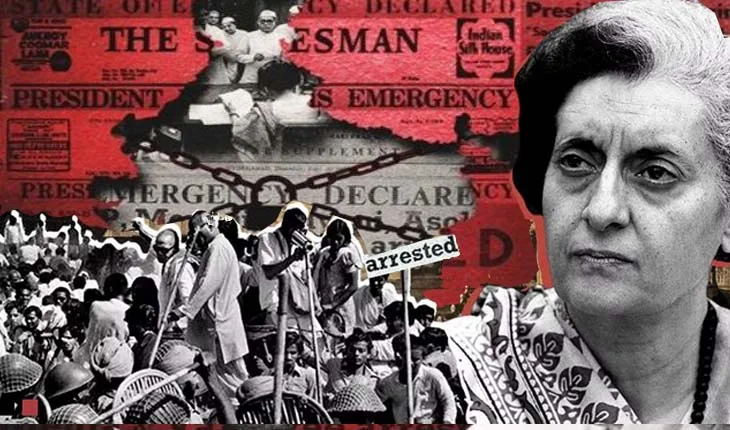
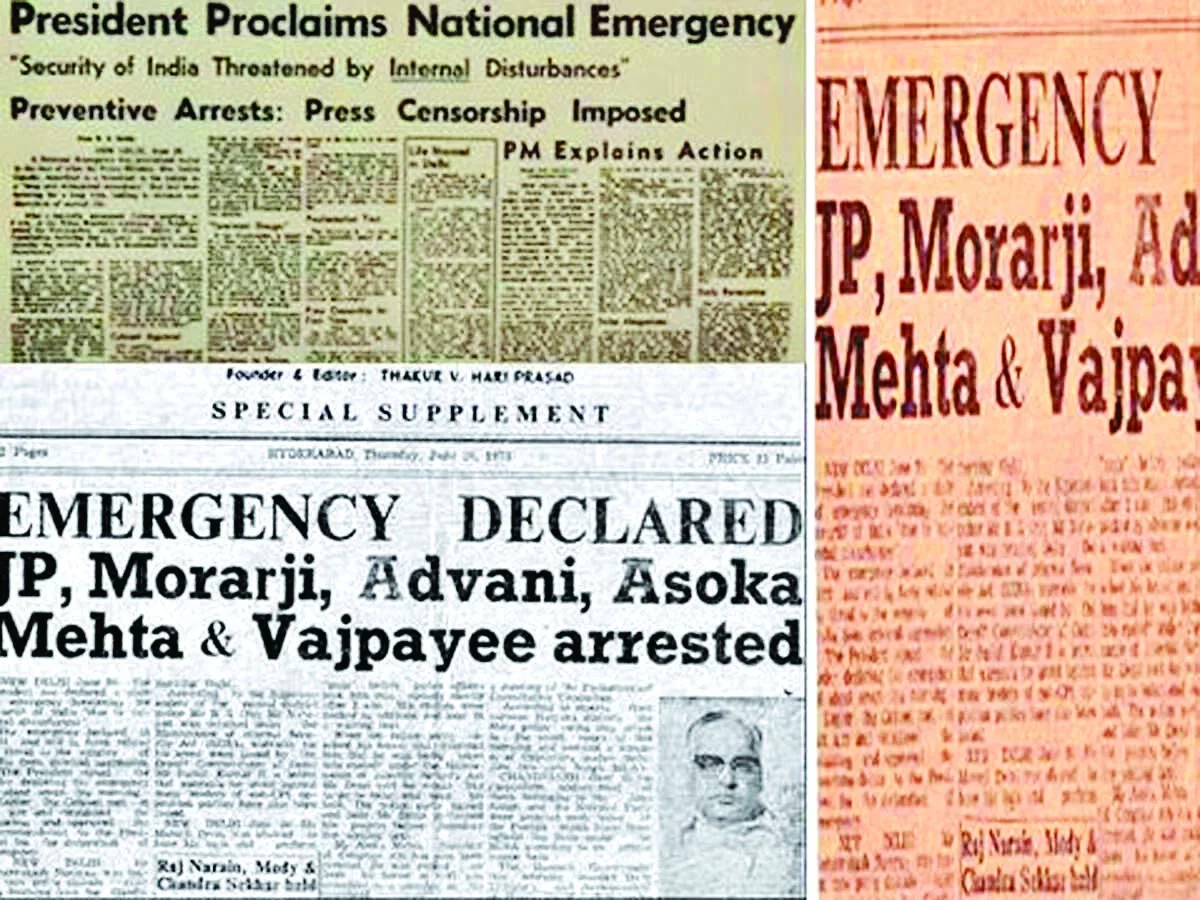
On June 27, 1975, Smt Gandhi stated at a special meeting of Central Secretariat officials, “The root of all these matters is the RSS.” On the other hand, Congress President Devakant Barua stated at a conference of Youth Congress office-bearers, “We want to completely destroy the Rashtriya Swayamsevak Sangh. These people should not be given an opportunity to reorganise themselves.”
These statements by the Prime Minister and the Congress President in the early days of the Emergency make it clear that they regarded the RSS as the greatest obstacle in their path. Across the country, while only the principal leaders of the agitating political parties were arrested following the declaration of the Emergency, even RSS karyakartas at the smallest levels were detained in thousands. Among the twenty-six organisations that were banned, the RSS was the only effective organisation with a nationwide presence. All the others operated in limited regions. All these facts lead us to the conclusion that Smt Gandhi’s principal target was the RSS.
RSS functionaries had understood the significance of Indira Gandhi’s strategy. They considered that this struggle was not merely political, but a struggle for the protection of the values of life itself. Therefore, they resolved to employ their full strength in confronting the grave crisis that had descended upon the nation.
Nanaji’s Arrest
The decision to launch the large-scale Satyagraha beginning in November had already been taken under the leadership of Nanaji Deshmukh, and preparations had commenced throughout the country. In the meantime, however, the Lok Sangharsh Samiti suffered a major setback. After the Satyagraha programme of August 15, while the Sangharsh Samiti was deliberating on its future plans, Nanaji was arrested on August 29.
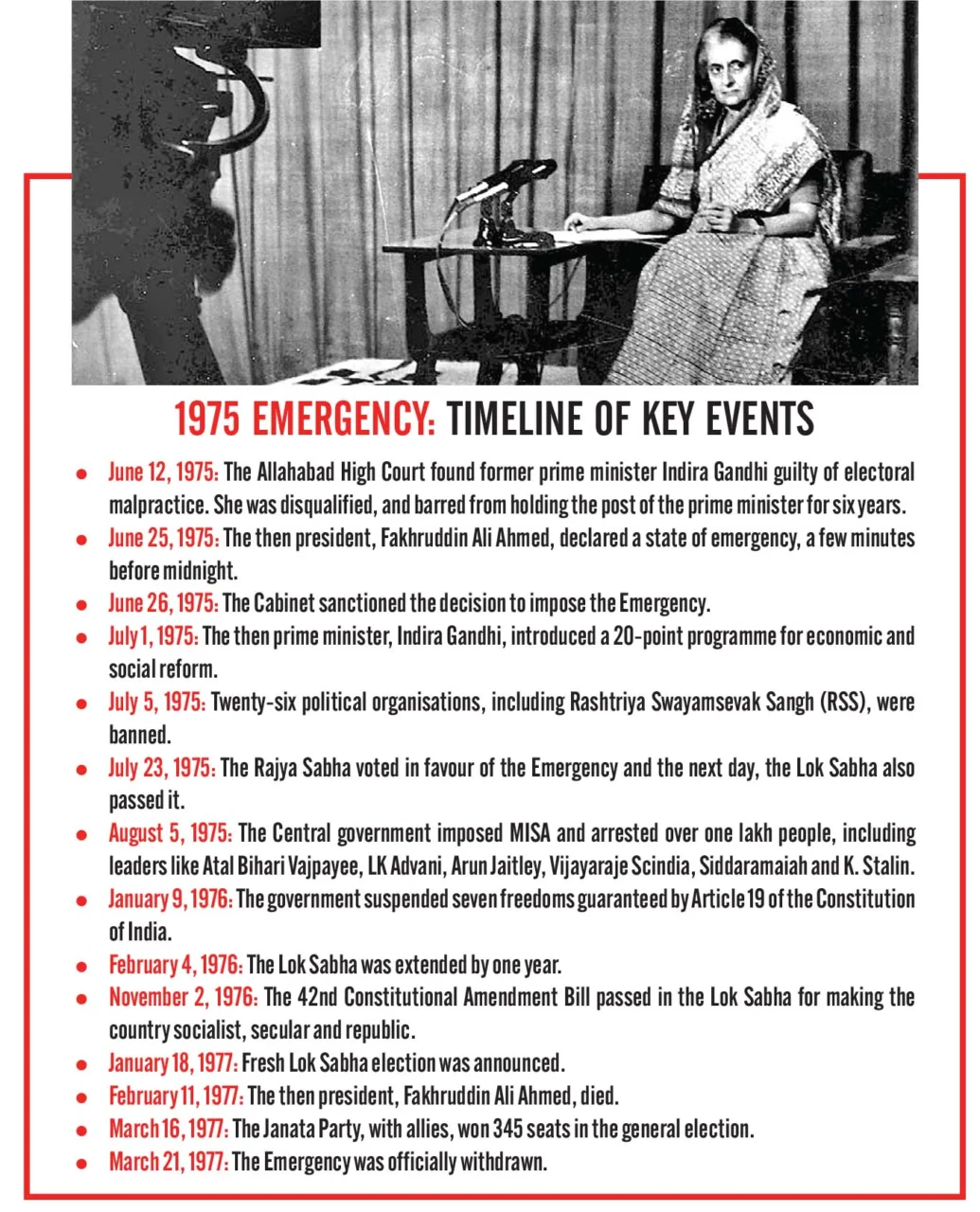
End of Emergency reaffirmed the resilience of democratic institutions and the enduring importance of civil liberties. The period remains a significant chapter in Bharat’s political history, remembered for the sacrifices, organisational efforts, and public resistance that contributed to the eventual restoration of constitutional democracy
Nanaji’s ability to remain beyond the reach of the police had become a source of concern for the Government. The very fact that a full-time pracharak of the Rashtriya Swayamsevak Sangh was leading the Lok Sangharsh Samiti was troubling Indira Gandhi. She had made considerable efforts to discredit the RSS, yet one of its karyakartas was challenging her as the General Secretary of the Lok Sangharsh Samiti, with the support of all sections of society and political parties behind him. This was entirely intolerable for Indira Gandhi.
When Nanaji was arrested, the Government assumed that the movement would now come to a standstill, because that had been its experience with other political parties. However, nothing of the sort happened after Nanaji’s arrest, because the entire organisational network remained in the hands of the RSS, whose structure at no level depended upon any single individual. Just as many waves surge forward after one wave recedes into the sea, the same occurred here. The movement continued uninterrupted. clarity on The Emergency’s
As soon as the Emergency was declared, the RSS leadership understood the intentions of Smt Gandhi. Therefore, before his arrest on June 30, Sarsanghchalak Balasaheb Deoras issued the following appeal: “Unfortunately, as a result of the judgement of the Allahabad High Court, the Prime Minister has lost her balance. Consequently, an Emergency has been declared. Public leaders have been detained and restrictions have been imposed upon newspapers. These actions have struck at the democratic system and violated the Fundamental Rights of the people. In these extraordinary circumstances, it is the duty of swayamsevaks not to lose their composure. They should continue RSS work in accordance with the instructions of Sarkaryavah Madhavrao Muley and the officers appointed by him, and should continue their work of public contact, public awakening, and public education as before, while creating among the people the capacity to fulfil their national duty.”
Along with the decision to undertake the symbolic Satyagraha, Nanaji Deshmukh circulated a guiding pamphlet throughout the country. It was disseminated everywhere through the RSS underground network and the RSS karyakartas implemented the decision. The pamphlet stated: “Only those karyakartas against whom warrants have been issued, or who are not in a position to continue working underground, should participate in this individual Satyagraha.”
The pamphlet further stated: “At every place where a Satyagraha is scheduled under a particular leader, it should be widely publicised through various means. As far as possible, a public location where people naturally gather should be selected so that the public can witness the Satyagraha. The satyagrahi should not be arrested before the appointed time of the Satyagraha. Participants should proceed from a predetermined location wearing garlands, with tilak applied, raising slogans, and distributing leaflets. If an opportunity to deliver a speech is available, it should be utilised to the fullest extent possible….” At the meeting of the Lok Sangharsh Samiti where the symbolic Satyagraha was decided upon, three additional programmes were also announced:
1. August 9 – Kranti Diwas (Revolution Day): Kranti Diwas should be observed throughout all provinces. By challenging the government machinery and undertaking Satyagraha, satyagrahis should court arrest. Slogans opposing the Emergency and expressing the spirit of democracy should be written on the walls of streets and markets in towns and cities. The dictatorship being imposed on the country in the name of the Emergency should be exposed.
2. August 15, 1975 – Independence Day: Satyagraha should be undertaken at all Independence Day functions organised by the government, and leaflets should be distributed. Slogans in support of civil liberty and against the Emergency should be raised. Wherever possible, parallel Independence Day celebrations should be organised, and speeches should be delivered calling for the restoration of civil liberties destroyed during the Emergency. If the police seek to make arrests, satyagrahis should offer Satyagraha and submit to arrest.
3. October 2 – Gandhi Jayanti: On the occasion of Gandhi Jayanti, the conduct of the Indira Congress, which was considered completely contrary to the ideals of Gandhi ji, should be exposed.
With regard to this symbolic movement, it was decided that the leadership of the Satyagraha should primarily be undertaken by leaders of political parties. The full strength of the RSS was not to be deployed in this Satyagraha. Only certain Sanghchalaks and those karyakartas who were being intensely pursued and harassed by the police were to participate in it. Although political organisations associated with the Lok Sangharsh movement contributed to the success of the plan, the principal burden of this symbolic Satyagraha was borne mainly by the Sangh (RSS) and the Jana Sangh.
The end of the Emergency reaffirmed the resilience of democratic institutions and the enduring importance of civil liberties. The period remains a significant chapter in Bharat’s political history, remembered for the sacrifices, organisational efforts, and public resistance that contributed to the eventual restoration of constitutional democracy.