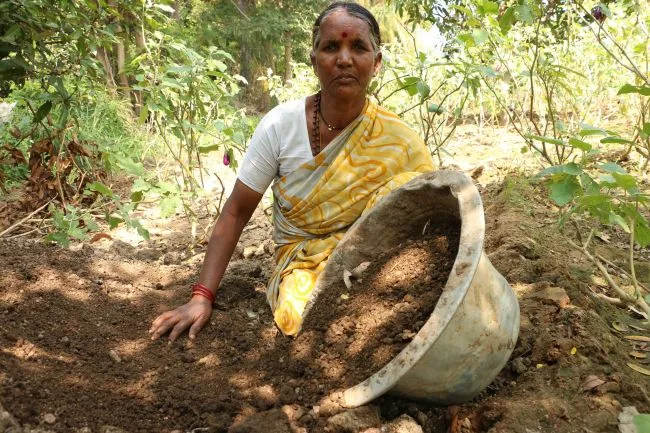
A big transformation appears to be underway in Indian agriculture as farmers increasingly adopt organic manure sources while the government simultaneously strengthens the country’s fertiliser security architecture amid global uncertainty. Data released by the Centre shows that farmers have purchased 11.17 lakh tonnes of organic manure during the ongoing Kharif 2026 season, compared to just 3.2 lakh tonnes during the corresponding period last year, marking a remarkable increase of nearly three-and-a-half times.
The development comes at a time when the global fertiliser market is witnessing considerable volatility due to geopolitical tensions in West Asia, disruptions in shipping routes and rising raw material costs. Despite these challenges, the Government of India has maintained that there is no shortage of fertilisers in the country and that adequate stocks have been created well ahead of the sowing season.
Addressing an inter-ministerial briefing on recent developments in West Asia, Aparna S. Sharma, Additional Secretary in the Ministry of Chemicals and Fertilisers, said the sharp increase in organic manure procurement indicates a gradual but noticeable shift in farming practices across the country. According to her, farmers are increasingly recognising the benefits of organic nutrient sources as part of a balanced approach to crop nutrition and soil health management.
“This substantial increase reflects a positive trend towards greater adoption of organic nutrient sources and a gradual shift in farmers’ preference from chemical fertilisers to organic alternatives,” Sharma said.
The government has attributed this change not only to increasing awareness among farmers but also to sustained efforts aimed at promoting sustainable agriculture and reducing excessive dependence on chemical fertilisers. Officials believe that balanced nutrient management will play a crucial role in improving soil fertility and ensuring long-term agricultural productivity.
At the same time, the Centre has moved aggressively to ensure that fertiliser availability remains unaffected despite turbulence in global markets.
According to the Department of Agriculture and Farmers Welfare, the fertiliser requirement for Kharif 2026 has been reassessed at 383.9 lakh tonnes, while available stocks currently stand at 197.56 lakh tonnes, representing more than 51 per cent of the total seasonal requirement. This stock position is significantly higher than the traditional benchmark of around 33 per cent that is generally maintained at the beginning of the kharif season.
Officials said the current buffer provides a strong safeguard against any disruption in international supply chains and ensures uninterrupted availability of fertilisers during the critical sowing period. Fertiliser purchases during the season have already reached 86.65 lakh tonnes, accounting for nearly 22.6 per cent of the projected requirement.
The comfortable stock position is the result of a broader strategy pursued by the Modi government over the past decade to make India increasingly self-reliant in fertiliser production.
Under the Atmanirbhar Bharat initiative, major investments have been made to expand domestic manufacturing capacity and reduce vulnerability to external shocks.
According to the Department of Fertilisers, six new urea plants have been established since 2014, adding 76.2 lakh metric tonnes of annual production capacity. Two additional urea projects with a combined capacity of 25.4 lakh metric tonnes are expected to begin production in the near future. These investments have significantly strengthened domestic production capabilities and reduced dependence on imports.
As a result, India’s urea production has increased from 225 lakh tonnes in 2014-15 to 306.67 lakh tonnes in 2024-25, after touching a record 314.07 lakh tonnes in 2023-24. Overall fertiliser production, including urea, DAP, NPK and SSP, has also risen sharply from 433.29 lakh tonnes in 2021 to a record 524.62 lakh tonnes in 2025.
Despite this progress, India continues to import substantial quantities of urea and diammonium phosphate (DAP) to meet domestic demand. The country imported more than 100 lakh tonnes of urea during the previous financial year, highlighting the importance of securing international supply chains even as domestic production expands.
The challenge has become particularly acute in recent months due to tensions in West Asia and concerns surrounding shipping routes through the Strait of Hormuz. Global prices of fertilisers and raw materials have witnessed significant fluctuations, prompting governments around the world to reassess supply security.
Indian officials, however, maintain that the country has successfully navigated these challenges through a combination of diplomatic engagement, alternative sourcing arrangements and close coordination among ministries. To oversee preparedness, the government constituted seven Empowered Groups of Secretaries and conducted multiple high-level reviews focused on fertiliser availability, imports, logistics and raw material procurement.
According to government data, since the onset of the recent crisis, India has secured 147.4 lakh tonnes of fertilisers through a combination of imports and domestic production. In June alone, more than 25 lakh tonnes of imported urea, DAP and NPK fertilisers arrived at Indian ports, while procurement of an additional 17 lakh tonnes of urea is currently underway.
One of the most significant aspects of the government’s fertiliser strategy has been insulating farmers from rising international prices. Although geopolitical tensions have driven up fertiliser costs globally, retail prices for Indian farmers have remained largely unchanged due to extensive government subsidies.
Currently, neem-coated urea continues to be sold at around Rs 242 to Rs 266.50 per 45-kg bag, while DAP remains available at Rs 1,350 per 50-kg bag. By comparison, officials noted that international market prices for urea exceed Rs 4,100 per bag, while DAP prices in global markets have crossed Rs 5,000 per bag in several regions.
To sustain this protection, the Union Budget for 2026-27 has allocated Rs 1.71 lakh crore towards fertiliser subsidies, one of the largest support mechanisms for the agricultural sector. The government has also stated that subsidy payments are being cleared in accordance with budgetary provisions to ensure uninterrupted supply.
Alongside ensuring fertiliser availability, the Centre has intensified efforts to promote environmentally sustainable farming. A nationwide awareness campaign conducted between March and May encouraged farmers to adopt balanced nutrient practices and utilise organic alternatives. The response has been significant.
Sales of Fortified Organic Manure (FOM), Liquid Fortified Organic Manure (LFOM) and Phosphate-Rich Organic Manure (PROM) increased seven-fold during FY26 compared to the previous year. Consumption of ammonium sulphate rose by nearly 60,000 tonnes, while green manuring activities were carried out across 1.84 lakh hectares with support from Krishi Vigyan Kendras.
Officials believe these developments indicate that Indian agriculture is moving towards a more balanced model that combines the benefits of modern fertiliser use with environmentally sustainable practices. The increase in organic manure purchases is being viewed not as a replacement for conventional fertilisers but as evidence of a growing emphasis on soil health and long-term productivity.
With fertiliser stocks exceeding half of the total kharif requirement, domestic production at record levels and farmers increasingly adopting organic nutrient sources, policymakers argue that India is better prepared than ever before to withstand global uncertainties.
At a time when many countries continue to grapple with supply disruptions and rising costs, India is attempting to build a model that combines self-reliance, affordability and sustainability while ensuring that farmers remain protected from external shocks.