For most of the world, a war between the United States and Iran is viewed through the lens of missiles, oil prices, naval deployments and geopolitics. Yet the most devastating consequence may not be felt on the battlefield. It may be felt in farms, grain markets and dinner tables across the world.
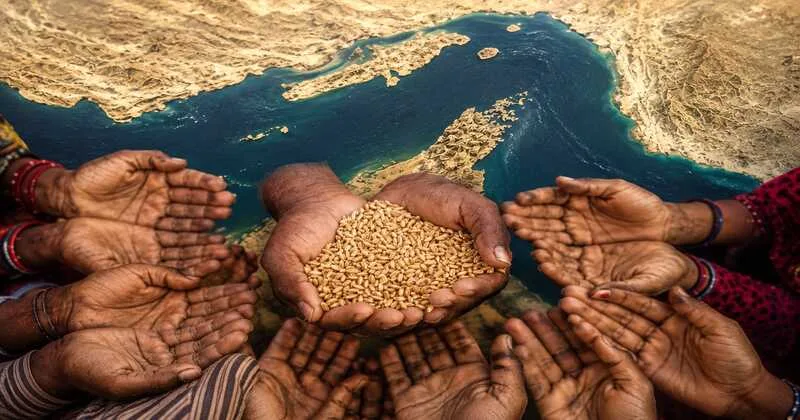
The Strait of Hormuz, a narrow maritime passage linking the Persian Gulf to the Arabian Sea, has emerged as the critical fault line. Any prolonged military confrontation involving the US and Iran risks disrupting traffic through this chokepoint. The result would not merely be an energy shock. It would be a food shock of historic proportions.
According to assessments cited by food security experts, roughly 20-30 per cent of global fertiliser trade passes through Hormuz. The strait also carries around 20 per cent of global LNG shipments and a substantial share of internationally traded oil, both indispensable to modern fertiliser production.
The uncomfortable reality is that the US-Iran confrontation does not end in the Gulf. Its consequences travel directly into agricultural fields from Punjab to Brazil and from Egypt to Nigeria.
Hormuz: The world’s hidden food artery
Most governments treat food security as a matter of grain reserves and agricultural subsidies. However, the modern food system depends on something much more basic than nitrogen fertiliser.
The Gulf region occupies a central place in this system. Iran, Qatar, Saudi Arabia and other Gulf producers are among the world’s major exporters of urea, ammonia and related fertiliser inputs. Around one-third of global seaborne fertiliser trade moves through Hormuz, making it one of the most important agricultural supply routes on Earth.
🇺🇸HUGE: President Trump’s deal ensures NOBODY can ever close the Strait of Hormuz again. Iran must stop funding terrorists or face consequences.
Oil prices set to plummet, gas will drop, shipping will surge!
Watters: “We know exactly where the mines are… there is a mechanism… pic.twitter.com/3VeMGmj9iw
— And We Know©🇺🇸 (@andweknow) June 16, 2026
A wheat farmer in Punjab, a maize grower in Bihar or a corn producer in Iowa all depend on nitrogen-based fertilisers. Producing one tonne of grain typically requires roughly 80-100 kilograms of nitrogen fertiliser, much of it in the form of urea.
This dependence creates a dangerous vulnerability. Iran possesses some of the world’s largest natural gas reserves, while Qatar and Iran jointly control the massive South Pars/North Dome gas field. Since natural gas is the principal feedstock for ammonia and urea production, any military disruption in the Gulf immediately threatens fertiliser availability. The consequence is not a gradual adjustment. It is a sudden shock.
The fertiliser collapse scenario
The first stage of the crisis begins with natural gas and ammonia. About 70 per cent of global ammonia production relies on natural gas. If Gulf shipping becomes a war-risk zone, insurance premiums surge, shipping companies withdraw vessels, and fertiliser exports become difficult or impossible. Even without direct attacks on production facilities, supply chains begin to fracture.
A real-world precedent already exists. In August 2022, the closure of a single fertiliser facility in the United Kingdom, CF Fertilisers, contributed to a five per cent reduction in global ammonia production. Analysts cited in Vijay Sardana’s assessment argue that a Hormuz conflict could simultaneously remove the equivalent output of fifteen such plants.
The second stage is even more severe than declining fertiliser application. Agronomic studies show that the first growing season without adequate nitrogen fertiliser can reduce yields of wheat, rice and maize by 40-50 per cent. If soil nutrient depletion continues into a second season, losses can reach 60-70 per cent.
Egypt offers a warning. During disruptions linked to the 2023 Red Sea crisis, fertiliser shipments faced delays of approximately 30 days. Farmers in the Nile Delta reportedly applied only half the recommended quantity of urea, contributing to a 25 per cent decline in wheat yields and forcing Cairo to spend an additional US$1 billion on grain imports.
The implications are enormous because Hormuz handles far larger volumes than the Red Sea fertiliser trade. Recent assessments suggest the Gulf accounts for roughly 43 per cent of seaborne urea exports and more than a quarter of global ammonia exports.
When logistics become a weapon
The crisis is not limited to production. Transport itself becomes a major problem. A typical cargo vessel carries between 40,000 and 60,000 tonnes of urea. Fertiliser is heavy, dusty and cannot be economically airlifted. If Hormuz becomes inaccessible, alternative routes must be used.
One option is to sail around the Cape of Good Hope. For shipments from the Gulf to Europe, this diversion adds approximately 10-12 days and 3,500 nautical miles. Fuel costs rise by around 30 per cent. Additional fuel requirements also reduce cargo-carrying capacity.
The Strait of Hormuz handles a major share of global #fertilizer exports—and recent disruptions have already pushed urea prices up 80% since February.
The latest April release of our Commodity Markets Outlook explains the ripple effects on fertilizers: https://t.co/XFHOfRCkFk pic.twitter.com/HPbopHvYJs
— World Bank Data (@worldbankdata) June 15, 2026
History again provides a warning. Following tanker attacks near Fujairah in 2019, insurance costs at Dubai’s Jebel Ali Port reportedly tripled. Shipping lines diverted cargo through Oman and transported it overland, adding roughly US$200 per tonne in logistics expenses.
Fertiliser faces another challenge, moisture. Urea absorbs humidity from the air. Long tropical voyages can cause it to harden into concrete-like blocks that require mechanical crushing before application. Many ports in Africa and South Asia lack the equipment needed to process damaged shipments. Thus, even fertiliser that physically arrives may be unusable. The result is a cascading disruption in which shortages, transport delays and higher costs reinforce one another.
From higher prices to hunger
The final stage of the crisis unfolds in households. The first victims are often not those who completely lose access to food. They are families forced to downgrade their diets.
As food prices rise, poorer households substitute protein, vegetables and nutrient-rich foods with cheaper carbohydrates such as rice, bread and cooking oil. This creates what development experts describe as “hidden hunger”, micronutrient deficiencies that particularly affect children and pregnant women. The report cites estimates suggesting that a six-month fertiliser-driven food price shock could contribute to approximately 150,000 additional child deaths worldwide from malnutrition-related causes.
💥 The Food Crisis Has Reached A Historic Breaking Point…
This grain feeds over 3.5 billion people… And the price is up 20% in one month.
The last time this happened, a major recession crippled the economy… pic.twitter.com/9ZRIPHatrH
— The Economic Ninja (@economyninja) June 15, 2026
Nigeria illustrates the danger. The country imports roughly 70 per cent of its urea requirements from the Gulf while also depending heavily on imported wheat. A Hormuz disruption combined with existing global grain pressures could double food import costs and place immense pressure on foreign exchange reserves.
Sri Lanka’s 2021 fertiliser ban offers another lesson. Rice yields reportedly fell by 40 per cent within six months, tea production dropped 18 per cent, and the broader economic crisis intensified dramatically. The World Food Programme subsequently warned of acute food insecurity affecting millions. According to projections cited in the Hormuz assessment, an extended closure could push an additional 45 million people into emergency hunger conditions.
Recent UN and FAO assessments similarly warn that fertiliser disruptions through Hormuz threaten vulnerable countries across Africa and South Asia. Around 1.5 to 3 million tonnes of fertiliser trade per month have already faced delays during recent disruptions, while fertiliser prices have risen sharply in major agricultural markets.
The Unequal Burden: Why the global South suffers most
Not all countries would suffer equally. Wealthier nations possess strategic reserves, stronger currencies and the ability to subsidise farmers. The European Union, for example, maintains intervention grain stocks and has previously approved large fertiliser support packages. Rich countries can outbid poorer nations in global markets when supplies tighten.
Poorer countries cannot. Sub-Saharan Africa already applies an average of only 12 kilograms of fertiliser per hectare compared with around 120 kilograms in Europe. Any major price increase pushes fertiliser entirely beyond the reach of millions of smallholders. This creates a vicious cycle. Lower fertiliser use reduces harvests. Smaller harvests raise food prices. Higher prices deepen poverty and hunger.
In economic terms, food demand is relatively inelastic. People cannot stop eating. Therefore, when supplies shrink, prices rise until poorer consumers are effectively excluded from the market. The market clears, but at a terrible human cost.
The Real cost of a US-Iran war
The dominant discussion surrounding a US-Iran confrontation focuses on oil. That is a mistake. The greater long-term threat lies in fertiliser, food production and agricultural resilience.
The evidence presented in the Hormuz assessment is stark. Fertiliser prices could rise by 300-500 per cent within months. First-year grain yield losses could reach 35-50 per cent in severely affected regions. Acute hunger could increase by 45-60 million people. Shipping costs would rise sharply while delivery times lengthen.
Whether every projection materialises is ultimately uncertain. But the central warning is clear that modern agriculture rests upon fragile supply chains linking natural gas, fertiliser and food. The Strait of Hormuz is one of the most important links in that chain.
If Washington and Tehran allow military confrontation to close that artery, the world may discover that the true cost of war is measured not only in missiles fired or ships sunk, but in harvests lost, prices doubled, and millions pushed closer to hunger. The battlefield may be in the Gulf. The casualties could be spread across the world’s farms and food markets.