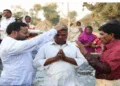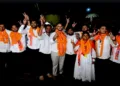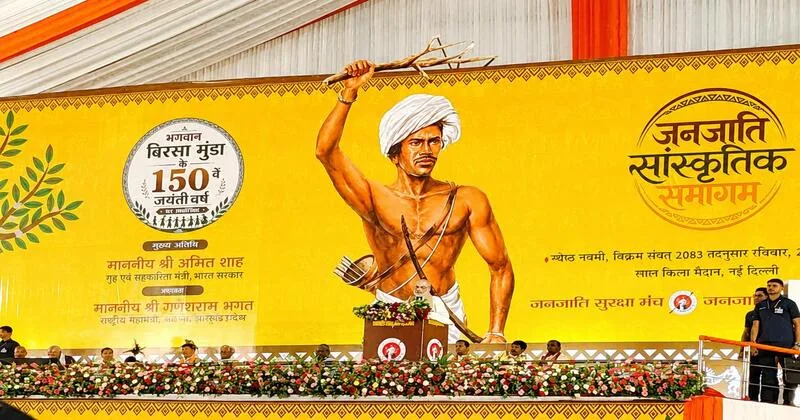
In India we have made several divisions based on caste, class, tribes and others. On one hand, we call ourselves Bharatiya with one identity. On the other, we try to denote ourselves from the caste or class or religion or linguistic or regional background that we belong to. As an academician and researcher in Sociology, this often, concerned me that which can be a greater identity, being a Bharatiya or being a person from a particular caste in a particular village belonging to a particular community and others. On May 24, 2026, I got the opportunity to share a national platform with more than 1.5 lakh people coming from 500 different janajatiya communities in Lal Quila, New Delhi. This opportunity made me truly believe that no identity is greater than the identity of your motherland.
The colonial dilemma of identity
For many, the question was, why I was over there? The inherent curiosity was to understand what my purpose was because I do not belong to any janajatiya community according to the definition and provisions given by the Constitution in its 5th and 6th Schedules, and Article 342 Schedule. Herein lies the biggest controversy! Who is a janajati? Can jajanjati be used synonymously as the word tribe? If janajati and tribe both mean the same, then why cannot I belong to tribe? As a non-Tribal person, this definition is troublesome to me! If we go by the basic definition or meaning of ‘janajati’ or the ‘tribe’ then all of us should belong to this group. There should not have been the segregation. Unfortunately, this segregation was done intentionally and in a very meticulous way so as to divide Bharat’s inherent identity, which made it easy, to rule. It is even more depressing to know that the definition of tribe followed in India is still the same definition which has been given by the European officials.
Deconstructing the exotic myth
A similar way to affect this identity and unitedness was being carried out by Christian missionaries and Islamic groups as well by introducing the path of conversion. At the first instance, European officials segregated the people belong to ‘janajatiya’ communities as ‘exotic’, denoting them as ‘white man’s burden’ and ‘primitive’ beings who never belonged to the Hindu social structure. Thus, various scholars even today raise the question, whether ‘janajatiya’ communities were Hindus ever. This question arises from the vague perception that nature worship is not Hinduism. It is rather depressing to listen to many such scholars and well-read individuals who claim that ‘janajatiya’ communities believe in animism and nature worship and thus, they cannot be brought in the Hindu social structure. The question is do we even know that animism or nature worship was the beginning of Sanatan Dharm in Bharat?
There is a gamut of literature which has repeatedly proven that animism has been the seed to Sanatan Dharma. Although, this literature is usually not available in popular University or College course material. Janajatiya Samagam 2026 was one such platform which made me realise that Sanatan Dharma is not just about practicing animism or not, or about following rituals or not, it is about the larger identity which binds all of us culturally and ideationally. The strength of Bharat lies in this unitedness in cultural diversity construed through religious awakening. As Sri Aurobindo Ghosh stated religious nationalism is the ultimate path to freedom of Bharat. Janajatiya Samagam 2026 was a live example of the efforts and struggles of such people who have spent their lives fighting for maintain their cultural roots.
The threat of cultural uprooting
Christian and Islamic conversion in Bharat has a long history. These conversions were mainly targeted on those communities who are gullible and can easily be moulded to thinking that majoritarian Hindus are exploitative and will not give them right place in society. Forced conversions have also taken place stating that conversion will provide better healthcare and education in the backward regions. The target was mostly the people belonging to the Scheduled Communities (SCs), STs and Other Backward Classes (OBCs). In due course of this conversion, such people are also culturally uprooted from their traditional rules and ritual practices. Along with conversion, there are certain restrictions which are endowed so that it is easy to uproot such communities from their identical bases. Vanavasi Kalyan Ashrama and Janajati Surkasha Manch have been relentlessly fighting for the rights of the people belonging to ‘janajatiya’ communities to preserve their identity, tradition and cultural rootedness.
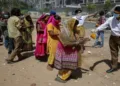
Leaders like Kartik Oraon, Arvind Netam, Champai Soren, Babulal Marandi and others have been fighting to stop religious conversion among the ‘janajatiya’ communities since 1960s. This is high time, when it needs to be decided, why will a person belonging to a ‘janajatiya’ community get benefits if he or she accepts Christian and Muslim conversion. The question does not limit itself only to conversion. The larger question is the deliberate attempt to uproot the communities from their traditional and cultural identity. The beauty of Bharat lies in the unitedness amidst the cultural diversity. The Janajati Samagam 2026 could prove that even if Garos, Khasis, Bodos, Tudus, Dimasas, Nagas, and others are different from each other in their livelihood practices, rituals and beliefs, still, they are all connected to one identity and purpose of being a Bharatiya. On May 24, the gathering of more than 1.5 lakh people belonging to different ‘janajatiya’ community arriving from different parts of the country by rail, road, bus and other forms of transport, showed the determination to keep this identity intact.
The call for policy reform and redefinition
The declaration of delisting of such janajatiya communities from ST category which have completely converted, removal of benefits for such communities and individuals who have converted and that UCC (Uniform Civil Code) will not be implemented for janajatiya communities, is a welcome move! However, there is also the need for complete revision of such texts and reports which still carry the colonial definition of tribe. Each and every janajatiya community has their own history, traditional rules and regulations, cultural practices, kinship patterns, marriage and family regulations. All these communities should be read and understood through their individual history. All of them cannot be generalized into a common definition which will always indicate that people from janajatiya communities are ‘uneducated’, ‘underdeveloped’, ‘forest-dwellers’ so on and so forth. There are many such janajatiya communities who have come in the mainstream, they have undergone education, they have moved to the cities and also work in various organisations. Such janajatiya communities should be redefined based on their customs and cultural practices.
Janajatiya Samagam 2026 has been the result of hardship of many people who have been dedicated towards the cause of maintaining their cultural identity for six decades and more. The colours of Unity in diversity showed that our inner will to bring a change can be successful only when we fight our wars together. Thus Janajati Samagam 2026 was a platform which taught me the essence of being Bharatiya and maintaining our integral identity by not losing our cultural roots.