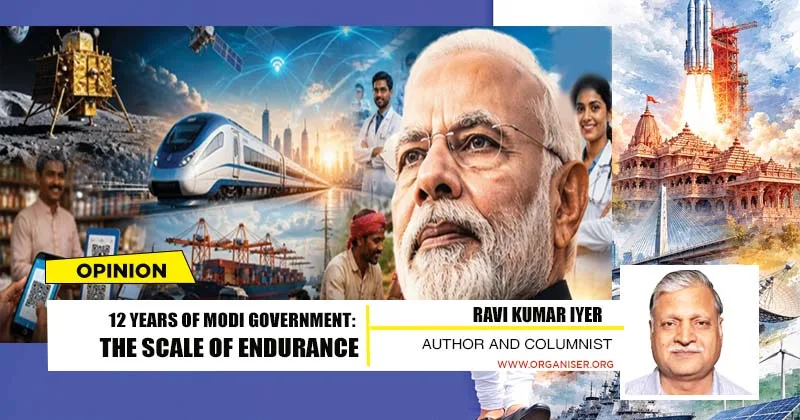
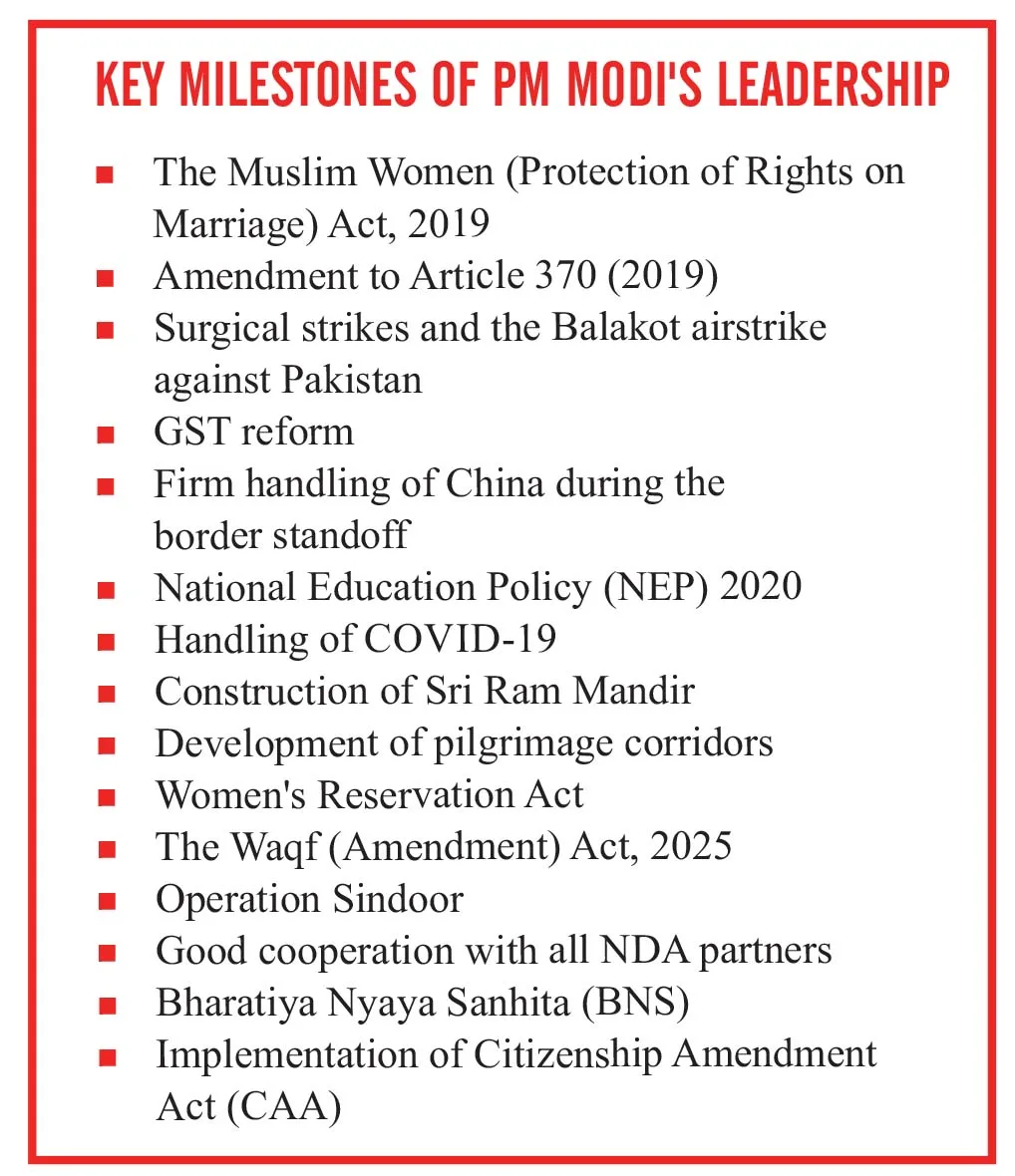
June 10, 2026, marks a watershed moment in the history of global democracy. Completing exactly 4,399 consecutive days in office, Prime Minister of Bharat Narendra Modi has officially become the longest-continuously serving elected Prime Minister in the nation’s history. In doing so, he surpasses a six-decade-old record held by Bharat’s foundational Prime Minister Jawaharlal Nehru, whose post-independence elected streak concluded at 4,398 days.
While political longevity is often calculated in simple mathematical tallies, evaluating leadership durability requires examining it alongside a critical geopolitical variable: the scale of the populace. When longevity is weighed against demographic weight, a stark reality emerges. Narendra Modi stands as the longest-serving democratically elected head of government of a large country anywhere in the world today.
Political history is replete with long-serving leaders, but context matters deeply. Lee Kuan Yew (Singapore) governed seamlessly for 31 consecutive years (1959–1990) as Prime Minister. Yet, during his foundational years, Singapore’s population hovered between 1.5 million and 3 million people—essentially a highly manageable, concentrated city-state. Sheikh Hasina (Bangladesh) commanded the legislative architecture of her country for over 20 cumulative years (including an uninterrupted run from 2009 until her resignation in August 2024). While navigating a highly complex country of 170 million, the administrative and geographic perimeter remained localised compared to a continental entity. Paul Biya (Cameroon) has served as President of 3 crore population since November 6, 1982. While Cameroon holds elections, his longevity in power is often described by political scientists as autocratic rather than strictly representative. Teodoro Obiang Nguema Mbasogo (Equatorial Guinea) has been the President since August 1979 for a small country of 18 lakhs.
To govern a highly centralised, ethnically homogeneous, or geographically compact state for decades is an exercise in elite administrative management. To do the same in a subcontinental nation of 1.46 billion people is an entirely different operational matrix.
The Math of Subcontinental Pluralism
Governing modern India is equivalent to administering the entire European Union, the United States, Russia, and South America combined — not just in raw numbers, but in sheer systemic friction. The Scale of present Indian Democratic Governance is a population of 1.46+ Billion with 960+ Million voters across 28 States and 8 UTs and 700+.
Active Political Parties which face continuous, 24/7 localised elections, unrestricted digital scrutiny, and deep pluralism.
Unlike single-party state models such as China under President Xi Jinping, whose tenure relies on an all-encompassing party apparatus, Bharat’s system is a hyper-competitive, round-the-clock electoral cauldron. Since 2014, the current administration has had to navigate:
1. Continuous Electoral Volatility: Bharat is in a state of perpetual election cycles. A premier must win not just national mandates (such as the historic consecutive terms of 2014, 2019, and 2024), but also manage high-stakes state assembly elections occurring multiple times every single year.
2. Hyper-Fragmented Political Landscapes: Moving past the one-party dominance of the early post-independence era, modern India features over 700 active political parties, deep-seated regional assertions, and complex coalition arithmetic.
3. The Digital Panopticon: Unlike the legacy leaders of the twentieth century who governed without private television networks or instant digital communication, contemporary governance unfolds under the immediate, unfiltered gaze of over 800 million smartphone users and globalised social
media ecosystems.
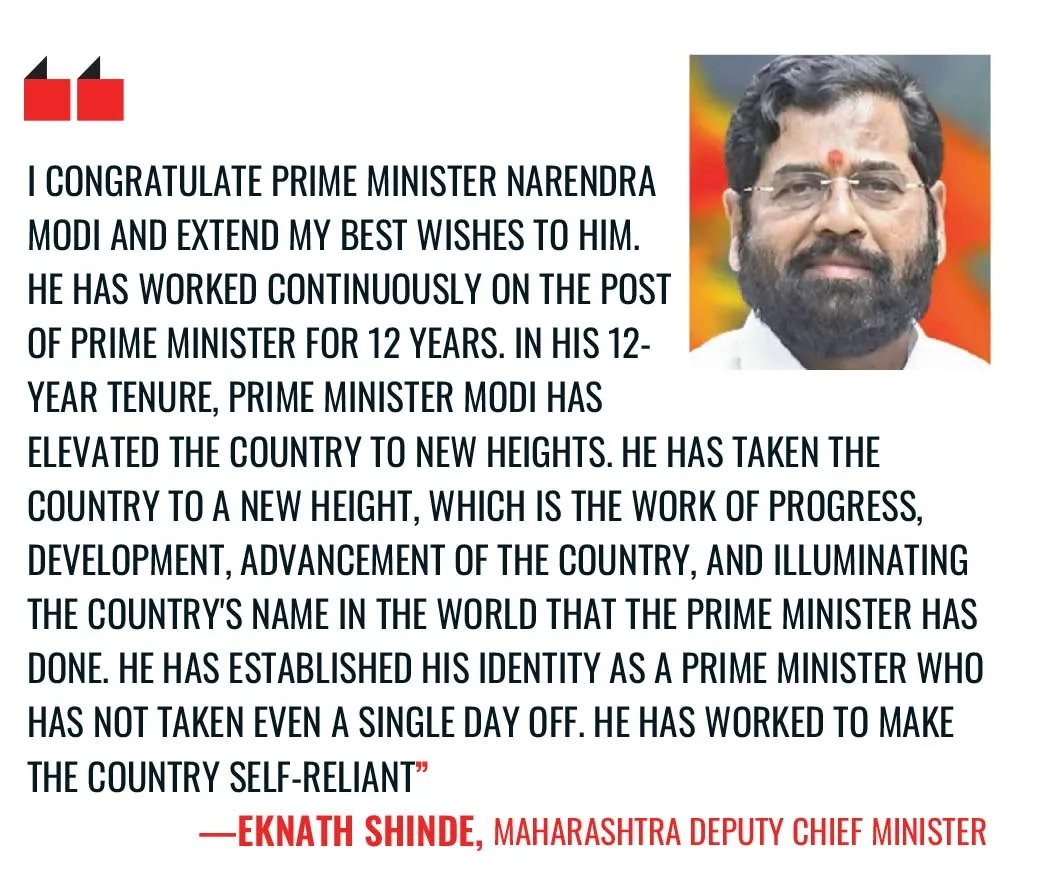
Shift from Survival to Delivery
What makes this 12-year-and-15-day milestone textually significant to political scientists is that the survival of the executive has not resulted in policy paralysis. Frequently, long-serving leaders often become desperate to just hold onto power. This desperation typically causes them to ruin the economy, impose emergency, suspend civil rights, imprison opposition leaders and attack democratic institutions. However, Narendra Modi avoided that trap, maintaining a stable democracy while successfully passing major laws.
Over the last 4,399 days, Bharat has undergone a massive transformation through its Digital Public Infrastructure and targeted welfare, uplifting over 23 crore citizens from multidimensional poverty. Reforms like GST integrated the market, Direct Benefit Transfers reduced leakages, and Jan Dhan accounts brought half a billion unbanked citizens into the financial system. Globally, Prime Minister Modi championed the Global South by inducting 1.5 billion people of all the 55 member countries of the African Union into the G20 in Delhi and has received a record number of international awards.
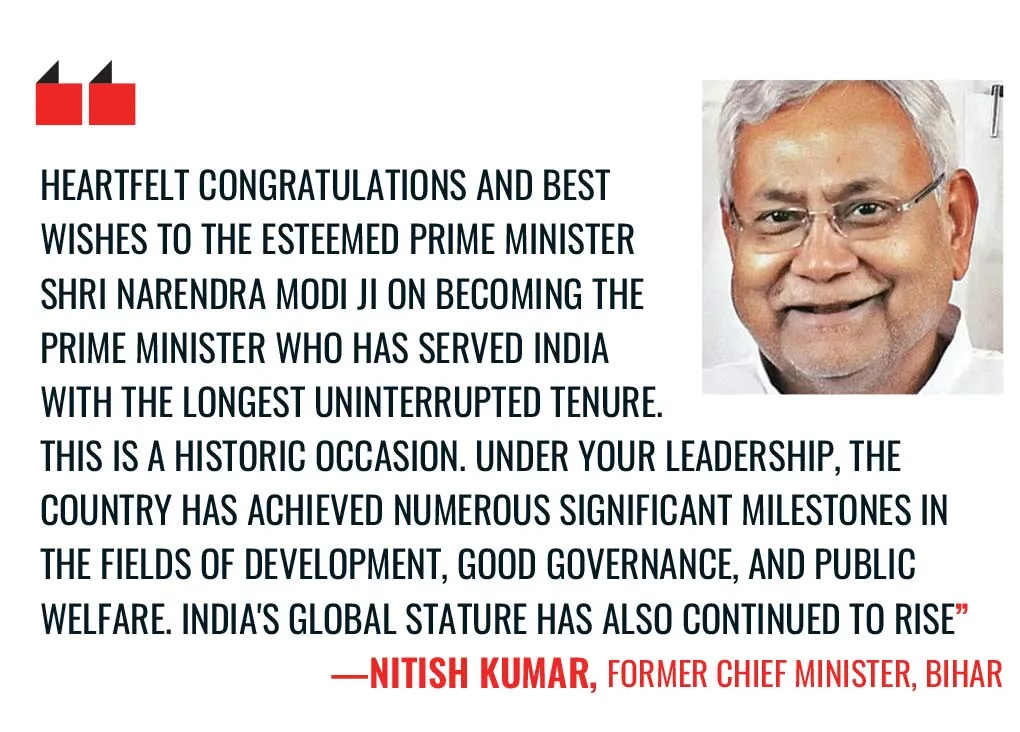
Every democracy features a natural shelf-life for its leadership; voter fatigue, anti-incumbency, and internal contradictions typically erode a leader’s political capital within a decade. As the National Democratic Alliance celebrates this milestone, the statistics serve as a reminder of an underlying truth: in the arena of global politics, surviving the democratic gauntlet of the world’s most populous nation for over twelve unbroken years is not merely a record of longevity. It is a testament to an unprecedented scale of sustained public trust.