Senior advocate and former Rajya Sabha MP Mahesh Jethmalani has demanded the formation of a Truth and Reconciliation Commission in West Bengal to investigate cases of political violence and crimes allegedly committed during the 15-year tenure of the Trinamool Congress (TMC) government.
In a strongly worded statement, Jethmalani argued that Bengal cannot move forward without first uncovering the truth behind numerous incidents of political violence that have scarred the state over the years. He called for a full, public and time-bound inquiry into every major case and urged authorities to document the experiences of victims and ensure accountability.
“Start with Abhijit Sarkar”
Jethmalani said that the proposed commission should begin its work by examining the case of Abhijit Sarkar, a BJP worker who was killed during the violence that followed the 2021 West Bengal Assembly elections.
According to Jethmalani, Sarkar was “hunted and killed,” leaving his family devastated. He further alleged that Sarkar’s elderly mother was sexually abused and that his brother has had to wage a prolonged battle for justice.
He described the case as emblematic of the suffering endured by many victims of political violence in the state and argued that it deserves a thorough re-examination.
Revisit 2021 post-poll violence cases
Jethmalani also called for reopening the full record of the 2021 post-poll violence that erupted after the Assembly election results were announced.
Referring to judicial intervention in the matter, he noted that the Calcutta High Court had ordered a CBI investigation into serious allegations involving murder, rape and crimes against women arising from the violence.
According to him, many incidents from that period remain unresolved and require renewed scrutiny through an independent process focused on truth, accountability and justice.
My demand: West Bengal needs a Truth and Reconciliation Commission for every victim of political violence and crime under Trinamool Congress rule of 15 years.
A full, public, time-bound inquiry.
Start with Abhijit Sarkar – hunted, killed, his family broken, his old mother… https://t.co/5fntqdIke4 pic.twitter.com/j6SsswmIaT
— Mahesh Jethmalani (@JethmalaniM) June 14, 2026
Cites several high-profile cases
The former Rajya Sabha MP listed a number of incidents that he said should be investigated by the proposed commission.
Among them was the alleged assault on Shova Majumdar, the elderly mother of BJP worker Gopal Majumdar. Jethmalani said the case became one of the most widely discussed examples of alleged political intimidation in the state.
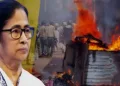
He also referred to the Birbhum violence, in which several people were burnt alive, describing it as one of the most horrific incidents witnessed in recent years.
The Sandeshkhali controversy also featured prominently in his statement. Jethmalani alleged that women in the area faced abuse and intimidation, and argued that all allegations connected to the episode should be thoroughly investigated.
In addition, he pointed to the Chopra flogging case, which drew nationwide attention after a video showing a man and a woman being publicly beaten went viral. Calling it an example of “medieval brutality,” he said such incidents should not be forgotten.
He further sought investigations into episodes of violence reported from Murshidabad and Bhangar, while maintaining that numerous other cases also deserve attention.
Allegations of political protection
Jethmalani alleged that political violence in West Bengal had been protected by those in power and normalised through administrative inaction.
Describing the incidents as examples of “political terror,” he claimed that many perpetrators enjoyed protection due to their political affiliations, while victims struggled to secure justice.
He argued that a dedicated commission could help establish a historical record of what transpired and provide a platform for victims and witnesses to share their experiences.
Jethmalani said the future government led by BJP leader Suvendu Adhikari should ensure that every case is documented and investigated.
He urged authorities to protect witnesses, reopen what he described as “buried files,” expose alleged political-criminal networks and prosecute those found responsible for crimes irrespective of political connections.
According to him, genuine reconciliation can only take place after the truth has been established and justice delivered.
“Bengal needs truth before reconciliation”
Concluding his remarks, Jethmalani asserted that West Bengal’s healing process cannot be built on silence or forgetting past events. Instead, he said, the state requires a transparent truth-seeking process that acknowledges victims’ suffering and ensures accountability.
“Bengal needs truth before reconciliation,” he said, adding that justice for the victims of political violence must begin without further delay.