Jagannath Shankarsheth and the early idea of Indian railways
June 13, 2026
  • Read Ecopy
  • Circulation
  • Advertise
  • Careers
  • About Us
  • Contact Us
Android AppiPhone AppArattai
Organiser
  • ‌
  • Bharat
    • Assam
    • Bihar
    • Chhattisgarh
    • Jharkhand
    • Maharashtra
    • View All States
  • World
    • Asia
    • Europe
    • North America
    • South America
    • Africa
    • Australia
  • Editorial
  • International
  • Opinion
  • RSS @ 100
  • More
    • Op Sindoor
    • Analysis
    • Sports
    • Defence
    • Politics
    • Business
    • Economy
    • Culture
    • Special Report
    • Sci & Tech
    • Entertainment
    • G20
    • Azadi Ka Amrit Mahotsav
    • Vocal4Local
    • Web Stories
    • Education
    • Employment
    • Books
    • Interviews
    • Travel
    • Law
    • Health
    • Obituary
  • Subscribe
    • Subscribe Print Edition
    • Subscribe Ecopy
    • Read Ecopy
  • ‌
  • Bharat
    • Assam
    • Bihar
    • Chhattisgarh
    • Jharkhand
    • Maharashtra
    • View All States
  • World
    • Asia
    • Europe
    • North America
    • South America
    • Africa
    • Australia
  • Editorial
  • International
  • Opinion
  • RSS @ 100
  • More
    • Op Sindoor
    • Analysis
    • Sports
    • Defence
    • Politics
    • Business
    • Economy
    • Culture
    • Special Report
    • Sci & Tech
    • Entertainment
    • G20
    • Azadi Ka Amrit Mahotsav
    • Vocal4Local
    • Web Stories
    • Education
    • Employment
    • Books
    • Interviews
    • Travel
    • Law
    • Health
    • Obituary
  • Subscribe
    • Subscribe Print Edition
    • Subscribe Ecopy
    • Read Ecopy
Organiser
  • Home
  • Bharat
  • World
  • Operation Sindoor
  • Editorial
  • Analysis
  • Opinion
  • Culture
  • Defence
  • International Edition
  • RSS @ 100
  • Magazine
  • Read Ecopy
Home Bharat

Jagannath Shankarsheth: The visionary who helped shape the early idea of railways in colonial India

Jagannath Shankarsheth, a visionary 19th-century Bombay philanthropist, was among the earliest Indian elites engaged in discussions around introducing railways in India. Alongside his civic and educational reforms, he played a key role in shaping the early dialogue that preceded India’s first railway line

WEBDESKWEBDESK
Jun 13, 2026, 10:30 pm IST
in Bharat
Follow on Google News
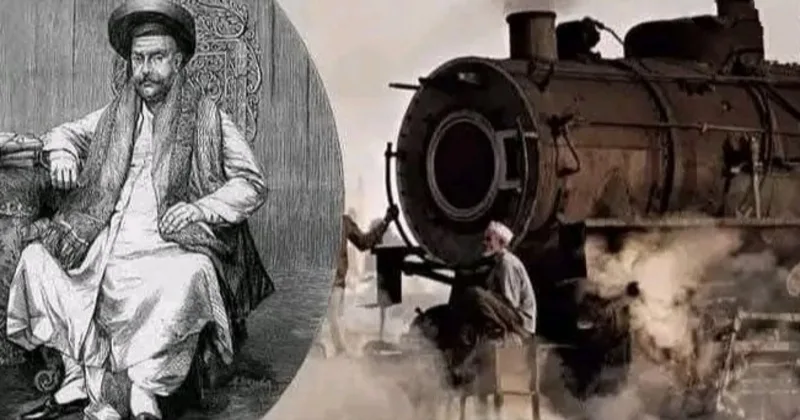
Jagannath Shankarsheth

Jagannath Shankarsheth

FacebookTwitterWhatsAppTelegramEmail

The history of Indian railways is often presented as a colonial project led entirely by the British East India Company. While the formal construction and expansion were carried out under colonial rule, this narrative often underplays the important role played by Indian visionaries, philanthropists, and merchants who supported, encouraged, and helped shape early discussions around modern infrastructure. Among them, one of the most prominent figures was Jagannath Shankarsheth, widely respected in 19th-century Bombay as a bridge between indigenous society and colonial administration.

भारत में ट्रेन लाने का श्रेय किसको प्राप्त है, अंग्रेज? बिलकुल नहीं, नाना जगन्नाथ शंकर सेठ वो पहले व्यक्ति है जिन्होंने इसके लिए पहल शुरू की थी

नाना स्वर्णकार परिवार में जन्मे थे और व्यवसाई घराना होने के कारण वे धन संपदा से काफी संपन्न भी थे

इंग्लैंड में जब ट्रेन पहली बार चली… pic.twitter.com/nKaNgdwuzm

— Vatsala Singh (@_vatsalasingh) June 7, 2026

A Builder of Institutions and Ideas

Jagannath Shankarsheth was not merely a wealthy merchant; he was a foundational force in shaping Bombay’s early civic and educational landscape. At a time when formal education was still limited and unevenly accessible, he invested heavily in establishing schools and promoting learning among Indians. His support for education extended beyond elite institutions; he actively encouraged broader access to knowledge systems that combined both traditional Indian learning and modern subjects introduced under British rule.

One of his most progressive contributions was his advocacy for girls’ education, which was a rare and forward-looking stance in the early 19th century. By supporting institutions that opened their doors to women, he helped plant early seeds of educational reform in urban India.

The Mercantile Mindset and Modern Infrastructure

Bombay in the early 1800s was emerging as a major commercial hub. Its wealthy merchant class, including figures like Jamsetjee Jejeebhoy, had a keen awareness of global developments, especially those emerging from Britain’s Industrial Revolution.

Railways, which were rapidly transforming transportation in England, naturally became a subject of interest in Bombay’s business circles. Merchants recognised the potential of such a system, not merely as a colonial instrument, but as a revolutionary infrastructure that could enhance trade, reduce transport costs, and connect distant markets more efficiently.

Within this context, Jagannath Shankarsheth’s significance lies in his openness to innovation and his engagement with British administrators on matters of public utility and urban development. He represented a class of Indian stakeholders who were not passive observers of colonial modernisation but active participants in discussions about how such advancements could be adapted to Indian conditions.

It is important to understand that the formal decision to build railways in India was ultimately taken within the colonial administrative framework, driven by strategic and economic considerations. Railways were seen as a means to:
-Improve administrative control over vast territories
-Facilitate movement of goods and raw materials
-Strengthen military logistics

Also Read: Gujarat’s Bharuch Jama Masjid at centre of fresh row after Jain murtis found in 700 year sealed basement

The first operational railway line in India, between Bombay and Thane in 1853, was the result of colonial engineering, capital investment, and administrative planning. At the same time, early discussions around the possibility of railway connectivity in Bombay were supported and encouraged by sections of the Indian mercantile elite. Figures such as Jagannath Shankarsheth, along with contemporaries like Jamsetjee Jejeebhoy, engaged with British officials on ideas of modern infrastructure, reflecting an emerging Indian interest in large-scale technological development and urban connectivity.

While it is historically inaccurate to credit any single Indian individual as the “founder” or sole initiator of Indian railways, it is equally important not to erase the contributions of early Indian thinkers and leaders who engaged with the idea of modern infrastructure long before it became a fully realised system.

Jagannath Shankarsheth’s legacy should be understood in a broader and more meaningful way:
-As a patron of education who invested in long-term social transformation
-As a civic leader who contributed to the modernisation of Bombay
-As a forward-thinking merchant who engaged with global technological change
-As a mediator between Indian society and colonial governance
His life reflects the emergence of a new Indian urban consciousness, one that sought to engage with modernity without abandoning cultural roots.

Jagannath Shankarsheth stands as a reminder that India’s journey into modern infrastructure and institutional development was not a one-sided imposition, but a complex process involving dialogue, adaptation, and participation from Indian leaders themselves. His greatest contribution may not lie in a single invention or project, but in helping cultivate an environment in Bombay where education, modernisation, and civic development could take root, an influence that continues to echo in the city’s identity today.


 

Topics: Indian PhilanthropyRailway History IndiaColonial InfrastructureJagannath ShankarshethIndian Railways OriginMumbai HistoryBombay Presidency
ShareTweetSendShareSend
✮ Subscribe Organiser YouTube Channel. ✮
✮ Join Organiser's WhatsApp channel for Nationalist views beyond the news. ✮
Previous News

J&K: India fast-tracks Kirthai II hydropower project on Chenab; A startegic move against Pakistan post IWT abeyance

Next News

Karnataka | Rs.108 Crore Government Land Scam: Criminal action approved against 15 officials after five-month delay

Related News

No Content Available
Load More

Latest News

Karnataka | Rs.108 Crore Government Land Scam: Criminal action approved against 15 officials after five-month delay

Jagannath Shankarsheth

Jagannath Shankarsheth: The visionary who helped shape the early idea of railways in colonial India

J&K: India fast-tracks Kirthai II hydropower project on Chenab; A startegic move against Pakistan post IWT abeyance

Shri Gireesh, Dr Mohan Bhagwat, Shri PV Prasad Bahu at Thrissur on June 13.

Bharat must prepare to guide the world through the principles of Sanatan Dharma – RSS Sarsanghchalak Dr Mohan Bhagwat

CJP is seen as a coordinated digital phenomenon allegedly exploiting youth unrest to destabilise Bharat’s democratic institutions

CJP Exposed: How leftist radicals & foreign media are trying to destabilise Bharat under the guise of youth activism

Karnataka: Maoist activities fuelled by foreign funding; FIR against US-based missionary organisation & six individuals

Slovakia President Peter Pellegrini meets Prime Minister Narendra Modi at the India AI Impact Summit 2026(File Photo)

PM Modi visits Slovakia: Strategic significance of the Central European nation to India’s defence, trade & energy goals

Akhil Bharatiya Grahak Panchayat wasged protest at Jantar Mantar demanding transparency in wage prices

No transparency in MRP means no protection of consumer interests: Jayant Kathiriya of Akhil Bharatiya Grahak Panchayat

Air Force AN-32 aircraft crashes in Jorhat, 5 officers die in line of duty

Air Force AN-32 aircraft crashes in Jorhat; 3 officers and 2 Agniveervayu made supreme sacrifices in the line of duty

Foundation stone laying ceremony for the natural calamity victims by SevaBharati

Keralam: SevaBharati begins housing project for homeless victims of the Wayanad landslide

Load More
  • Privacy
  • Terms
  • Cookie Policy
  • Refund and Cancellation
  • Delivery and Shipping

© Bharat Prakashan (Delhi) Limited.
Tech-enabled by Ananthapuri Technologies

  • Home
  • Search Organiser
  • Bharat
    • Assam
    • Bihar
    • Chhattisgarh
    • Jharkhand
    • Maharashtra
    • View All States
  • World
    • Asia
    • Africa
    • North America
    • South America
    • Europe
    • Australia
  • Editorial
  • Operation Sindoor
  • Opinion
  • Analysis
  • Defence
  • Culture
  • Sports
  • Business
  • RSS @ 100
  • Entertainment
  • More ..
    • Sci & Tech
    • Vocal4Local
    • Special Report
    • Education
    • Employment
    • Books
    • Interviews
    • Travel
    • Health
    • Politics
    • Law
    • Economy
    • Obituary
  • Subscribe Magazine
  • Read Ecopy
  • Advertise
  • Circulation
  • Careers
  • About Us
  • Contact Us
  • Policies & Terms
    • Privacy Policy
    • Cookie Policy
    • Refund and Cancellation
    • Terms of Use

© Bharat Prakashan (Delhi) Limited.
Tech-enabled by Ananthapuri Technologies