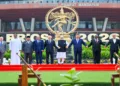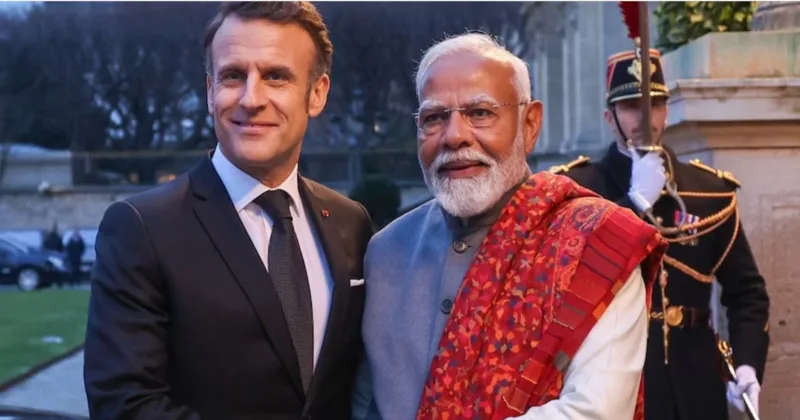
The diplomatic mission kicks off in the coastal city of Nice from June 14 to 16, where Prime Minister Modi and President Macron will jointly cut the ribbon for Bharat Innovates 2026. Coinciding with the celebrated India-France Year of Innovation, this landmark platform is intentionally structured to act as a bridge connecting India’s high-growth engineering talent with European venture capital funds, enterprise buyers, and elite research universities.
Unlike standard trade delegations of the past, the cohort features over 120 curated Indian deeptech startups spanning 13 highly critical sectors. The startup lineup underscores how radically the Indian ecosystem has matured past consumer internet apps and basic software services:
SpaceTech & Aerospace: Leading the pack are private space pioneers like Agnikul Cosmos—celebrated for developing small satellite launch vehicles powered by fully 3D-printed rocket engines—alongside Dhruva Space and GalaxEye, proving India’s private space industry can go toe-to-toe with global actors.
Semiconductors & Hardware: As India pushes for silicon sovereignty, hardware startups like Agnit Semiconductors (pioneering GaN RF tech) and BigEndian Semiconductors (developing localized AI vision chips) will showcase India’s native microelectronics capabilities.
Next-Gen AI & Quantum: The delegation includes foundation-model builders like Sarvam AI, enterprise-focused Avataar.ai, medical diagnostic disruptor Qure.ai, as well as quantum encryption firms QpiAI and QNu Labs.
Taking the High Table as AI Country Partner at VivaTech
Following his engagements at the G7 Summit, Prime Minister Modi will arrive in Paris on June 18 for VivaTech 2026, Europe’s largest technology festival, hosted at the Paris Expo Porte de Versailles. Operating under the civilizational theme “Tech for Humanity,” India has been designated as the event’s official AI Country Partner, erecting one of the largest national pavilions in VivaTech history.
The partnership comes at a critical geopolitical juncture. While Western nations focus heavily on enterprise profitability and defensive alignment, India intends to pitch its successful population-scale model. Prime Minister Modi is slated to formally present India’s MANAV framework for AI governance—a policy blueprint that balances rapid technological deployment with ethical constraints, safety guardrails, and democratic digital inclusion.
The Indian pavilion will place local innovators in direct conversation with global tech titans. The event’s speaker roster features industry luminaries including Nvidia CEO Jensen Huang, Meta Chief AI Scientist Yann LeCun, OpenAI CFO Sarah Friar, and Mistral AI co-founder Arthur Mensch.
The Symbiosis of Euro-Indian Tech Core
For the European ecosystem, plagued by demographic contractions and capital execution bottlenecks, India represents a vital lifeline: an unparalleled demographic dividend of highly skilled developers, an massive domestic data pool, and an insatiable market for advanced infrastructure.
For New Delhi, deepening ties through the India-France Special Global Strategic Partnership yields immediate access to advanced European research labs, institutional capital pools, and strategic component manufacturing agreements. By embedding Indian startups directly into the foundational layers of global AI and deeptech, PM Modi’s visit is actively rewriting the geopolitical architecture of 21st-century technology.