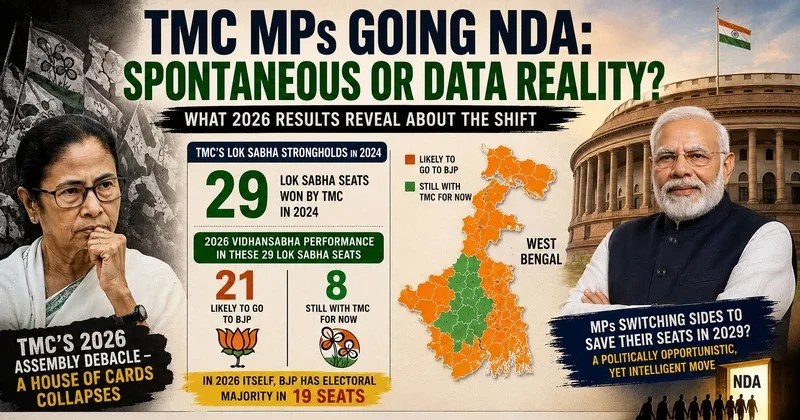
Post TMC’s poll debacle in the 2026 West Bengal Assembly, there’s no surprise in watching the TMC collapse like a house of cards. The outfit called TMC appeared as a political party, less than a symbiotic cohabitation of a very large community that collaborated and concerted together for defalcation of public money. Heaping all the blame thereof solely upon the TMC would be prudent, but the Constitution of India, too, has not kept any clause to disqualify such syndicates from being a political party.
While the TMC community collapsed almost within a fortnight after the poll defeat, the anti-BJP sect of the Indian political sphere held the BJP responsible for it, hypothesising that the BJP was hooking the MLAs & MPs towards the NDA or the BJP itself. Such a hypothesis was preceded by a statement of the West Bengal BJP State President, Samik Bhattacharya, who said that the BJP might consider opening the door to the “Bhalo Trinamool” (i.e. good TMC). Such a statement drew a lot of flak as “Bhalo Trinamool” appeared to be an oxymoron to a very large populace in general. The hypothesis that the BJP itself was pulling the TMC MPs towards the NDA still deserved a test from the perspective of the electoral performance of the parties in various seats in the 2026 Vidhansabha Election, vis-à-vis the hold of the TMC on various Loksabha seats of West Bengal in the 2024 Loksabha Election.
Out of the 42 Lok Sabha seats of West Bengal, the following seats were represented by the TMC in the 18th Lok Sabha until the recent fall of the TMC.
1) Birbhum
2) Bolpur
3) Asansol
4) Bardhaman Durgapur
5) Bardhaman Purba
6) Bankura
7) Medinipur
8) Jhargram
9) Ghatal
10) Arambagh
11) Hooghly
12) Sreerampur
13) Uluberia
14) Howrah
15) Kolkata Uttar
16) Kolkata Dakshin
17) Jadavpur
18) Diamondharbour
19) Mathurapur
20) Jaynagar
21) Basirhat
22) Barasat
23) Dumdum
24) Barrackpore
25) Krishnanagar
26) Murshidabad
27) Baharampur
28) Jangipur
29) Coochbehar
Let’s have a look at the Vidhansabha-wise performance break-up of both the BJP and the TMC in various Loksabha seats (won by the TMC in the 2024 Loksabha) in the 2026 Vidhansabha Election in the table as given below.
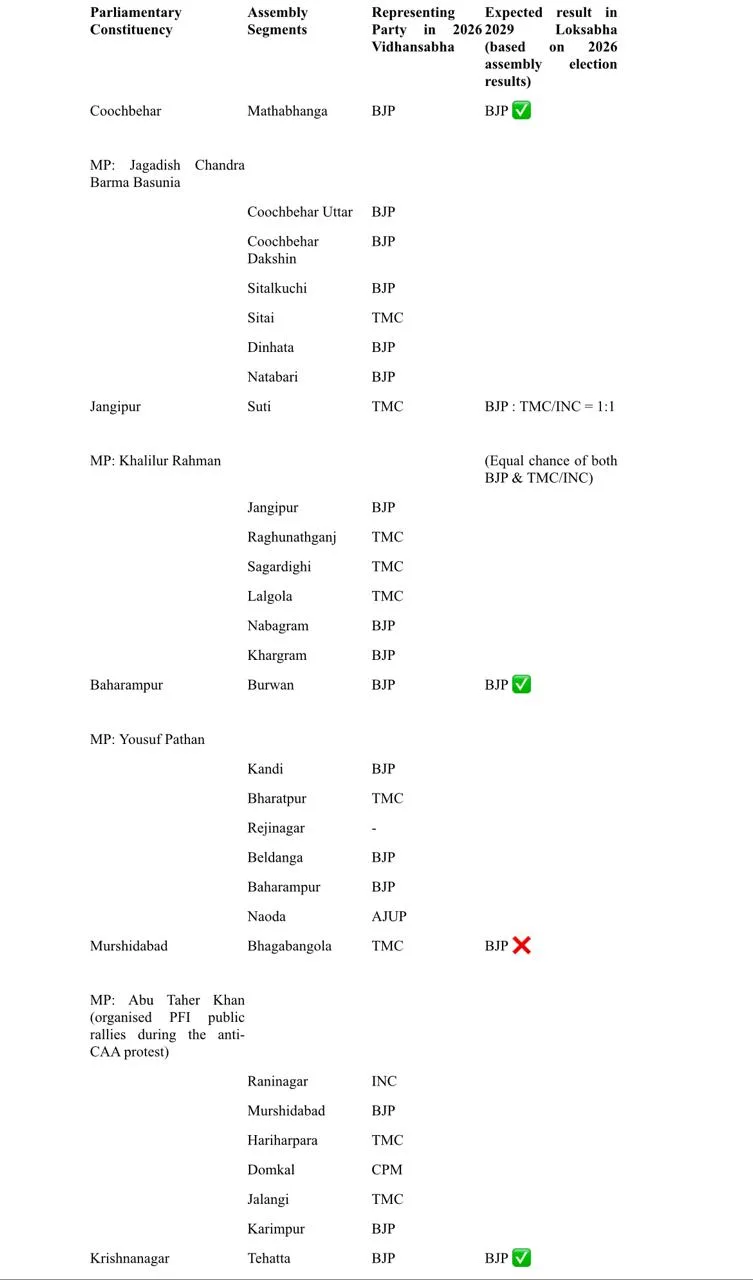
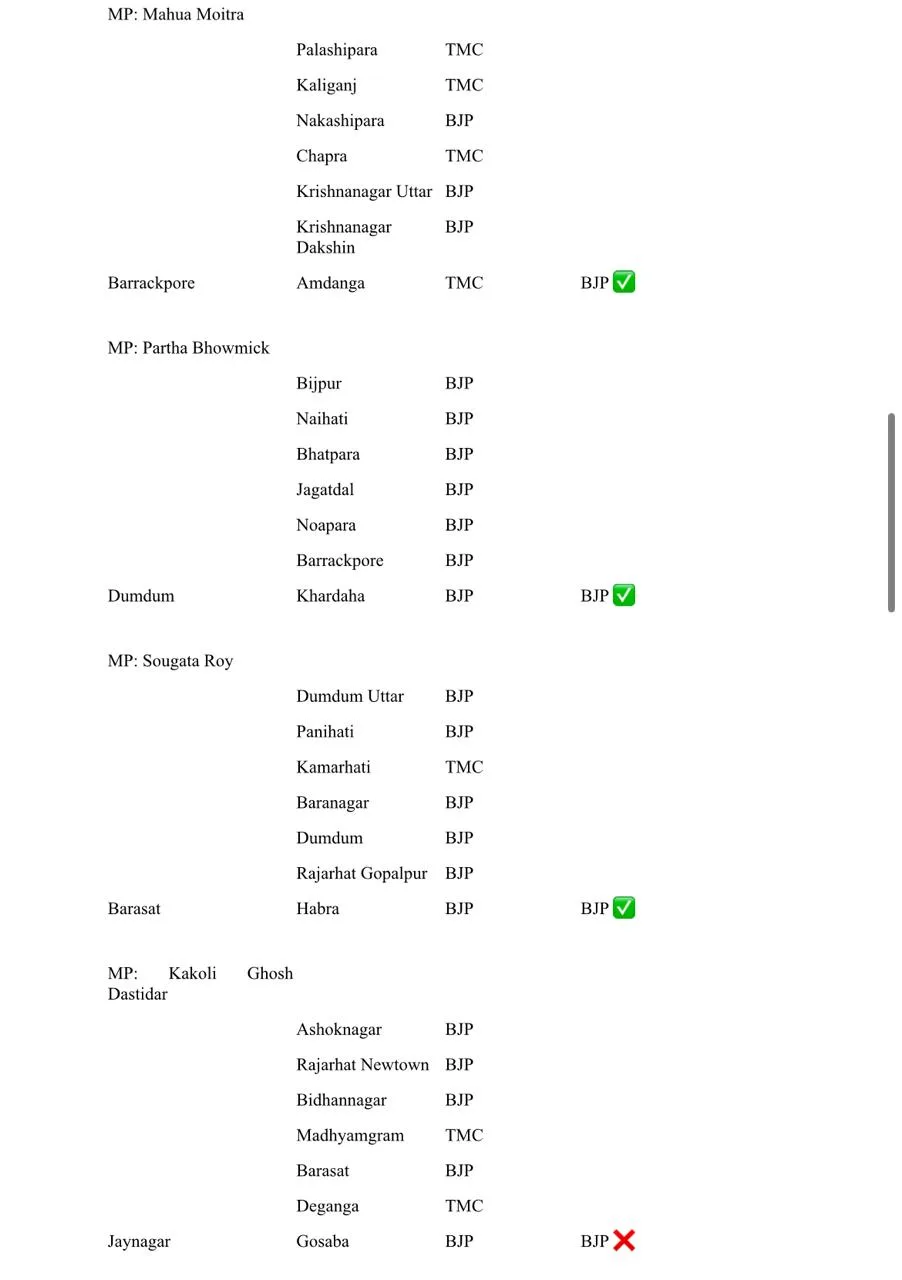
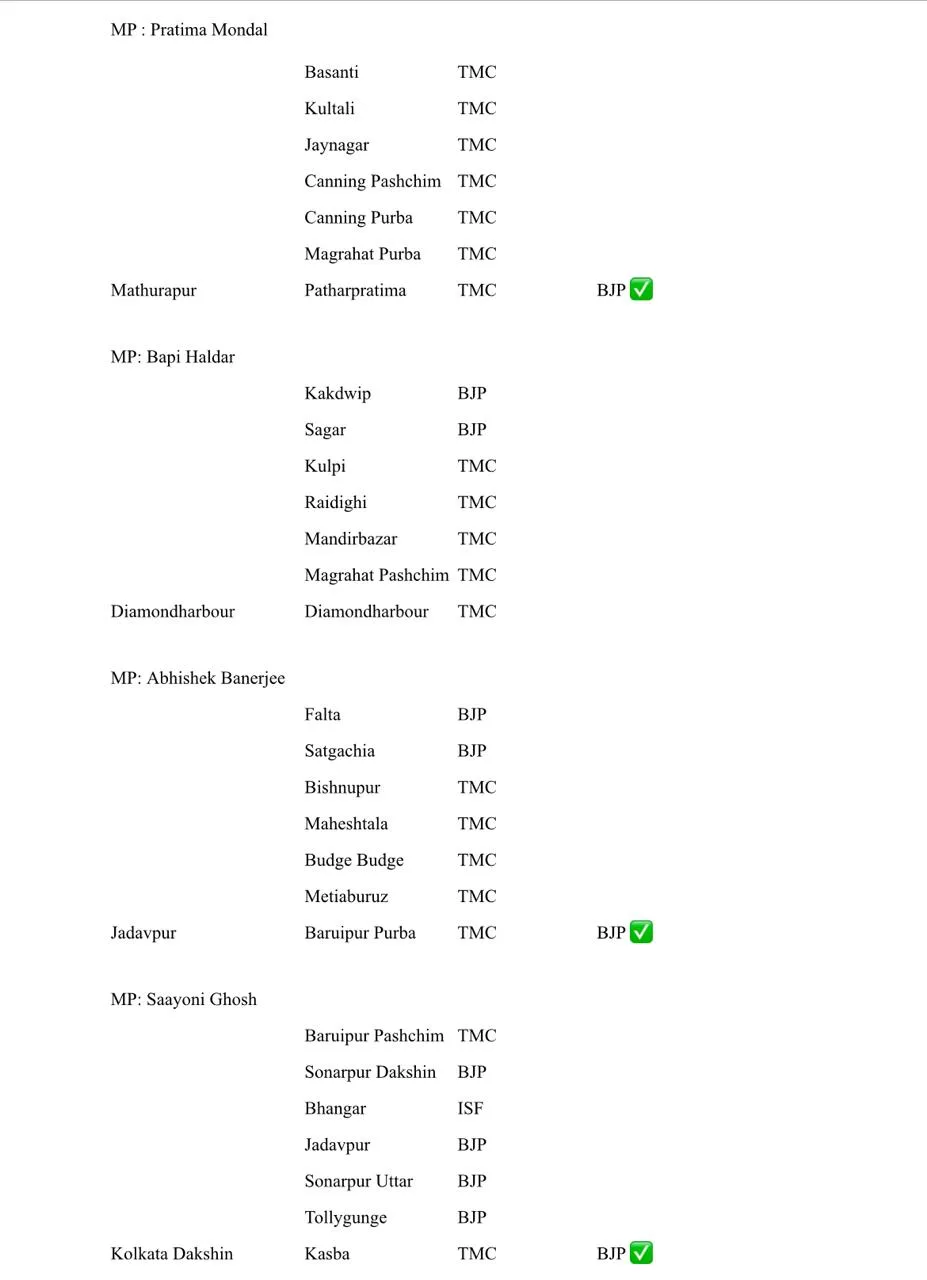
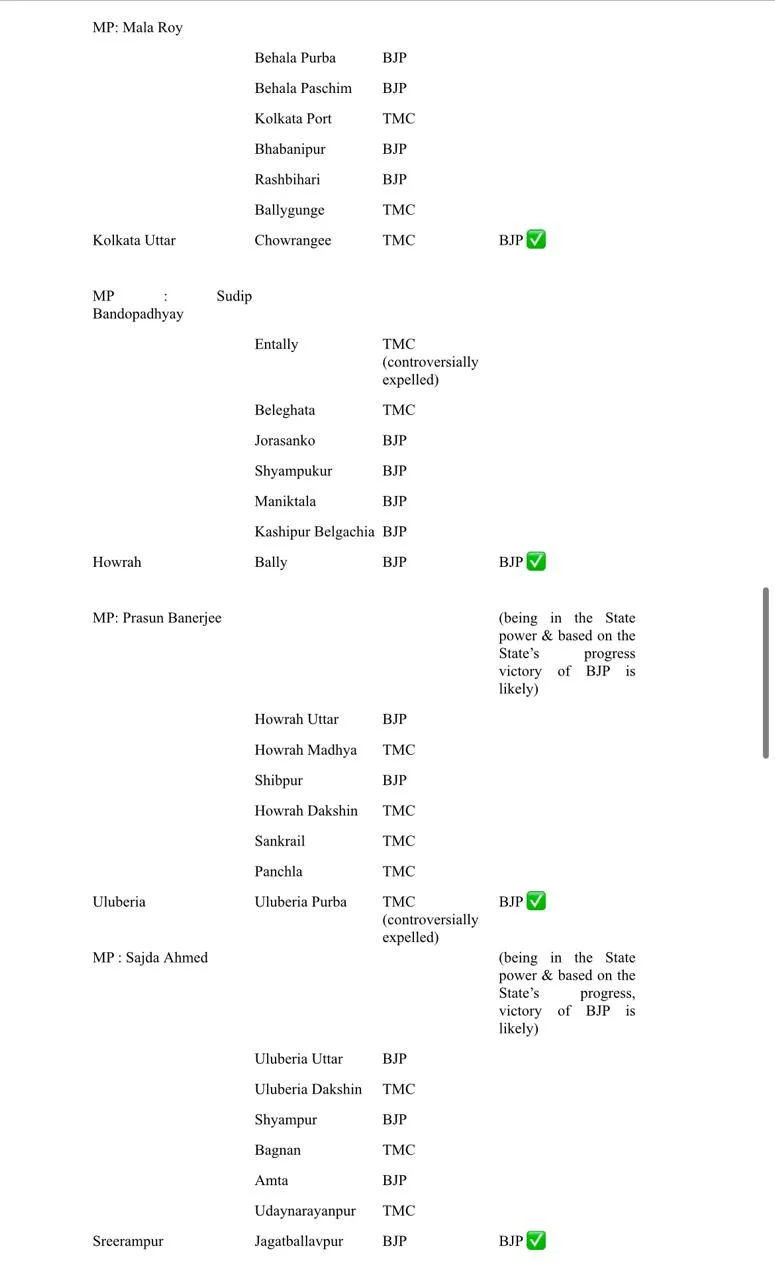
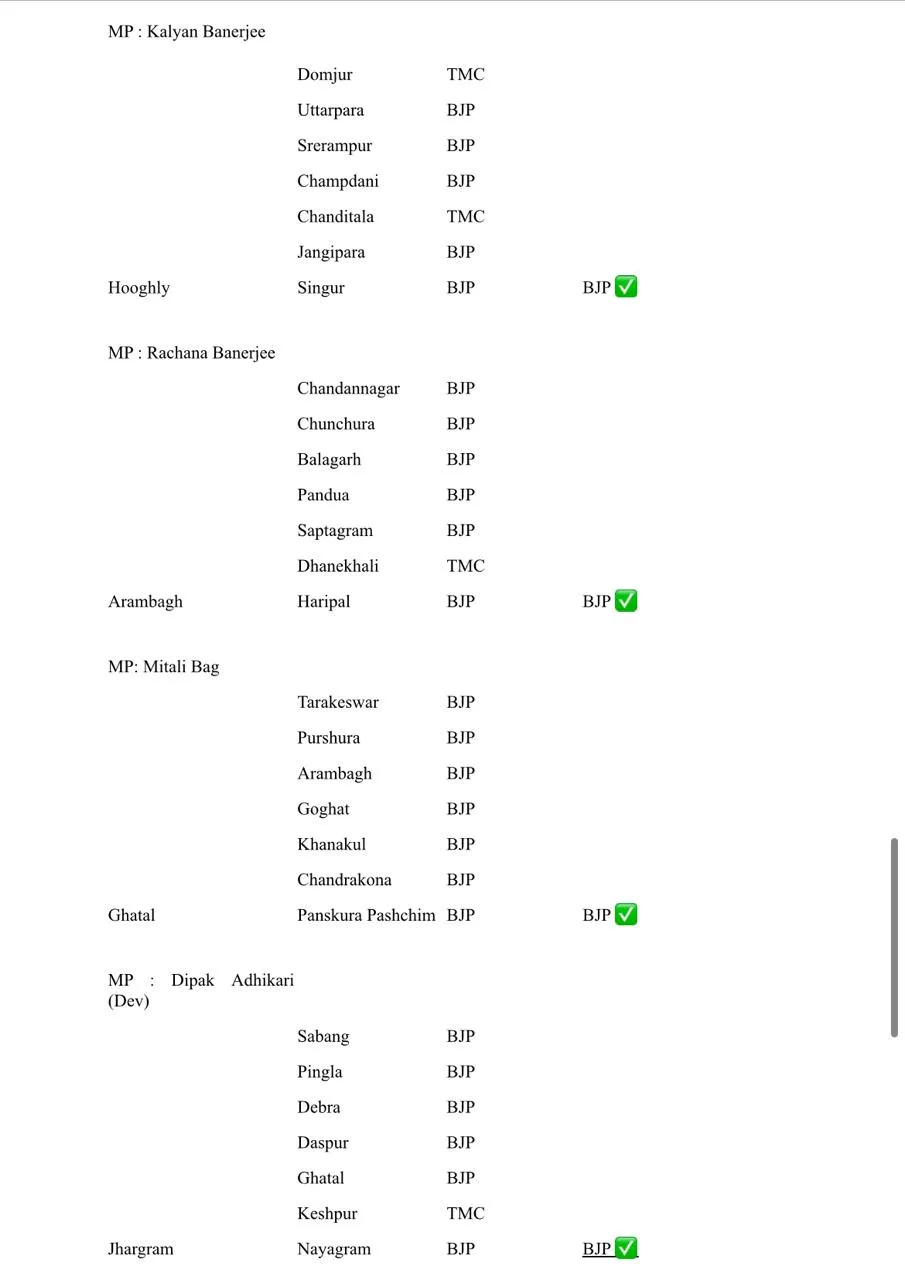
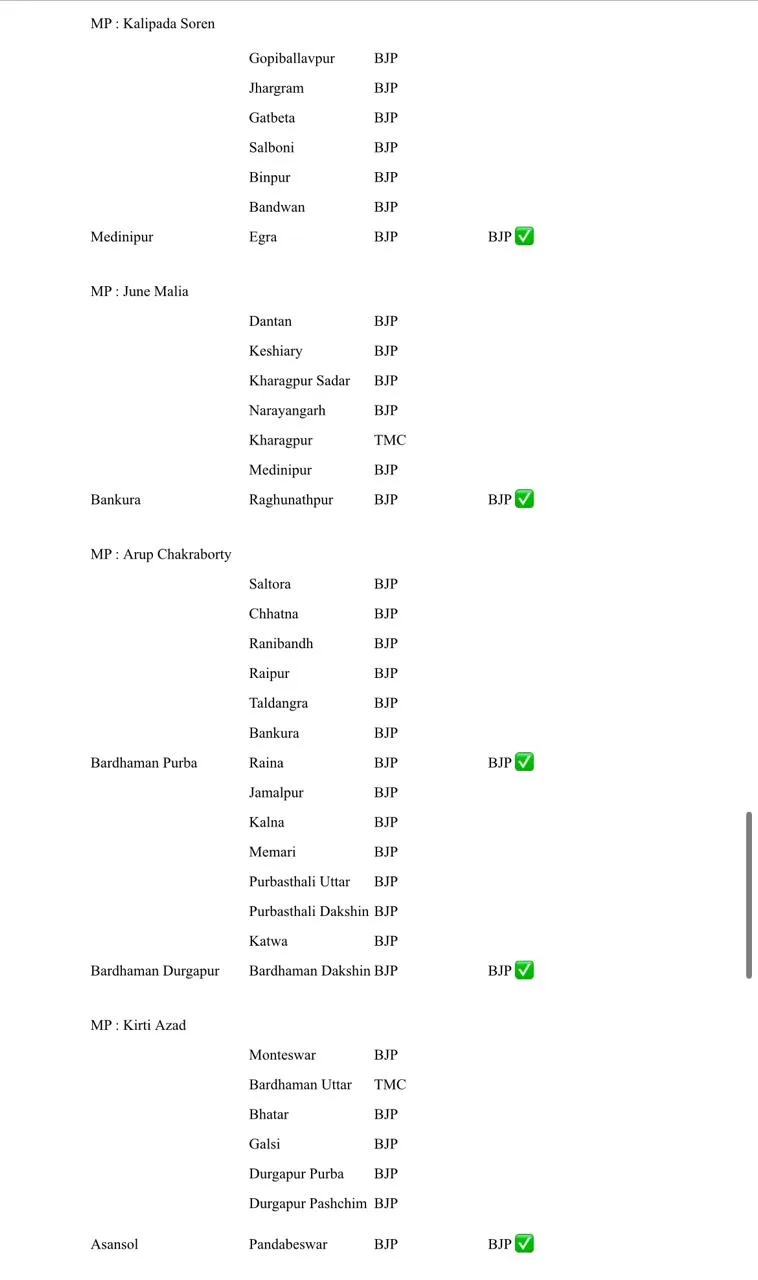
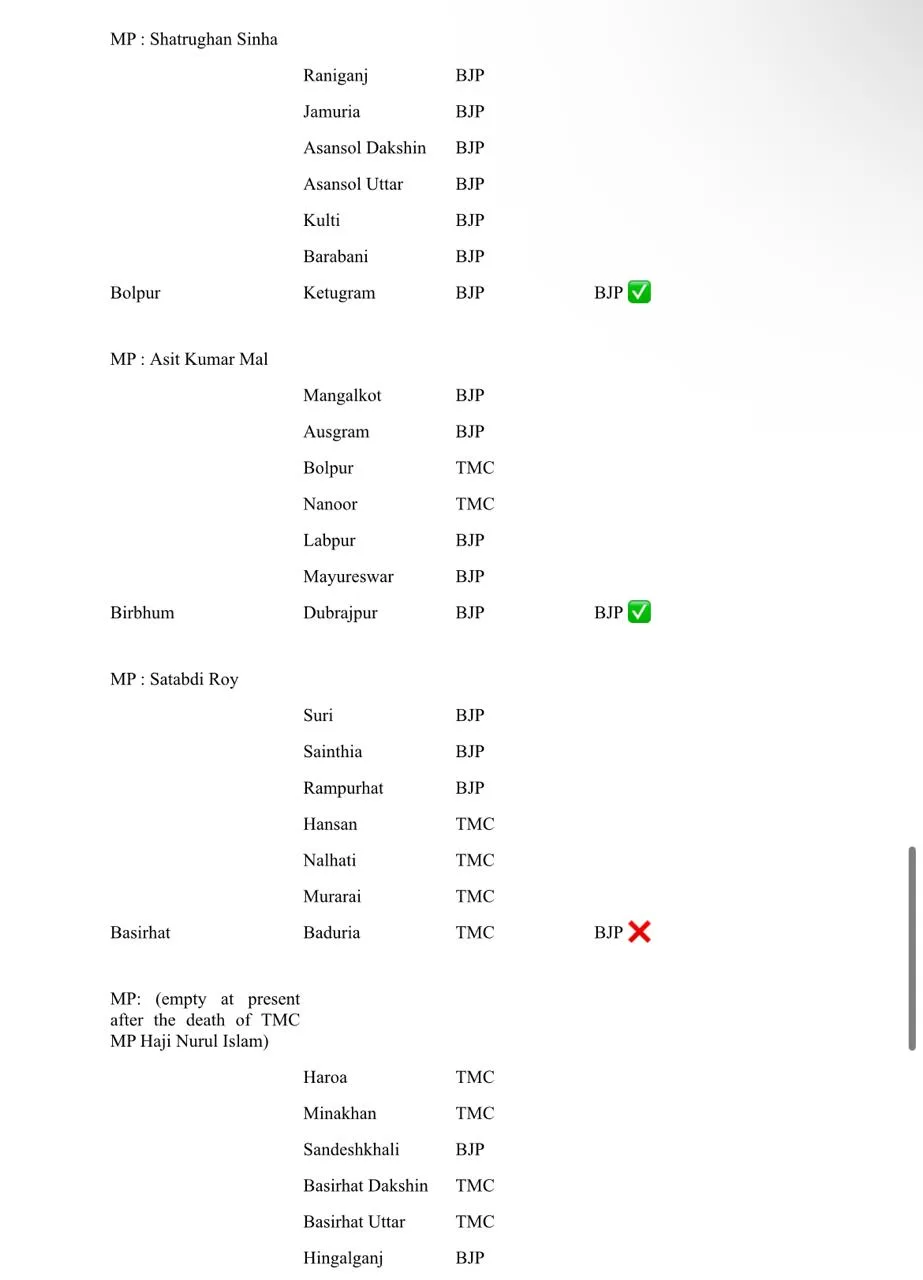
Out of all these 29 Loksabha seats, 21 seats would likely come to the BJP based on the performance of the BJP in the various assembly segments of those Loksabha seats in the 2026 Vidhansabha. For example, 5 Loksabha namely Asansol, Bardhaman Purba, Bankura, Jhargram & Arambagh are seats where the BJP has won all the assembly segments in 2026. In 7 Loksabha seats, namely Bardhaman-Durgapur, Medinipur, Ghatal, Hooghly, Dumdum, Barrackpore & Coochbehar, the BJP has won 6 assembly segments of each Loksabha while the TMC has won only one in each. In Birbhum, Kolkata Uttar, Kolkata Dakshin, Jadavpur & Baharampur, the BJP has won 4 assembly segments out of 7 in each seat, gaining electoral majority in the complete Loksabha. Moreover, in Sreerampur & Barasat, the BJP has won 5 assembly segments in both the Lok Sabha seats, gaining a majority. This implies that in the 2026 assembly election itself, the BJP has an electoral majority in 19 Lok Sabha constituencies out of those 29 which were won by the TMC in 2024.
Apart from that, certain assembly segments of both Howrah & Uluberia may shift to the BJP in 2029 Loksabha with the BJP holding the seat of power in the State & also based on the works of development that the BJP is expected to deliver before the 2029 Loksabha election. Moreover, Jangipur Loksabha too may bring in a surprise for the BJP under the changed political pulse of West Bengal.
Under such circumstances, if around 20 TMC MPs contacted the Lok Sabha speaker to dissociate themselves from the TMC & to ally with the NDA, it is likely they did it to save their own seats in the coming Lok Sabha election in 2029, because given the work of progress the BJP is expected to deliver in the State of West Bengal, these Lok Sabhas are expected to go to the BJP based on the party’s own performance itself. Such proactivity to dissociate themselves from the losing symbol, hence, has to be marked as a politically opportunistic yet intelligent move by the MPs like Kakoli Ghosh Dastidar, though being non-performer, unaccountable, opportunist, corrupt & greedy are the essence of almost all TMC politicians. While politics is no field where people of good moral character are generally available, the motto of TMC’s politics has almost been proven to be corruption of all sorts & defalcation of public funds at all levels. Hence, the hypothesis that the BJP was pulling the TMC MPs towards the NDA doesn’t corroborate with the data reality because the real reason behind the urge of the TMC MPs to join the NDA could be numerically established. And that is to save their own seats, which already shifted away from them in 2026.
However, it’s also true that if the NDA gains the support of 20 or more additional MPs in the parliament, it would be a windfall for the BJP-led NDA, and the political party has no reason to throw away its fortune by negating the realpolitik win-win deal. On the other hand, the ex-TMC MPs, even upon allying with the NDA in the parliament, have no reason to expect to be able to defalcate the public fund that would pour into the State of West Bengal from the Central Government for the development of the State, which had long been living in a financial coma.
Finally, after a number of TMC MPs deciding to join the NDA, the true picture of “Bhalo Trinamool” is getting clearer to the people displaying that the “Bhalo Trinamool” are not those who are allying with the NDA immediately after the defeat of the TMC in West Bengal but those who are still standing with the TMC symbol in spite of having fair scope to drift away from it.
How many MPs & MLAs stick to the TMC symbol till the end of the time would indeed be an exciting watch for the common people. However, the most filmy finish would be if Mamata Banerjee herself too drifts away from the TMC symbol just as shown by the film-making maestro Satyajit Ray in one of his legendary works named ‘Hirak Rajar Deshe’.