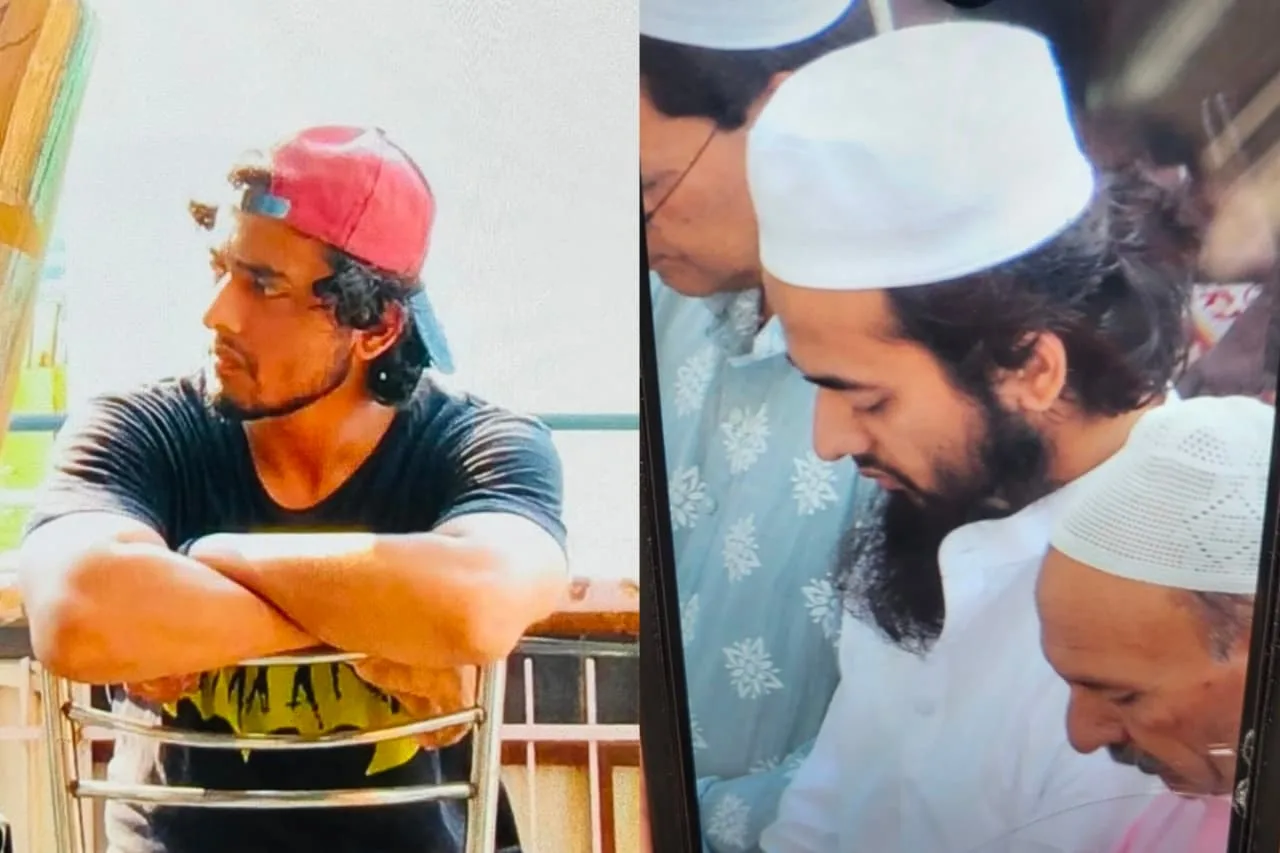
The controversial conversion of Ayush Malik, the only son of a prominent pharmaceutical business family in Shamli, has taken a fresh turn after the young man, who now goes by the name Mohammad Ali, publicly defended his decision to embrace Islam and marry Chandni Qureshi.
His statement comes amid growing allegations from his family and local Hindu organisations that he was systematically groomed over several years, isolated from his family, encouraged to change his lifestyle and eventually persuaded to convert and marry into a Muslim family.
Speaking to the media, Ayush rejected all allegations of coercion or brainwashing, claiming that his decision to convert was entirely voluntary and rooted in his own study of Islam.
“I learned about Islam through YouTube and by watching Islamic scholars from different countries. Nobody brainwashed me. I read, understood and then accepted Islam on my own,” he said.
Family’s Allegation: Grooming, Isolation and Conversion
The case first came to public attention after Ayush’s family alleged that the young businessman had undergone a dramatic transformation over the past several years.
As reported earlier, family members claimed that Ayush gradually distanced himself from relatives, altered his appearance, adopted new religious practices and eventually disclosed that he had already converted to Islam and married Chandni Qureshi.
According to the family, the change did not happen overnight. They believe he was subjected to a sustained process of influence that slowly reshaped his religious identity and worldview.
The allegations have fueled concerns in Shamli, with local residents questioning how the son of a well-known Hindu business family came to sever ties with his family’s traditions and embrace an entirely different religious identity.
“Studied Islam on YouTube”
Responding directly to allegations that he had been manipulated, Ayush said the claims were based on misunderstandings and rumours.
“It is wrong to say that someone brainwashed me. I studied Islam myself, understood it and then accepted it. There was no pressure, conspiracy or coercion involved,” he said.
According to him, he began exploring the religion nearly two decades ago.
“I started learning about Islam around 2007-08. Over time I understood the religion and eventually accepted it,” he said.
His remarks have drawn attention because they suggest that online content played a major role in shaping his understanding of Islam.
Many have long argued that digital platforms, social media and religious content creators increasingly serve as tools for ideological influence and religious outreach. In Ayush’s case, he himself acknowledges that YouTube became one of his primary sources for learning about Islam.
Nikah to Chandni Qureshi
At the centre of the controversy is Chandni Qureshi, the woman Ayush married after his conversion.
Ayush said their nikah took place approximately four years ago and denied allegations that the marriage was arranged through deception or pressure.
According to him, the two first met at a physiotherapy centre and gradually developed a relationship.
Ayush further stated that after the nikah, Chandni continued living with her family while he remained with his own family for some time.
He claimed that he informed his family about both the marriage and his conversion during preparations for his sister’s wedding.
“When I showed my family Chandni’s photograph wearing hijab and burqa, they were shocked and upset,” he said.
From Ayush Malik to Mohammad Ali
One of the most visible changes in his life has been his adoption of a new Islamic name.
Although official documents still reportedly carry the name Ayush Malik because the legal name-change process has not been completed, he now identifies himself as Mohammad Ali.
Explaining the decision, he said he was inspired by both the legendary boxer Muhammad Ali and Hazrat Ali.
“After accepting Islam, I chose the name Mohammad Ali. Most people know me by this name now,” he said.
The adoption of a new religious name has become another point of contention in the ongoing debate surrounding his conversion.
Pakistan Allegations and Religious Aspirations
Ayush also addressed allegations linking him to Pakistani religious content and narratives.
The controversy intensified after questions were raised regarding videos and Islamic speakers he allegedly followed online.
He said he had watched Islamic scholars from various countries and had no affiliation with any particular nation or organisation.
“I have never been to Pakistan. I don’t even have a passport,” he said.
Asked whether he intended to travel abroad in the future, Ayush said that if he were to undertake a religious journey, his preferred destinations would be Mecca and Medina.
Larger Questions Remain
Even as Ayush insists that his conversion was an informed personal decision, the controversy has raised broader questions about the role of online religious content, interfaith relationships and allegations of organised conversion networks.
For his family, the transformation of Ayush Malik into Mohammad Ali represents the culmination of what they describe as years of gradual religious influence and social isolation.
For Ayush, however, the story is very different.
As the debate intensifies, the case continues to draw attention across western Uttar Pradesh, becoming one of the most discussed conversion-related controversies in the region.