Few stories capture India’s development journey as powerfully as its transformation in food security.
When India gained Independence in 1947, it inherited a fragile agricultural economy marked by low productivity, inadequate irrigation, recurring food shortages, and a rapidly growing population. Ensuring food for millions was among the foremost challenges before the newly formed republic.
More than seven decades later, India stands among the world’s largest producers of foodgrains and operates an unprecedented welfare system that supplies free foodgrains to over 80 crore beneficiaries every month.
The journey from food scarcity to food security and from food security to welfare delivery at scale has been one of the defining achievements of independent India.
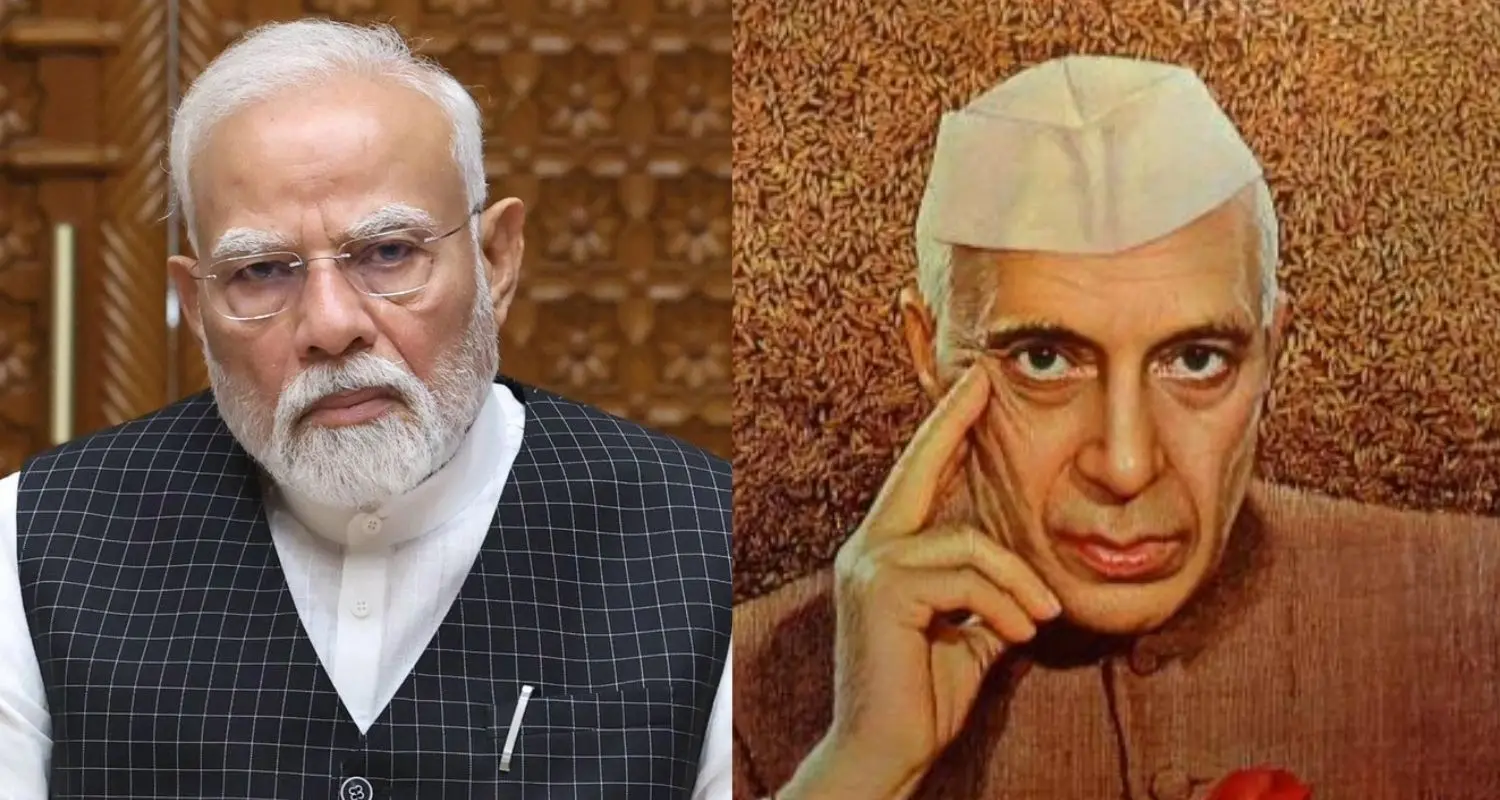
The Nehru Years: Battling Shortages and Dependence
The India governed by Prime Minister Jawaharlal Nehru was a country struggling to overcome the economic scars of colonial rule and the disruptions caused by Partition.
Agricultural production remained low, farming continued to depend heavily on rainfall, and modern agricultural practices were yet to gain widespread acceptance.
According to official data, India’s foodgrain production in 1950-51 stood at just 50.82 million tonnes. As demand outpaced supply, the country increasingly relied on imported grain, particularly from the United States under the Public Law-480 (PL-480) programme.
While these imports helped bridge immediate shortages, they also highlighted India’s vulnerability. The country’s ability to feed its population often depended on grain shipments arriving from abroad, giving rise to the term “ship-to-mouth economy” a phrase that became synonymous with India’s food insecurity during that period.
For policymakers, the situation was a hard reality: political independence had been achieved, but food self-sufficiency remained elusive.
The Green Revolution and India’s March Towards Self-Sufficiency
The turning point came during the mid-1960s when successive droughts and food shortages forced India to fundamentally rethink its agricultural strategy.
The Green Revolution, led by agricultural scientist Dr M.S. Swaminathan and supported by government policy interventions, transformed India’s food landscape. High-yielding seed varieties, expanded irrigation networks, improved access to fertilisers, scientific farming methods, and institutional reforms dramatically increased agricultural productivity.
The establishment of the Food Corporation of India (FCI) in 1965 further strengthened procurement and buffer stock mechanisms, helping create a more resilient food distribution system.
Over the following decades, India steadily moved away from dependence on imported grain and emerged as a self-sufficient agricultural nation.
The transformation was historic. A country once dependent on foreign aid for food had acquired the capacity to feed itself.
The Modi Era: From Self-Sufficiency to Welfare Delivery
If the Green Revolution addressed the challenge of production, the Modi government’s focus has been on ensuring that food reaches every eligible beneficiary.
The defining test came during the Covid-19 pandemic in 2020, when lockdowns and economic disruptions threatened the livelihoods of millions.
In response, the government launched the Pradhan Mantri Garib Kalyan Anna Yojana (PMGKAY), one of the largest food support initiatives ever undertaken anywhere in the world.
Beginning in March 2020, beneficiaries covered under the National Food Security Act received additional free foodgrains over and above their regular entitlement. The programme provided a critical safety net during a period of unprecedented uncertainty.
What started as an emergency relief measure gradually evolved into a broader welfare framework. From January 2023, foodgrains were made completely free for all eligible beneficiaries under the National Food Security Act.
In November 2023, the Union Cabinet approved the continuation of PMGKAY for five years, ensuring free foodgrains for more than 81.35 crore beneficiaries until December 2028.
Technology-Driven Food Security
The Modi government’s food security model has also been characterised by technology-enabled reforms.
The One Nation One Ration Card initiative has allowed beneficiaries, particularly migrant workers, to access their ration entitlements from anywhere in the country. Digitised databases, Aadhaar-based authentication, and technology-driven monitoring have improved transparency and reduced leakages in the Public Distribution System.
The emphasis has shifted from merely maintaining food stocks to ensuring efficient and accountable last-mile delivery.
Record Production Supports Record Welfare
India’s ability to sustain such a large welfare programme rests on the strength of its agricultural sector.
According to the Ministry of Agriculture and Farmers Welfare, India’s foodgrain production for 2025-26 is estimated at 376.56 million tonnes, nearly 18.8 million tonnes higher than the previous year’s output.
The contrast with the 50.82 million tonnes produced in 1950-51 reflects the scale of India’s agricultural transformation.
Today, India is not only self-sufficient in food production but also possesses significant buffer stocks and export capabilities while simultaneously running one of the world’s largest welfare programmes.
From Scarcity to Assured Access
India’s food security journey is ultimately a story of national transformation.
The challenge during the early decades after Independence was food availability. The Green Revolution addressed production deficits and laid the foundation for self-sufficiency. The current era has focused on accessibility, portability, and ensuring that food reaches every eligible citizen.
The contrast between the two eras is stark.
There was a time when India’s food security depended on grain shipments arriving from foreign shores. Today, the country provides free foodgrains every month to more than 80 crore people through a nationwide distribution network.
The shift is not merely from scarcity to abundance. It is a transition from dependence to self-reliance, and from self-reliance to assured access, one of the most consequential development stories in independent India’s history.