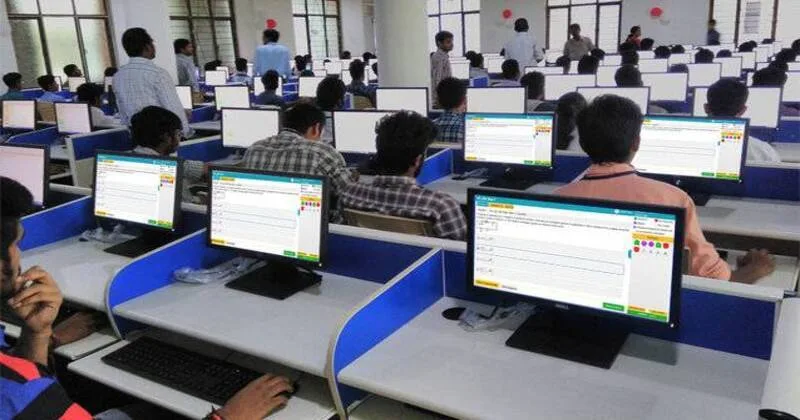
What happens when the system designed to assess students fails them? What should a student do after spending months or even years, preparing for an examination only to discover that the test has been postponed, disrupted or effectively cancelled? These questions have become increasingly relevant in India following the recent controversies surrounding the Common University Entrance Test (CUET-UG) 2026 and the earlier disruptions associated with national-level examinations such as NEET.
Education is often described as the foundation of a nation’s future. Competitive examinations are meant to identify talent, reward hard work and provide equal opportunities to students from diverse social and economic backgrounds. However, recent events have raised a troubling question: Are India’s examination authorities capable of conducting these tests in a manner that is fair, reliable and transparent?
The latest controversy emerged during CUET-UG 2026, when several examination centres across the country experienced serious technical failures. Computer systems malfunctioned, examination schedules were delayed and many students were unable to complete their tests. Some centres witnessed delays of several hours, while others effectively saw examinations cancelled because the digital infrastructure failed to function. As a result, the National Testing Agency (NTA) announced re-examinations for affected candidates.
While authorities described the issue as a technical glitch, can the situation simply be dismissed as an unfortunate accident? When thousands of students are affected, the problem appears to be much larger than a minor technical error. It reflects a deeper crisis in examination management and preparedness. The significance of this issue becomes even clearer when viewed alongside the controversies that have surrounded other national examinations.
The cancellation and disruption of examinations have become an increasingly familiar story. The debate surrounding NEET, concerns over examination integrity, allegations of irregularities and repeated administrative failures have already weakened public confidence in the system. If such incidents continue to occur, can they be regarded as isolated events? Or do they indicate a structural problem within the institutions responsible for conducting these high-stakes tests?
The human cost of these failures is often overlooked. Behind every examination form is a student with aspirations, sacrifices, and expectations. Many candidates travel hundreds of kilometres to reach examination centres. Their families invest significant financial resources in coaching, transportation, accommodation and educational materials. For students from economically weaker backgrounds, one exam may be their only opportunity to secure admission to a prestigious institution. When examinations are delayed, cancelled or disrupted, it is not merely a logistical inconvenience — it is a disruption of dreams and opportunities.
Supporters of the current system may argue that technical failures are unavoidable in large-scale examinations involving millions of candidates. Indeed, no system can be entirely free from errors. However, should students bear the consequences of those errors? If authorities have chosen to adopt a computer-based testing model, do they not also have a responsibility to ensure that adequate backup systems, emergency protocols, and technical safeguards are in place?
The increasing dependence on digital technology presents both opportunities and risks. Computer-based examinations offer efficiency, faster evaluation and improved security. Yet technology is only as reliable as the infrastructure supporting it. The CUET-UG disruptions demonstrate that modernisation without preparedness can create new forms of inequality. Students who encounter technical failures may perform differently under stress, even if they are later given another opportunity to take the examination. Can a re-test truly compensate for the anxiety, uncertainty and emotional strain caused by such disruptions?
Another critical question concerns accountability. Whenever examination controversies emerge, investigations are announced, explanations are offered and promises of reform are made. Yet similar incidents recur. Who should be held responsible when examination systems fail? Is it the testing agency, the technology provider, administrative authorities or government institutions overseeing the process?
Without clear accountability mechanisms, public trust becomes increasingly difficult to restore. The broader implications extend beyond individual examinations. Educational institutions derive legitimacy from public confidence. Students must believe that success depends primarily on merit, preparation and effort rather than luck or administrative competence. If faith in examination systems begins to erode, the credibility of the entire higher education admission process may be questioned. Such a development would be damaging not only for students but also for universities and policymakers seeking to promote educational excellence.
The recent CUET-UG disruptions should therefore be viewed as more than a temporary technical problem. They represent a warning sign regarding the state of examination governance in India. Comprehensive reforms are urgently needed. Examination authorities must invest in stronger technological infrastructure, conduct extensive pre-examination testing, establish independent auditing mechanisms and maintain transparent communication with students. Most importantly, they must recognise that every administrative decision has real consequences for the lives of young people.
Ultimately, the debate is not merely about a cancelled examination, a delayed test or a malfunctioning computer system. It is about trust. Can students trust the institutions responsible for evaluating their future? Can parents trust that their children’s hard work will not be undermined by administrative failures? Can society trust that educational opportunities are being distributed fairly and efficiently?
India’s students deserve more than promises of reform after every crisis. They deserve an examination system that is reliable, accountable and worthy of the trust placed in it by millions of aspiring young citizens.
While tactical responses are necessary before 21 lakh-plus students retake the NEET-UG exam on June 21, the only lasting solution is to expand supply through deregulation that empowers education technocrats, such as principals and deans, to set up institutions. India’s inability to create mass prosperity arises from the low productivity of our employers and youth. Reforms over the past decade have focused on employer productivity; we must now tackle outdated regulations choking the expansion of schools, colleges and universities.
Recommendations for effecient examination system
The Radhakrishnan Commission of 1948 and the Kothari Committee of 1968 responded to educator John Gardner’s challenge to design education systems that are equal and excellent. But India’s youth population today is larger than America’s total population. We are no longer a poor, new and hesitant republic, and our education policy should stop behaving like one. This entails ending five false binaries.
Quantity vs Quality
India has run a randomised control trial in education regulation. The Medical Council of India was bribed to keep medical capacity down, while the All India Council for Technical Education was bribed to expand engineering capacity. This means we have 16 lakh engineering seats every year, but only 1.3 lakh MBBS seats. Capitation fees have largely disappeared in engineering but exploded in medicine. Unlike Athena, who sprang fully formed from the head of Zeus in Greek mythology, educational institutions are not born adults. Over time, the goofy engineering colleges set up in the 1980s in Andhra Pradesh, Karnataka and Tamil Nadu have improved, providing the supply chain for India’s software industry. Nearly 30 per cent of engineering seats now lie vacant. Weak colleges are closing, and good colleges are raising faculty salaries.
Public vs Private
The debates over public vs private, or foreign vs domestic, institutions are juvenile. We should only care about good vs bad schools. But India’s education regulations are obsessed with hardware over software, legal structures over learning and input metrics over outcomes. This creates adverse selection among education entrepreneurs because success requires lying at birth (not unlike legislators’ election-spending affidavits) and lifelong regulatory “management” skills (creating a gap between how the law is written, interpreted, practised and enforced).
Repair vs Prepare
Few disagree with Mark Twain’s quip that education is not the filling of a bucket but the lighting of a fire. But addressing poverty needs learning for earning as much as learning for living. This does not mean India must vocationalise school education or imitate Singapore by streaming children too early, but it does mean recognising that what we can teach someone in six months (a plumber, mason, salesperson or customer service worker) takes 15 years to learn (confidence, curiosity, creativity or communication skills).
The most important vocational skills are the old four Rs: Reading, writing, arithmetic and relationships, and too many government schools (50 per cent of enrolment) fail at these basics. Why are half of our kids paying for something to avoid something free? Because a 21st-century education makes the strange familiar through knowledge, but also the familiar strange through questioning.
Price vs Cost
The challenge for great educational institutions is reconciling high costs for faculty and infrastructure, but low fees for diversity and inclusion. Predictably, debates around fair fees and reasonable profits provoke outrage. But India already knows price controls don’t work; private schools simply invent 20 different fee categories. The most expensive school is no school at all.
Excellence vs Inclusion
India’s inequality of opportunity means our most valued institutions inhabit two extremes — either the IITs and IIMs, with narrow entry gates (99 per cent fail) and wide-open exits that require elimination rather than selection entry exams, or the chartered accountant qualification with wide entry gates and narrow exits (99 per cent fail). But weak competition for most schools means their wide-open entry and exit gates lead to poor learning outcomes, weak signalling value and rotten employability.
The solution is clear: More education entrepreneurship through deregulation
- Removing the state government NOC requirement for Central Board recognition — state registration is already mandatory under the Right to Education Act.
- Deleting the RTE clause that prescribes jail for schools that conduct admission evaluations — should we select IIT or IIM students by lottery?
- Allowing all companies, not just Section 8 ones, to open schools and colleges so that education technocrats can become entrepreneurs by legally raising external capital.
Coaching factories, exam leaks, nursery-school interviews and unemployability mean an Indian child’s most important decisions are choosing their parents and pin code wisely. The solution is not licensing but supply. Competition will drive innovation in teaching, fees, productivity, multilingual instruction, gifted students, teacher training and employability. India doesn’t need fewer cooks in the kitchen; it needs more cooks, more recipes and fewer bureaucrats.