Azerbaijan: Azerbaijan: Indian Ambassador Abhay Kumar undertook a visit to the regions of Ganja, Goygol and Shamkir in Azerbaijan to learn more about their rich historical, cultural and natural heritage, an official statement said.
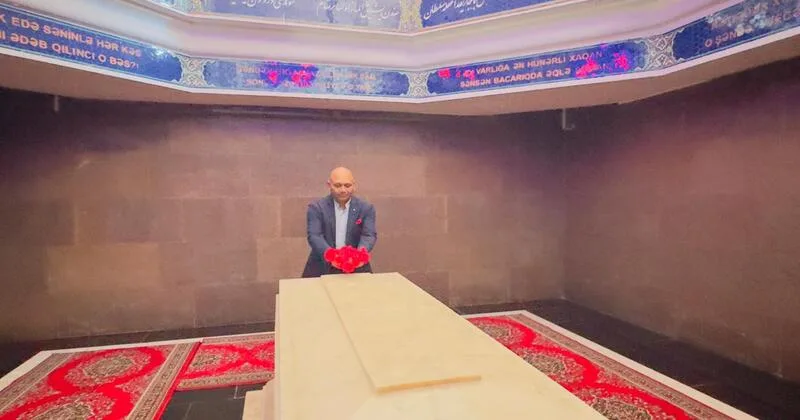
Ambassador Abhay Kumar visited the mausoleum of Nizami Ganjavi and paid homage to the enduring literary legacy of one of the greatest poets and thinkers of Azerbaijan, and the author of the celebrated Khamsa (“Five Treasures”). During the visit, Ambassador also met Teymur Aliyev,… pic.twitter.com/tLIfh27Eq5
— India in Azerbaijan (@indembassybaku) May 27, 2026
The Ambassador visited the Mausoleum of Nizami Ganjavi, one of the greatest poets and thinkers of Azerbaijan, honouring his enduring literary legacy. Ganjavi was the author of the celebrated Khamsa (‘Five Treasures’).
He also explored the ‘Nizami Ganjavi: Predecessors and Successors Park,’ dedicated to the distinguished literary and cultural figures of the Ganja school. Featuring monuments to Nizami Ganjavi and other prominent poets, scholars and thinkers associated with the region, the park reflects Azerbaijan’s rich intellectual and cultural heritage.
In Goygol district, Ambassador Kumar met Yusif Kazimov, Director of Goygol National Park, and learned about the park’s unique biodiversity, natural heritage and environmental conservation efforts. He learnt the initiatives undertaken to preserve the region’s ecological wealth and promote sustainable tourism.
The Ambassador further engaged with the history and culture of Goygol at the Goygol District History and Local Lore Museum, where he met the Museum Director, Gulshah Zeynalova. He explored the museum’s collections, highlighting the history, archaeology and cultural legacy of the region.
At the Goygol Cultural Centre, he was briefed on efforts to preserve and promote local cultural traditions. He also appreciated Goygol’s well-preserved 19th-century architecture, which remains an important part of the district’s cultural identity.
In Shamkir, the Ambassador learned about the historical significance of the Shamkir Fortress, a protected archaeological site which served as a major urban centre from early medieval times until the 13th century. Its citadel, inner city and outer settlement areas offer valuable insights into Azerbaijan’s medieval urban planning, architecture and cultural development.
He also met Gunel Rzayeva, Director of the Shamkir Museum of History and Local Lore, and explored the museum’s rich collection of more than 5,800 exhibits showcasing the history and cultural heritage of the Shamkir region and Azerbaijan. The collection includes archaeological artefacts dating back to the Neolithic period, traditional household items, coins, musical instruments and examples of Azerbaijani national costumes. The ambassador learned the museum’s important role in preserving and promoting the region’s historical legacy.
The visit provided an opportunity to gain deeper insight into the rich cultural, historical and natural heritage of western Azerbaijan and to further strengthen cultural understanding and people-to-people ties between India and Azerbaijan.
(With inputs from ANI)