
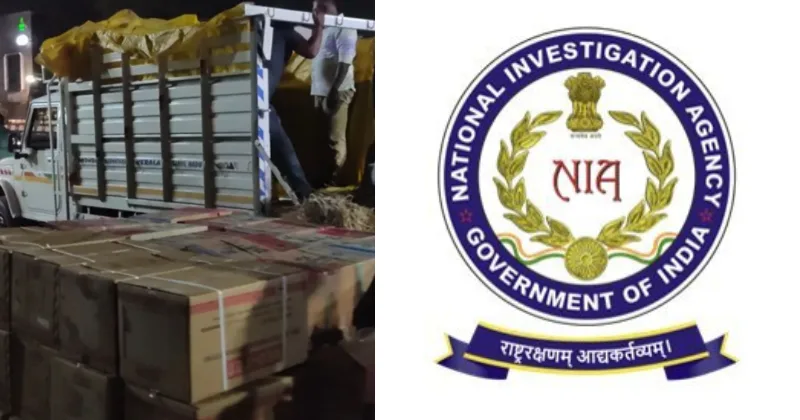
Malappuram: The National Investigation Agency (NIA) on May 30 conducted extensive searches across Kerala, Tamil Nadu and Karnataka in connection with a major illegal explosives seizure case in Kerala’s Malappuram district.
According to the NIA, searches were carried out at 19 premises linked to the accused as well as dealers and manufacturers of explosives. The agency said several digital devices, documents and other materials, including gelatin sticks, were seized during the searches.
The agency stated that six accused persons have so far been arrested in the case, which it described as having “grave national security implications” because of the huge quantity of illegally procured explosives seized earlier this year.
19 premises of accused and dealers & manufacturers of explosives were searched today in Kerala, Tamil Nadu & Karnataka in a case of seizure of huge quantum of explosive materials intended for unlawful use. Case originated in Kerala’s Malappuram in February 2026. Probe continues. pic.twitter.com/ykC4I3EjgV
— NIA India (@NIA_India) May 31, 2026
The raids were conducted in Kozhikode, Malappuram and Kasaragod districts of Kerala, apart from locations in Tamil Nadu and Karnataka. The operation is linked to the seizure of a lorry loaded with explosives on February 7 in Malappuram district.
According to investigators, the lorry was transporting hollow bricks to shops, while the explosives were allegedly concealed among onion bags. At the time of the seizure, the lorry owner reportedly claimed that the explosives were intended for quarrying purposes. However, the NIA’s ongoing investigation is examining other possible aspects of the case.
The agency conducted searches at the godown of a hollow bricks establishment in Malappuram and also at the residence of the third wife of the lorry driver.
In Kozhikode district, raids were carried out in Mukkom, including at a business establishment owned by Harris and at his residence.
The NIA said the case originated after Kerala Police seized a lorry parked in the compound of Farha Hollow Bricks Company on Chemmad-Thalappara Road in Malappuram district.
According to the agency, the vehicle contained 89,600 gelatin sticks packed in 448 boxes and 10,500 non-electric detonators packed in 35 boxes.
“The entire consignment had been procured without a valid licence and was intended for illegal and unlawful activities,” the NIA stated. The agency took over the investigation in April 2026.
Investigators are also examining possible links with another explosives seizure reported from Kondotty two months earlier. Two persons were arrested in that case. Reports indicate that the accused allegedly told investigators that the explosives had been brought from Salem in Tamil Nadu.
In Kasaragod district, NIA teams conducted searches at Chittarikkal, including at a granite quarry and residence linked to a person identified as Saji. Investigators are examining allegations that gelatin sticks may have been procured through the quarry. The quarry is currently reported to be non-operational, and detailed searches are continuing.
The NIA said it is continuing its probe to uncover the entire supply chain involved in the unlawful procurement and movement of explosive substances and to determine their intended use.
Kerala has been a safe haven for Islamic terrorists for a long time because both the Congress-led United Democratic Front (UDF) and the CPM-led Left Democratic Front (LDF) are always in intense competition for the minority vote bank.
Therefore, they would not blame Muslim fundamentalists for any reason. During the recently concluded Assembly elections, the UDF was supported by Jamaat-e-Islami and the LDF by the SDPI (Social Democratic Party of India), the political wing of the outlawed Popular Front of India (PFI).
Following the ban on PFI, its members were arrested and jailed by the NIA, whereas the Kerala Police force, under the former Chief Minister Pinarayi Vijayan, allegedly showed lukewarm interest in apprehending their senior leaders and raiding their offices.
As a result, several of them were able to evade arrest and important documents were allegedly transferred elsewhere when the outfit was banned by the Union Home Ministry in September 2022.