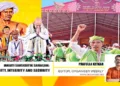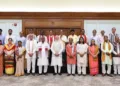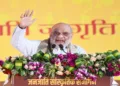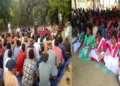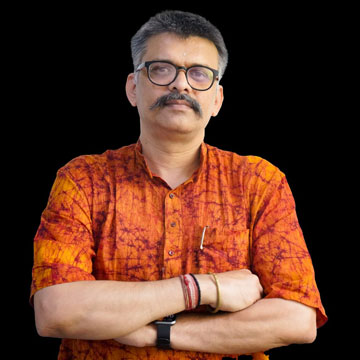

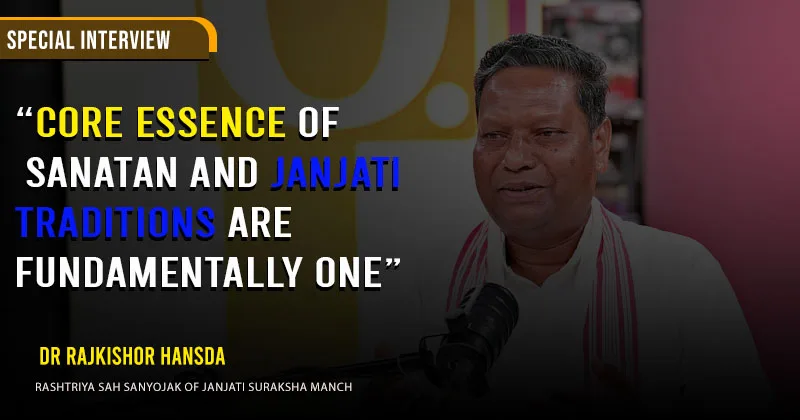
This year, we are celebrating the 150th birth anniversary of Bhagwan Birsa Munda — the icon who established the spirit of dharma, sanskriti, the spirit of protecting the selfhood of people dwelling in forests, whom we call Scheduled Tribes today. He sacrificed his life fighting against the British and their colonial designs in Bharat. Most of us, influenced by English education and colonial practices, often forget that it is these Janjatis who have retained their original Bharatiya identity and culture. Celebrating their traditions is our national duty. To celebrate this tapasya, a major event, the Janjati Sanskritik Samagam, was held in Delhi on May 24, 2026. It is a congregation of Scheduled Tribes from across Bharat, where they presented their art, culture, and knowledge traditions in the national capital. What is the significance of this event? Why was this event so important? What is the vision behind it? To discuss this, Organiser Editor Prafulla Ketkar spoke with Dr Rajkishor Hansda, Rashtriya Sah Sanyojak of Janjati Suraksha Manch. Excerpts:
What is the vision behind Janjati Sanskritik Samagam?
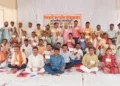
Bhagwan Birsa Munda’s 150th birth anniversary is being celebrated this year. We felt that Bhagwan Birsa Munda is not only the pride of the Janjati society, but the pride of the entire Bharat. Therefore, we decided that his 150th birth anniversary should be celebrated collectively and grandly in the national capital, Delhi. Along with this, the event is also about our Dharma, culture, faith, traditions, and heritage. That is why, this gathering has been named Janjati Sanskritik Samagam. People from tribal communities across the country are coming together in large numbers. That is the larger vision behind this programme. Across Bharat, there are around 750 tribal communities. Approximately 1.5 lakh people from 500 Janjatis are attending the Samagam. The maximum participation is from youth, both young men and women. Becoming educated or moving to cities does not mean abandoning traditions. Tribal organisations are actively working to ensure that festivals, customs, and cultural practices continue even in urban areas so that youth remain connected to their roots.
“The Sanatan civilisation is like a vast banyan tree, under whose cool shade we all live peacefully together ”
Managing 1.5 lakh people in Delhi must be a huge task. How are the arrangements being made?
This is the first time such a massive tribal gathering has happened in Delhi. Many people in Delhi have never seen such a large gathering of Janjatis before. We consider all these Vanvasi brothers and sisters to be guests coming into our homes. People started arriving from May 23 onwards. Everyone attending the event paid out of their own pocket. From the North East alone, people arrived through five special trains. Across Bharat, around 40-45 trains brought participants to Delhi. Many others from nearby states arrived by buses and smaller vehicles. Accommodation was arranged in schools and other locations across Delhi. There are many people
who have never even boarded a train before, let alone seen the capital city. Proper arrangements have been made in every state. Each train had a train-in-charge, assistants, coach-in-charges, and coordinators for
smaller groups. Full attention is given to everyone’s safety and convenience.
The Samagam speaks about protecting faith, culture, and traditions. Why did the Janjati Suraksha Manch feel such a gathering was necessary today?
Today, in Janjatiya regions, missionaries are carrying out religious conversions at a very rapid pace. Because of this, the culture, faith, and traditions of Janjatis are increasingly under threat. At the state level, sometimes such issues become part of local news discussions, whether in Chhattisgarh, Jharkhand, or the North East. But in Delhi, the national capital, these developments often do not enter the mainstream national conversation. People in Delhi do not know what is happening in those regions. Through this Samagam, we want to make the government, society, and the nation aware of what is happening in such areas. There should be laws and systems that help preserve and safeguard tribal identity and heritage.
“Foreign missionaries are carrying out conversions at a rapid pace, and Janjatiya culture, faith, and traditions are increasingly coming under threat ”
When we speak about Janjatis even in the constitutional sense, the words “tradition” and “heritage” are repeatedly used. How are those who have converted and no longer follow local traditions, who no longer worship nature or follow those ancestral customs, continuing to avail constitutional rights and benefits meant for Scheduled Tribes?
This is exactly what I say with great concern and sadness. In Government records, they remain listed as Scheduled Tribes, while in missions and churches, they identify themselves as Christians. In this way, they become minorities on one side, but on the other side, they also continue to remain in the Scheduled Tribe list. So they are taking benefits from both sides. Even the Supreme Court has repeatedly observed that a tribal person is one who follows the traditional customs and practices of Janjatis. From birth to death, their rituals, traditions, methods of worship, deities, and sacred places are all part of that identity. If someone does not follow these traditions, then they cannot truly be considered tribal. But such people hide their real identity. You can even call them “crypto Christians.” They want to take advantage of both sides. Whenever it suits them, they appear as minorities and sometimes even become members of minority commissions in different States. At the same time, they also continue to remain in the Scheduled Tribe category. Some even become MLAs through ST reservation. These are the kinds of situations we are witnessing today.
Along with this, discussions on religion, culture, faith, rights, and laws, including the PESA Act of 1996, were on the agenda for this Samagam. Many Fifth Schedule areas still lack proper implementation of these provisions. We want State Governments to properly frame rules and ensure implementation so that tribal communities truly benefit and their traditions and rights are protected.
The Hon’ble President of India recently said that every forest-village- and city dweller in Bharat is ultimately Bharatiya. But when you speak about a distinct identity, distinct rights, food habits, and unique traditions, do you think some people may see this as creating separation or encouraging a sense of isolation from the larger idea of Bharat?
No, not at all. All the unique traditions of Janjatis are fundamentally Sanatan traditions. When we speak of Sanatan culture, what does it mean? It means the worship of the five elements – Earth, sky, air, fire, and water. Janjatis also believe in these very traditions. Janjatis worship nature. All followers of Sanatan worship nature. They also worship murtis. But at the core of Sanatan is the worship and respect for nature and the five elements. Janjatis protect these traditions and continue to practice them. So, Sanatan and Janjati traditions are fundamentally one. Their core essence is the same. That is what connects all of us. We consider the Earth as our mother. All followers of Sanatan and all Janjatis worship the Earth and believe in Surya Bhagwan. It is this reverence for nature, rivers, and the five elements that unite us. What separates us are foreign ideologies.
“For the first time, Janjatis gathered in such huge numbers in the nation’s capital. This itself will create confidence among our people”
The armed Naxal movement may have largely declined, but the ideological confusion they created – a psychological distance from their own traditions – still remains. Just as some missionaries create this kind of confusion, Maoist ideologies also attempt to do the same.
These Maoist and Left-wing ideologies fundamentally create problems where none exist. They first manufacture a sense of grievance and then pretend to offer solutions to those very problems. They are creating confusion among Janjatis by telling them, “This is not your god,” “This is not your deity,” “You are separate from all this.” But the Sanatan civilisation is like a vast banyan tree, under whose cool shade we live peacefully together. These people, for their own political interests, want to separate us from that larger Sanatan mainstream. This, too, is a foreign ideology. Just as the missionaries’ thinking does, this thinking also comes from outside. It is a Western ideological framework. Everyone is trying to use Janjatis for their own political interests.
What larger impact do you think this Samagam has created?
One of the biggest developments was that, for the first time, Janjatis gathered in such large numbers in the nation’s capital. This itself will create confidence among our people. Even those who were unable to attend will hear about it through the news and discussions, and confidence will arise within them as well. Other sections of society across the country also witnessed this strength. Even those who oppose us or stand against these ideas will see this and realise our collective presence. Most importantly, our people will realise that we are not weak or isolated. This gathering has presented the vision of our Virat Swaroop – our vast civilisational presence. It will awaken self-confidence among Janjatis and send a strong message to the entire nation.