NEW DELHI: The evening of May 24, 2026 witnessed a remarkable gathering at the historic Red Fort ground in New Delhi. Organised by Janjati Suraksha Manch, the Janjati Sanskriti Samagam marked the 150th birth anniversary of Bhagwan Birsa Munda and brought together more than 1.5 lakh people from 550 Janjati communities across India. Chief Guest Union Home Minister Amit Shah was present in the programme, along with other Chief Ministers Vishnu Deo Sai of Chhattisgarh and Mohan Charan Majhi of Odisha. The main impetus of this gathering was to safeguard Janjati faith, forests, traditions and cultural identity. Leaders reiterated the need to protect tribal heritage and to give them equal opportunity to participate in the nation’s development.
This event was my first experience of covering a massive public congregation and engaging with people on the ground as a Multimedia and Mass Communication student. Until the day of the event, my experience with reporting was limited to classroom discussions or lectures in which students were taught concepts and how to write assignments for the subject. I was immersed in an intense heat wave in Delhi, amid a massive crowd, carrying a camera under the scorching sun, and interacting directly with people who had travelled from far away to attend the event. I realised what field journalism feels like. What really struck me was the discipline and clarity of purpose among the people gathered. The men, women, older people and children travelled long distances from places like Assam, Bihar, Jharkhand, Uttar Pradesh, Sikkim, Chhattisgarh, Tamil Nadu and other places to attend the event.
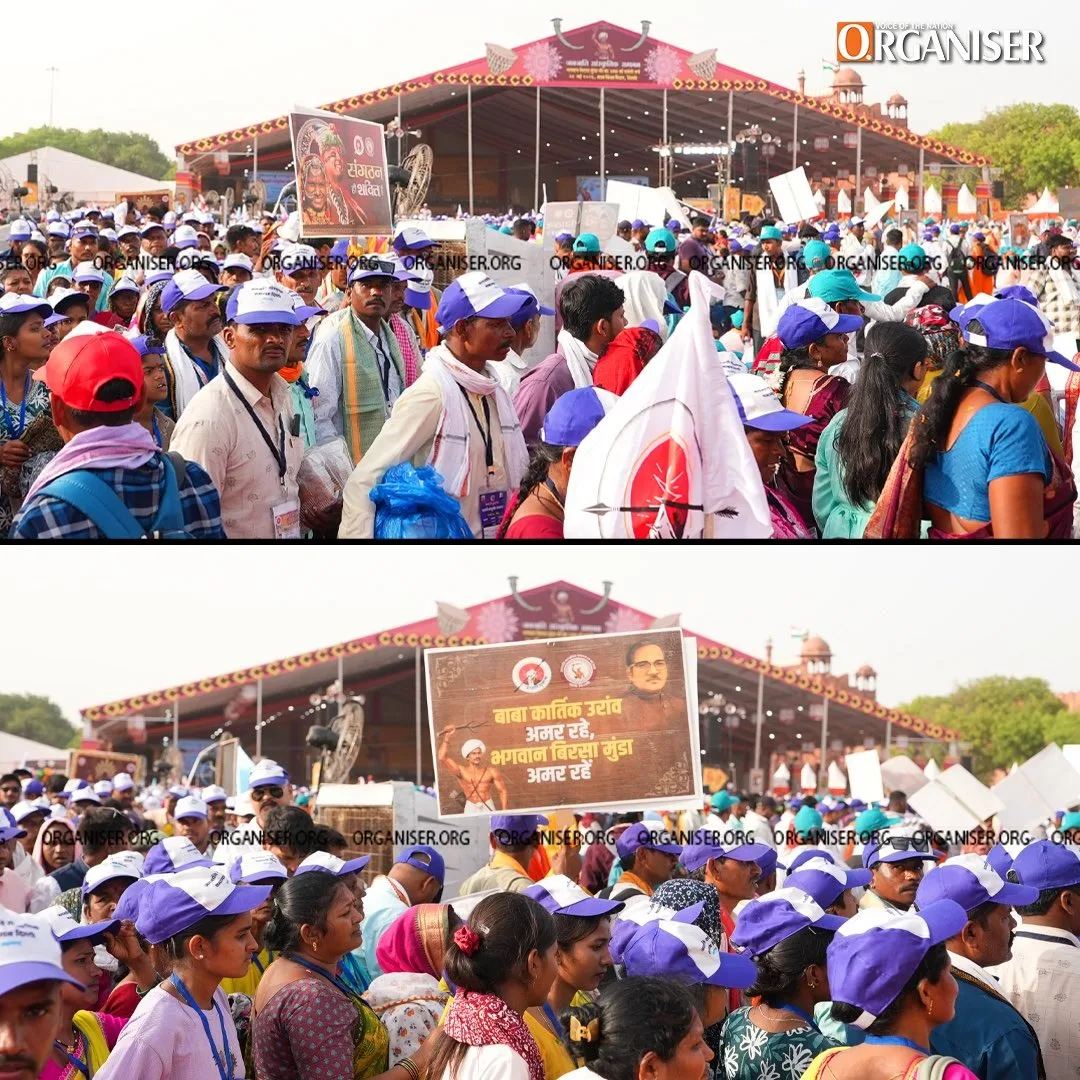
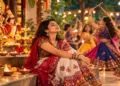
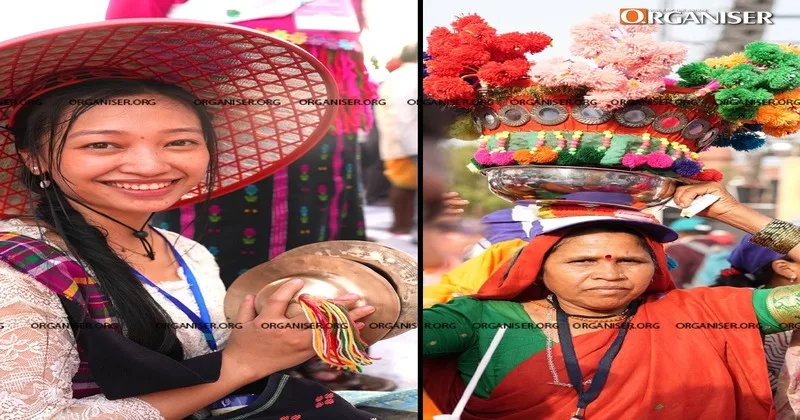
Immediately upon reaching the venue, we found it full of life and culture. People from various janjatis wearing their traditional dress, many with colourful headgears, denoting the various groups. RSS Swayamsevak and Vanvashi Kalyan Ashram volunteers led people to the appropriate places and continuously tried to maintain food, water, ORS and cooling facilities for all. The scale and complexity of management at work itself were important learning experiences for me as a journalism student.
Several janjati communities arrived at the gathering from distant areas, far from major cities and modern urban infrastructure. There was an observable sense of contentment and rootedness. Indeed, forests, rivers, land, and customs practised for thousands of years were not discussed in terms of cultural symbols but as elements of their everyday life. The constant urgency and material ambition that seems to permeate urban spaces was nowhere to be found. Instead, a compelling sense of calm was evident, as many of them spoke of a life with limited material resources and ample fulfilment. Their faith in nature and the traditional wisdom of their ancestors was not pretend, but simply born of day-to-day practice, gratitude, and community.
One of the main issues raised at the Samagam was the proposal for individuals to be removed from the Scheduled Tribes category if they had converted to other religions, such as Christianity. There were concerns that Janjati communities were being targeted by organised religious conversion campaigns and that there was a need to safeguard their traditional beliefs and cultural identity.
While interacting with people on the ground, I was deeply surprised by the ease and confidence with which they spoke to the camera. Almost anyone we approached was willing to offer opinions without hesitation. Their level of clarity, understanding of the problems, and organised behaviour made a strong impression on me. At the event, I met a man from Jharkhand of the Oraon tribe. He exultantly told me that it was his first time in Delhi. But for many who have resided in the capital, the city eventually becomes ordinary. Yet as he described his experience, I became aware of how powerful the feeling of arrival can be for someone experiencing the national capital for the first time. He told me he was happy to see so many people in Delhi for such a great cultural occasion.
I saw an older man from Chhattisgarh playing a wooden traditional musical instrument in the crowd. The sound was gentle, yet rhythmic enough to be audible against the roar of thousands at this venue. A few yards away, a very young girl, maybe five or six years old, dressed in a white-and-red saree, was moving with her people, confidently displaying her culture. It was not a case of uncritical following of tradition but rather a bold expression of respect for their identity, dignity and tradition. “We are Adivasi Hindus, and we will remain Adivasi Hindus,” said in a single statement, with absolute conviction, a janjati representative from Assam. His statement was short, but the manner in which he said it indicated how tightly bound identity and faith were for many of the people at the Samagam. During a discussion with an individual from the Santhal tribe, it came to light that individuals who converted to Christianity often disparage the traditions and customs of their indigenous tribe. He further stated that many converts have harshly criticised tribal traditions and customs, a trend that is causing the younger generation to drift away from their own ancestral heritage.
One of my most memorable conversations was with a 78-year-old woman from Assam’s Dimasa tribal community named Hemlota Kemprai. She was from the village of Sambhnagar, and she spoke with confidence about constitutional provisions, especially Article 342, and the need for changes regarding tribal rights and their recognition. It’s rare to find that the more remote an area is, the less aware its people are of political frameworks. Her daughter-in-law mentioned another worry that lasted a long time after the event. She said that she is always worried that if the traditional rituals, tales, and customs are not consciously taught to children, future generations will never fully understand the cultural practices of the community. It is about preserving tradition rather than a symbolic function.
Another detail I noticed that was particularly striking was the language. India’s diversity is described in many abstract ways, but here it was manifested in more practical ways. People from faraway places with different cultural practices still managed to communicate very comfortably, using Hindi. Seeing conversations take place between groups separated by geography, language, and lifestyle was an intuition-busting experience of cultural unity amid diversity.
“Nagarvasi, Gramvasi, Vanvasi.. Sab Hain Bharatvasi, “Bharat Mata Ki Jai,” & “Ek Sanatan, Divya Sanatan” slogans were heard from all corners, giving vibrancy to the atmosphere and a sense of collective identity. I also met two boys, both fourteen years old, from the Santhal Janjati community in Bihar’s Kishanganj district. One of them, Suklal Soren, explained my question about why he wanted to maintain ties to his religion. “I like my religion,” said Suklal, and “I will try to make sure that those around me do not leave it either, for they may never understand the depth and goodness within our traditions.” I was surprised to have heard such ideas expressed so cogently by a boy of his age.
Mechuhu Eppa was hailing from Itanagar in Arunachal Pradesh and belonged to the Nyishi Janjati community, which he said was the largest tribe in the state. He talked about how, previously, many tribal communities stayed apart, but that holdings organised by Janjati Suraksha Manch have helped create a feeling of unity and can help expand their ability to think of themselves as part of a whole. He said that the large number of people at the Samagam was a reflection that a lot of hard work had been done in the past by people who wanted to preserve their identity and build upon it, as well as work towards the greater good.
Personally, this experience has changed my notion of reporting. The heat and exhaustion took us towards taking a break, yet the ambience of the gathering pushed us to keep recording conversations, arguments and narratives, and document the event. While covering the event alongside a senior colleague in my organisation, I learnt something important: it is not wise for a reporter to get swept away emotionally by the magnitude or mood of an event, while also recording footage and statements. What matters is the observant, patient and rational reporter.
While conversing with other community members as the evening progressed, I became aware that the gathering was about more than demands or political inclusion. For many members of the community, it was also about recognition, visibility and lifestyle that they felt were disappearing under the pressure of cultural conversion. It took me to unify Bharat, which is absent from the simplified version of the country on the Internet, from the shallow narrative of Western media, and from the textbooks.
Janjati Sanskriti Samagam is not just my first big report. It is also my first time seeing what actual Bharat looks like, what reporting really means on the ground, and how we can see beyond headlines.