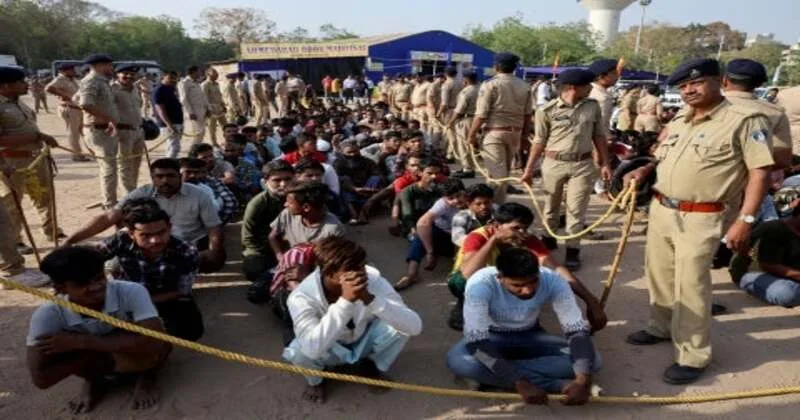
Murshidabad: A dramatic situation unfolded along the India-Bangladesh border in West Bengal after hundreds of suspected undocumented Bangladeshi migrants reportedly attempted to cross back into Bangladesh amid an intensified anti-infiltration drive launched by the new BJP-led state government under Chief Minister Suvendu Adhikari.
According to multiple reports, long queues formed near the border as people allegedly tried to leave India following strong warnings issued by the West Bengal government regarding undocumented immigrants. Security agencies, including the Border Security Force (BSF), reportedly began verification procedures before allowing any movement across the international border.
The developments came shortly after Chief Minister Suvendu Adhikari publicly backed the “Detect, Delete, Deport” policy against illegal infiltration. In a strongly worded statement, he warned suspected illegal Bangladeshi migrants to leave voluntarily before stricter enforcement measures began.
The government’s aggressive posture appears to have created fear among many undocumented residents, especially in border districts where migrant populations have historically existed due to economic migration, porous borders, and long-standing cross-border familial ties. Reports indicate that several of those attempting to cross back were daily wage labourers, domestic workers, construction workers, and fishery employees who had been living in various districts of West Bengal.
“Detect, Delete, Deport” Strategy
The phrase “Detect, Delete, Deport” has emerged as the central slogan of the new West Bengal administration’s immigration policy. The strategy focuses on three key objectives:
1. Identifying undocumented foreign nationals living in the state
2. Removing allegedly fake names from voter and welfare databases
3. Deporting individuals found to be staying illegally in India
The BJP has long accused previous governments in West Bengal of allowing illegal infiltration from Bangladesh for political and electoral reasons. The issue has remained politically sensitive for decades, especially in border districts like North 24 Parganas, Nadia, Murshidabad, Malda, and Cooch Behar.
Suvendu Adhikari and other BJP leaders have repeatedly claimed that illegal immigration has altered the demographic balance of several regions in the state.
Holding Centres and Administrative Measures
Reports suggest that the state administration has already started operational preparations for large-scale verification and detention procedures. Temporary holding centres for suspected illegal immigrants have reportedly been established in districts such as Malda and Murshidabad.
The government has also instructed railway authorities and local police to monitor transport hubs for suspicious movements linked to illegal infiltration. Earlier reports indicated that the Railway Protection Force (RPF) had been directed to track undocumented migrants at railway stations across the state.sh Responds with Increased Vigilance
The developments in West Bengal have also attracted attention across the border. Bangladesh authorities reportedly increased vigilance in border regions after concerns emerged regarding possible forced or hurried cross-border movements from India.
According to sources, the Border Guard Bangladesh (BGB) has strengthened patrols and surveillance in vulnerable sectors and warned local villagers about illegal crossings. Bangladesh has also reportedly insisted that any repatriation process must follow formal diplomatic procedures and verification mechanisms.
The India-Bangladesh border, stretching over 4,000 kilometres, remains one of the most sensitive and porous international boundaries in South Asia. Illegal migration, smuggling, and trafficking have long been major concerns for both countries.
As border checks intensify and political rhetoric sharpens, the situation in West Bengal is likely to remain at the centre of national political discourse in the coming months.
For now, the scenes unfolding near the Bangladesh border reflect both the scale of administrative action underway and the deep anxieties surrounding immigration, citizenship, and identity politics in eastern India.