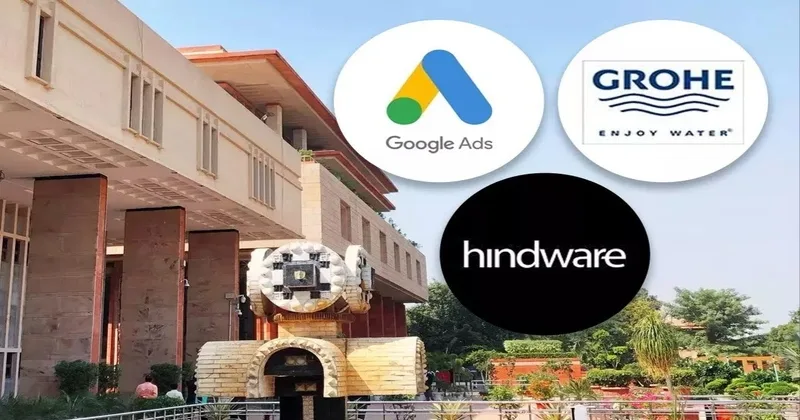
Delhi HC fines Google Rs 30 lakh in Hindware case
June 16, 2026
  • Read Ecopy
  • Circulation
  • Advertise
  • Careers
  • About Us
  • Contact Us
Android AppiPhone AppArattai
Organiser
  • ‌
  • Bharat
    • Assam
    • Bihar
    • Chhattisgarh
    • Jharkhand
    • Maharashtra
    • View All States
  • World
    • Asia
    • Europe
    • North America
    • South America
    • Africa
    • Australia
  • Editorial
  • International
  • Opinion
  • RSS @ 100
  • More
    • Op Sindoor
    • Analysis
    • Sports
    • Defence
    • Politics
    • Business
    • Economy
    • Culture
    • Special Report
    • Sci & Tech
    • Entertainment
    • G20
    • Azadi Ka Amrit Mahotsav
    • Vocal4Local
    • Web Stories
    • Education
    • Employment
    • Books
    • Interviews
    • Travel
    • Law
    • Health
    • Obituary
  • Subscribe
    • Subscribe Print Edition
    • Subscribe Ecopy
    • Read Ecopy
  • ‌
  • Bharat
    • Assam
    • Bihar
    • Chhattisgarh
    • Jharkhand
    • Maharashtra
    • View All States
  • World
    • Asia
    • Europe
    • North America
    • South America
    • Africa
    • Australia
  • Editorial
  • International
  • Opinion
  • RSS @ 100
  • More
    • Op Sindoor
    • Analysis
    • Sports
    • Defence
    • Politics
    • Business
    • Economy
    • Culture
    • Special Report
    • Sci & Tech
    • Entertainment
    • G20
    • Azadi Ka Amrit Mahotsav
    • Vocal4Local
    • Web Stories
    • Education
    • Employment
    • Books
    • Interviews
    • Travel
    • Law
    • Health
    • Obituary
  • Subscribe
    • Subscribe Print Edition
    • Subscribe Ecopy
    • Read Ecopy
Organiser
  • Home
  • Bharat
  • World
  • Operation Sindoor
  • Editorial
  • Analysis
  • Opinion
  • Culture
  • Defence
  • International Edition
  • RSS @ 100
  • Magazine
  • Read Ecopy
Home Bharat

Delhi High Court rules Google Ads’ use of ‘HINDWARE’ keyword as trademark infringement, orders Rs 30 lakh damages

The Delhi High Court has ruled that Google’s practice of allowing trademarked names such as “HINDWARE” to be used as advertising keywords amounts to trademark infringement under the Trade Marks Act. The court imposed a permanent injunction on Google and directed the tech giant to pay Rs 30 lakh in damages to Hindware for profiting from the brand’s goodwill through its Google Ads programme

WEBDESKWEBDESK
May 26, 2026, 12:00 pm IST
in Bharat, Delhi
Follow on Google News
Indian sanitaryware brand took Google to court & won. Rivals can no longer bid on its trademark

Indian sanitaryware brand took Google to court & won. Rivals can no longer bid on its trademark

FacebookTwitterWhatsAppTelegramEmail

The Delhi High Court has held that Google’s practice of allowing trademarked brand names to be auctioned as advertising keywords under Google Ads amounts to trademark infringement, and has permanently barred the tech giant from using “HINDWARE” or any deceptively similar variations as keywords in its advertising programme.

The dispute dates back to 2013, when sanitaryware company Hindware found that rival firm Cera Sanitaryware and its website developer, Omkara Infoweb, were allegedly purchasing the trademark “HINDWARE” as a keyword under Google’s AdWords programme.

In October 2014, Hindware discovered that plumbing fixtures company Grohe had also purchased the “HINDWARE” trademark as a keyword. Consequently, whenever users searched for Hindware online, advertisements and links related to Cera and Grohe appeared prominently in the search results. Hindware argued that this practice amounted to unfair competition and trademark dilution, as it allegedly diverted potential customers by creating confusion around the brand.

Although Hindware later reached settlements with both Cera and Grohe, the legal battle against Google continued to determine whether the use of trademarked terms as invisible keyword triggers in advertisements constituted “use in advertising” under the Trade Marks Act and whether it led to unauthorised brand confusion.

Delivering the verdict on May 22, Justice Mini Pushkarna of the Delhi High Court observed that “it is not necessary that the registered trademark physically appears in an advertisement for the same to be used ‘in advertising’.”

Justice Mini Pushkarna held that the use of a trademark as a keyword to trigger advertisements for goods or services amounts to using the mark “in advertising”. The court also directed Google to pay Rs 30 lakh in damages to Hindware.

The ruling centred on Section 29(6)(d) of the Trade Marks Act, 1999, which states that a registered trademark is considered to be in use if it is applied to business papers or advertisements without the consent of the trademark owner.

Also Read: Cracks Inside Trinamool Widen: 101 councillors quit as arrests and rebellion rock Bengal civic bodies

Under this provision, unauthorised use of a registered trademark in print advertisements, digital campaigns, sponsored search keywords, social media promotions, and broadcasting can constitute trademark infringement. In the 163-page judgment, Justice Pushkarna observed that Google and its subsidiaries had actively infringed the well-known “HINDWARE” trademark by permitting rival companies to bid on the keyword, thereby diverting internet traffic intended for Hindware. But how did the court conclude that Google’s actions amounted to trademark infringement?

The court observed that Google’s “AdWords” programme, now known as Google Ads, enabled competing companies to unfairly benefit from the reputation and goodwill associated with established trademarks.
Since “HINDWARE” is a coined and distinctive mark with no dictionary meaning, the court noted that any internet user searching for the term was specifically looking for Hindware products. By making “HINDWARE” available as a keyword for bidding, Google was effectively monetising the commercial value and consumer recognition attached to a trademark it did not own.

The court further held that Google profited through its pay-per-click advertising model whenever users searching for Hindware were redirected to competitors such as Grohe or Cera and clicked on sponsored links. According to the judgment, this amounted to Google deriving financial benefit from Hindware’s established goodwill, thereby constituting trademark infringement. Google contended that keywords function merely as invisible backend triggers and are not visible to consumers, and therefore cannot be treated as “use” of a trademark under the law. The court, however, dismissed this argument, holding that Section 29(6) of the Trade Marks Act clearly recognises the use of a trademark “in advertising” as a form of infringement, irrespective of whether the mark is visibly displayed to consumers.

The court observed that advertising is a broad and evolving process, and that invisible keywords form a crucial mechanism behind online promotional activity. Drawing a comparison between Google’s keywords and “meta-tags”, the court said that diverting internet traffic from a trademark owner’s website to a competitor’s site through such hidden tools amounts to illegal conduct, even if users cannot directly see the code involved.

It further held that Google’s actions violated “honest practices” in commercial dealings because the company actively encouraged advertisers to bid on rival brand names through its Keyword Planner Tool, which recommends popular search terms to advertisers.

According to the judgment, Google Ads effectively compels trademark owners to bid on their own brand names to ensure their official websites appear above competitors in search results. The court said this practice enabled Google to “seize and sell” commercial value that it had no lawful right to exploit. Google had sought protection under Section 79 of the Information Technology Act by claiming that it functioned merely as a neutral intermediary entitled to “safe harbour” immunity.

The court rejected this defence, ruling that Google was not a passive intermediary but an active participant in the advertising process, as it determines the recipients of sponsored links and monetises the resulting traffic and data. The judgment also noted that Google’s policy in India, which declines to investigate trademark use as keywords, demonstrated a failure to exercise the “due diligence” expected from an intermediary under the law.


 

Topics: digital advertisingHindwareTrademark InfringementTrade Marks ActJustice Mini PushkarnaDelhi High CourtGoogleGoogle Ads
ShareTweetSendShareSend
✮ Subscribe Organiser YouTube Channel. ✮
✮ Join Organiser's WhatsApp channel for Nationalist views beyond the news. ✮
Previous News

How Suvendu Adhikari-led BJP government is recasting Bengal’s bureaucratic culture – From ‘Tumi’ to ‘Aapni’

Next News

QUAD Foreign Ministers Meet: EAM Jaishankar pushes maritime democracies for Indo-Pacific security & counter-terrorism

Related News

Dr Surendra Jain, Joint General secretary, VHP

VHP Demands Audit of Waqf Properties Amid Encroachment Claims: “Land should go to rightful owner,” says Surendra Jain

Exterior of Delhi's Jama Masjid

Delhi Jama Masjid Encroachment Case: HC-monitored survey nears completion; Civic authorities prepare final report

A representative image

What about Love Jihad?: Delhi HC acquits Qasim in minor Hindu girl abduction case after 22 years says, eloped willingly

Umar Khalid (File Photo)

Umar Khalid seeks 15-day interim bail for uncle’s Chehlum, mother’s surgery; Delhi HC hearing on May 22

No Relief for The Wire’s Siddharth Varadarajan! Delhi High Court Recalls OCI Order After He Hid Bail Conditions

No Relief for The Wire’s Siddharth Varadarajan! Delhi High Court Recalls OCI Order After He Hid Bail Conditions

Yasin Malik who has ties with Pakistan

Yasin Malik used links with Pakistan PM, President to push Kashmir secession agenda: NIA tells Delhi HC

Load More

Latest News

Rabindranath Tagore

Rabindranath Tagore and the revival of Hindu civilisational pride

Representative Image

Viksit Bharat Shiksha Adhishthan Bill 2025: Mandate to promote Bharatiya ‘Gyan’ & ‘Bhasha’

Uttar Pradesh: Digital democracy dialogue ‘Triveni’ concludes; Focused on inclusive growth & cultural discourses

RSS Pune organises workshop on “Preparing for the AI Era”; Experts stress on AI literacy and Atmanirbharata in AI

Assam Governor Lakshman Prasad Acharya leads sacred Buddha relics mission to Mongolia

India- Mongolia Relations: Celebrating the spiritual neighbourhood

The AN-32: Service, sacrifice and the search for a successor

The Baya River of Bihar: How Jan Andolan brought the dying stream back to life

Oplus_16908288

Love Jihad in Assam: Illias Ahmed trapped Noida Hindu girl with fake identity; Held in Guwahati, victim untraceable

UK bans social media for under-16s: Tightens online vigilance to insulate children from digital risks

Maoist Arms Dump Recovered in Malkangiri

Odisha: Another major Maoist arms dump recovered in Malkangiri; Four hidden caches unearthed in last eight days

Load More
  • Privacy
  • Terms
  • Cookie Policy
  • Refund and Cancellation
  • Delivery and Shipping

© Bharat Prakashan (Delhi) Limited.
Tech-enabled by Ananthapuri Technologies

  • Home
  • Search Organiser
  • Bharat
    • Assam
    • Bihar
    • Chhattisgarh
    • Jharkhand
    • Maharashtra
    • View All States
  • World
    • Asia
    • Africa
    • North America
    • South America
    • Europe
    • Australia
  • Editorial
  • Operation Sindoor
  • Opinion
  • Analysis
  • Defence
  • Culture
  • Sports
  • Business
  • RSS @ 100
  • Entertainment
  • More ..
    • Sci & Tech
    • Vocal4Local
    • Special Report
    • Education
    • Employment
    • Books
    • Interviews
    • Travel
    • Health
    • Politics
    • Law
    • Economy
    • Obituary
  • Subscribe Magazine
  • Read Ecopy
  • Advertise
  • Circulation
  • Careers
  • About Us
  • Contact Us
  • Policies & Terms
    • Privacy Policy
    • Cookie Policy
    • Refund and Cancellation
    • Terms of Use

© Bharat Prakashan (Delhi) Limited.
Tech-enabled by Ananthapuri Technologies