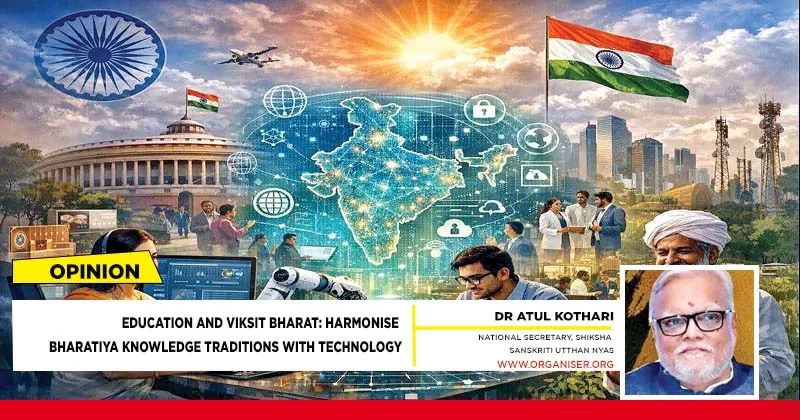
Bharat set the goal of Viksit Bharat 2047 at a time when the country had already achieved remarkable success in several sectors. Today, Bharat has established a distinct global identity in the field of space science. The achievement of reaching parts of the Moon where no country had previously landed is evidence of our scientific capability. The Indian Space Research Organisation (ISRO) has emerged as a major global hub for satellite launches.
Economically, Bharat is moving rapidly towards becoming one of the world’s leading economies. In the medical sector as well, Bharat has established a strong presence, with citizens from many countries coming to Bharat for treatment. Growing self-reliance in defence and the increase in defence exports reflect Bharat’s strategic capability. Bharat has also gained a significant position globally in mobile and digital technology. At the same time, due to its balanced foreign policy, Bharat’s influence in global politics has continued to grow. Many more such achievements can be listed.
Despite these achievements, it must also be acknowledged that many challenges still remain on the path towards becoming a developed nation. The continued depreciation of the Indian rupee, inadequate progress in research and technology, and lack of self-reliance in several sectors indicate that much work remains unfinished. More importantly, development today is often reduced merely to economic and material progress. As a result, environmental crises, erosion of moral values, social imbalance, increasing violence against women, and rising health-related problems have become major concerns. As material and economic development expands within the current model of development, many of these problems are also on the rise. Therefore, it is natural to ask whether material progress alone can truly be called development.
The Bharatiya Idea Of Development
If the vision of Viksit Bharat is to become meaningful, the concept of development must be made broader and more holistic. In the Bharatiya thought tradition, development does not merely mean economic advancement, but the balanced pursuit of the four Purusharthas — Dharma, Artha, Kama and Moksha. In this framework, material progress is accepted only when grounded in morality and social responsibility. Therefore, there is a need today to re-establish this balanced concept of development in which material and spiritual growth exist in harmony. Education has a central and decisive role in achieving this holistic development.
The national vision document for Viksit Bharat 2047 emphasises economic development, technological advancement, global competitiveness and good governance. However, this vision can succeed fully only when the active participation of states is ensured. With this perspective, state governments should also prepare development vision documents according to their geographical, social, cultural and economic conditions. States such as Maharashtra, Gujarat, Haryana, Chhattisgarh and Uttar Pradesh have already presented such vision documents, which is a positive step.
There is a need for other states to prepare similar development plans and carry them forward to districts, local bodies and village panchayats. When the process of development reaches the local level, the vision of Viksit Bharat can become meaningful on the ground. Likewise, along with social participation, active involvement of every citizen is essential to realise the vision of Viksit Bharat. Citizens should not remain merely beneficiaries of government schemes, but should participate in planning, implementation, identifying local needs and offering suggestions. Only then can the idea of Viksit Bharat truly be realised.
Nation Building through Education
In this entire process, education emerges as a foundational force. Education is not just a means of employment, but the most effective instrument of nation-building. Today, there is a need to reorganise the education system in such a way that it develops not only knowledge and skills, but also values, character and social responsibility. A serious question has emerged: are we merely producing skilled doctors, engineers and scientists, or are we also developing individuals who are ethical, responsible, socially sensitive and committed to the nation? For Bharat to sustain progress in sectors such as space, healthcare, digital technology and industrial development, the quality of education must be further strengthened. High-quality education and research are necessary to build a strong foundation in science and technology. Ethical values and human sensitivity must be integrated into all fields of education, including medical education. Industrial development requires technical and vocational education aligned with the needs of industries and society. The expansion of the digital economy demands skilled human resources in artificial intelligence, data science and emerging technologies, along with the development of eco-friendly technologies.
Research & Educational Reform
At the same time, education can also address the areas where Bharat continues to face limitations. The lack of research and innovation, imbalance between skills and employment, and absence of technological self-reliance are directly connected to the education system. Therefore, universities should not be viewed merely as institutions distributing degrees, but as centres for holistic personality development, research and innovation. Education must be linked with industry and business so that students gain practical understanding of real work environments. Alongside theoretical knowledge, vocational education and skill development should receive greater emphasis to improve employment opportunities for youth. Special attention must also be paid to the quality and training of teachers, since the quality of education is directly linked to the teacher. In this journey of development, foundational education is equally important. If literacy, mathematical ability and logical thinking are not developed at the primary level, then efforts in higher education and skill development will not yield the desired results. Therefore, ensuring universal foundational education is essential.
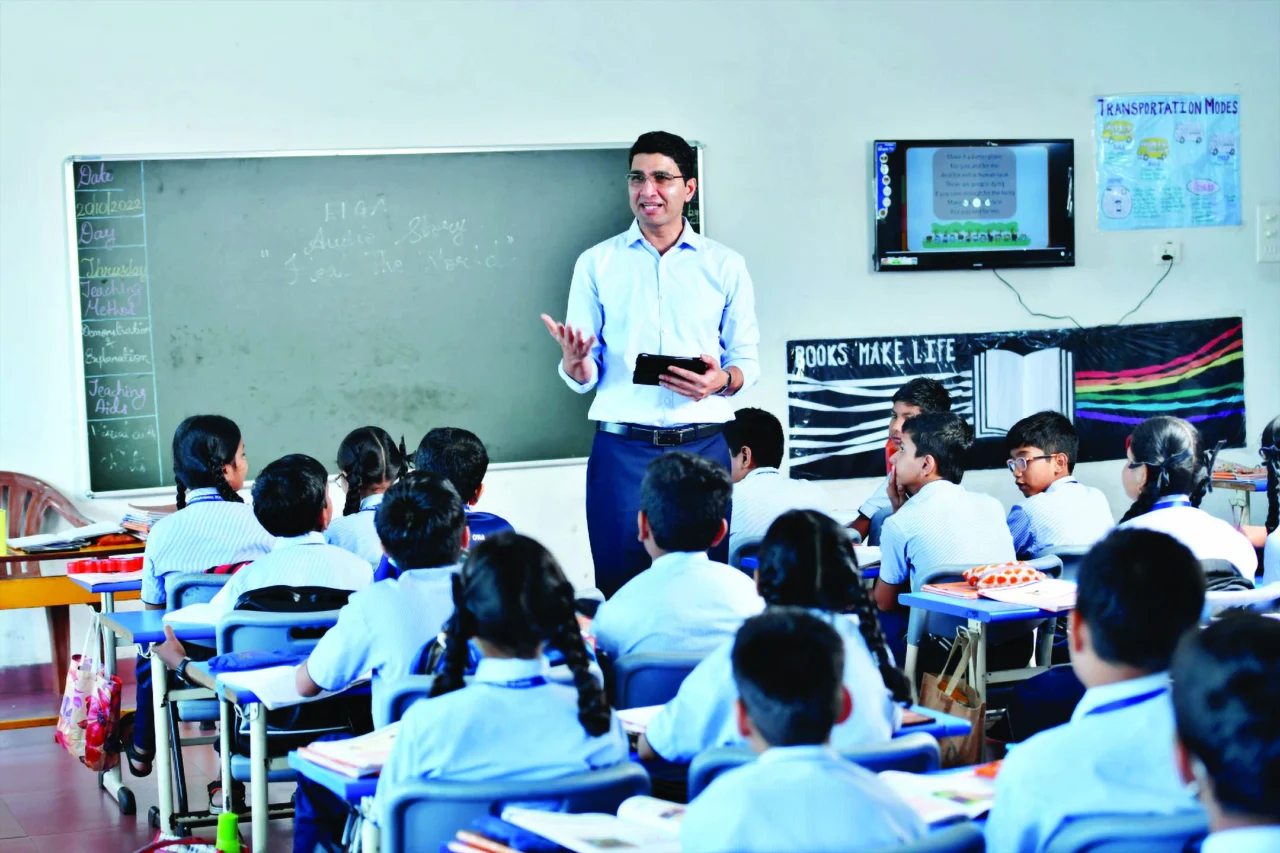
Holistic Learning Through NEP 2020
The inclusion of Bharatiya Knowledge Systems in education is another important dimension. Bharat was regarded as a Vishwaguru in ancient times, and one of the primary reasons was its outstanding education system. Universities such as Nalanda, Takshashila and Vallabhi were not only centres of knowledge, but also institutions dedicated to the holistic development of students. Today, there is a need to integrate Indian knowledge traditions into modern education. This can make education more humane, value-oriented and balanced. Such integration would not merely revive tradition, but would help create a harmonised educational model suited to modern needs.
Effective administration and good governance are also essential for educational reform. Through digital technology, education can be made more accessible and effective. Data-driven decision-making, transparency and accountability must be strengthened. The National Education Policy (NEP) 2020 is an important step in this direction, but its success will depend upon effective implementation. Continuous and sustained efforts by governments and educational institutions will be necessary to achieve this goal.
Civilisational Vision Of Viksit Bharat
To establish Bharat as a developed nation or Vishwaguru does not mean turning Bharat into America, Russia or China. Pushing the world towards war, arms races or terrorism is not Bharat’s vision of development. Bharat’s vision is to contribute towards the upliftment of every suffering, deprived and marginalised individual, society and nation, and to establish peace, harmony and goodwill in the world. The primary responsibility of creating citizens capable of fulfilling this role rests with the field of education.
Ultimately, it is clear that the goal of Viksit Bharat 2047 is not merely a target of economic advancement, but a process of broad and holistic transformation. Education lies at the centre of this transformation. It is education that empowers human capabilities and enables economic, social and cultural development. If Bharat wishes to become a developed, self-reliant and Vishwaguru nation, then essential changes in the education system are unavoidable. An education system must be developed that creates knowledgeable, skilled and character-driven citizens. For this, it will be necessary to harmonise Bharatiya knowledge traditions with modern science and technology so that the vision of Viksit Bharat can truly be realised.