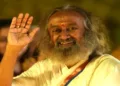
There are very few movements in the world that genuinely change the way people think, live and engage with society. One such movement is The Art of Living Foundation, founded by Gurudev Sri Sri Ravi Shankar 45 years ago. What began as a spiritual movement centred around meditation, inner peace and human values gradually evolved into a global civilisational project touching millions of lives across 182 countries. This year, as Gurudev celebrates his 70th birthday, the occasion is not merely a celebration of a spiritual leader, but also of an idea – an idea that combines ancient Indian wisdom with contemporary aspirations. During a conversation at the International Centre of The Art of Living in Bengaluru, one of the senior members associated with the movement, Jaina Desai, explained the core philosophy behind their institutions. Desai said, “We are running over 1,500 educational institutions, and 1,356 of them are free. The motto of these institutions is – ‘Broaden your vision and deepen your roots.’ That means, look out to the world, but go deep into your Sanskriti, your Bharatiyata, your civilisation.”
Education Beyond Information
The movement’s approach to education emerges from Gurudev’s broader understanding of human development. In a world increasingly dominated by artificial intelligence, hyper-competition and digital distractions, The Art of Living argues that education cannot remain limited to textbooks and examinations alone. Mumbai-based businessman Parag Kothari, who now teaches at The Art of Living, at the discussion remarked: “Education is going beyond what we perceive through our five senses. It is tapping into the higher consciousness, tapping into that field of absolute intelligence. In this age of AI, that is also another AI.”
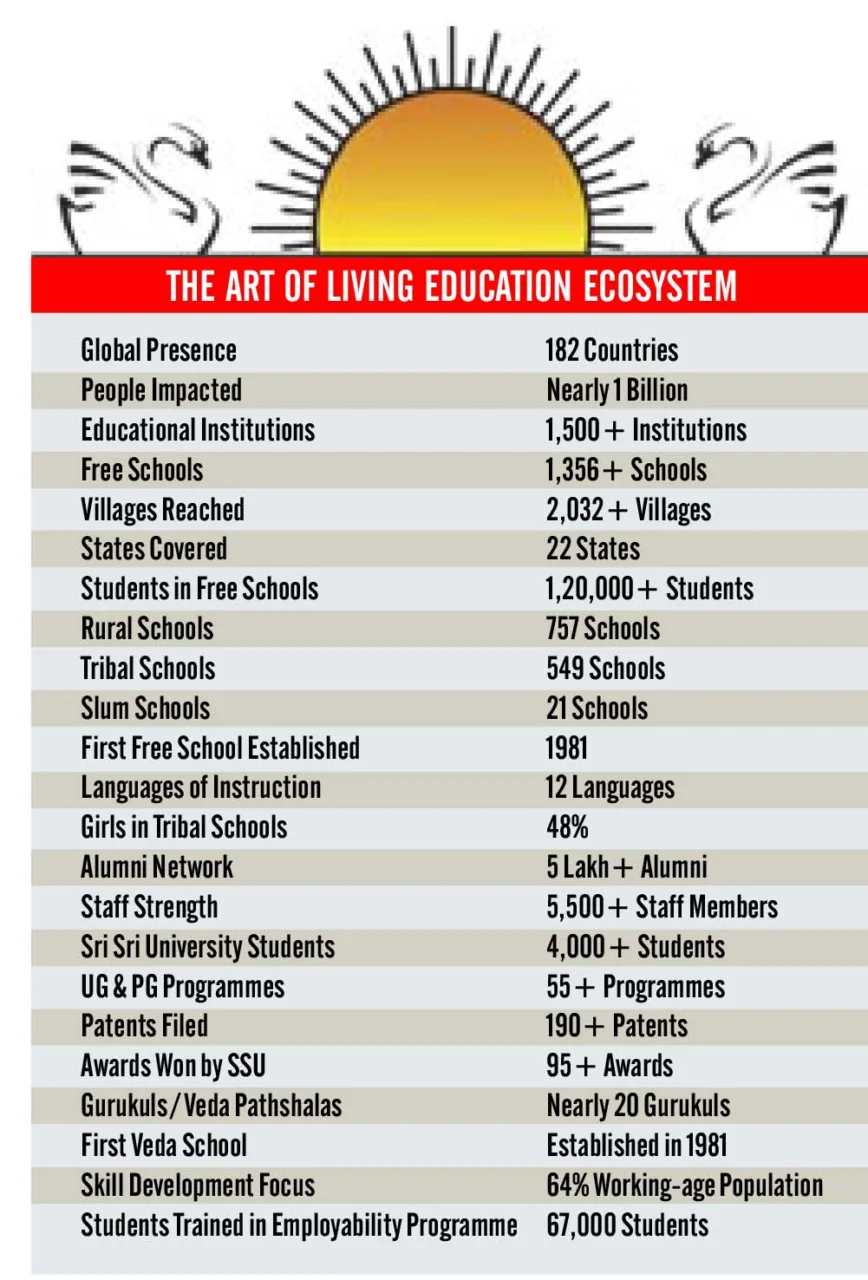
The educational institutions under the Sri Sri Ravishankar Vidya Mandir Trust operate on the principle “Education Brings Completeness.” Founded in 1999, the trust today manages over 121 institutions, including schools, universities, Ayurveda colleges, nursing institutes and vocational centres. More than 60,000 students currently study in these institutions, while the alumni network has crossed half a million students.
The Free School Revolution
Perhaps the most remarkable contribution of the movement lies in its network of free schools operating in rural, tribal and socio-economically backward regions of India. For nearly four decades, the organisation has been running schools in areas where quality education was either absent or inaccessible. Today, the Art of Living Free Schools network spans more than 1,356 schools across 22 states and over 2,032 villages, benefiting more than 1,20,000 underprivileged children.
The story began modestly in 1981 near the Bengaluru ashram. A few village children from Udayapura who had no access to education were gathered together. Volunteers taught them basic hygiene, rudimentary education and provided free meals. From that humble beginning emerged one of India’s largest networks of free value-based schools.
Gurukul in the Modern Age
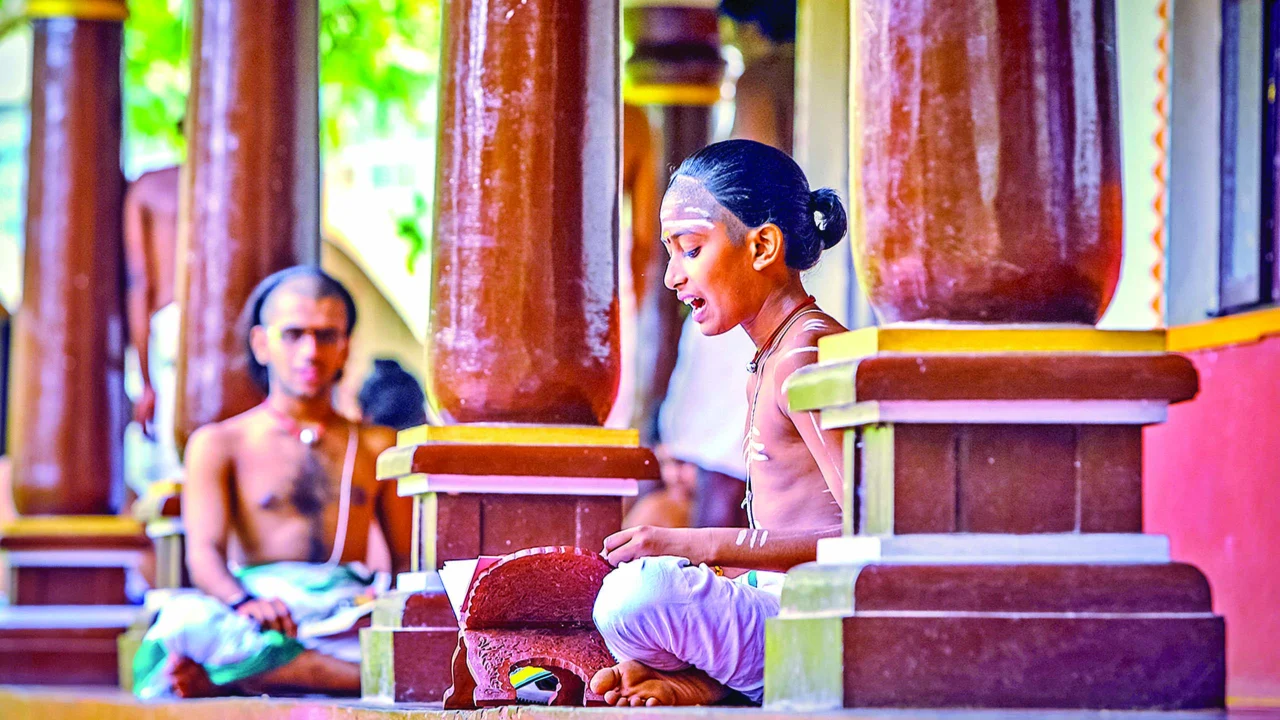
What truly distinguishes The Art of Living educational ecosystem is that it does not see ancient Indian traditions and modern education as contradictory. At the heart of this education model lies the Veda Agama Samskrutha Maha Patashala, popularly known as The Art of Living Gurukulam. Desai described it beautifully: “We are running close to 20 gurukuls across the country. In these gurukuls, children learn all the Vedas and Agamas; they chant and study in Sanskrit, but along with that, they also complete their regular education. You saw today that while wearing dhoti-veshti, they were also using computers and playing basketball.” The first Veda School was established by Gurudev in Bengaluru in 1981 with the aim of preserving Vedic education in its pristine form. Over the years, several Vedic pathshalas have been established across India under the supervision of Vedic scholars. This educational vision also aligns strongly with India’s new educational thinking under the National Education Policy 2020. Kothari observed: “When the National Education Policy came out, we realised that we had already been practising many of these ideas for years – focusing on Indian culture, Indian languages, meditation, seva and human values.”
Learning Beyond the Classroom
The Art of Living model also emphasises peer learning, emotional intelligence and experiential growth. Desai explained, “Children learn best from each other, often more than what the teacher, the blackboard or even the computer can teach them. Learning with peers and with children of different age groups is something we have already incorporated into our education system.” The university today offers over 55 undergraduate and postgraduate programs, has signed more than 250 MoUs and earned numerous national and international recognitions.
Reaching the Margins
The educational mission of the movement extends far beyond mainstream urban India. Its schools in slum areas and the Northeast reflect an attempt to reach some of the country’s most neglected communities.
In Mumbai’s Dharavi, Asia’s largest slum, the organisation established its first English-medium free school in 2003. Despite challenges such as poverty, crime and parental indifference towards education, the school today provides quality education, counselling, yoga and even robotics training to hundreds of children.
Similarly, children from the Northeast are brought to Bengaluru, where their accommodation, education and extracurricular development are fully supported from nursery to university level. The movement believes that education must not remain restricted to privilege. Its stated vision is “Equal Education for All.”
Skill Development and Livelihood
Recognising the economic realities of modern India, the organisation has also invested heavily in skill development initiatives. Courses range from tailoring and carpentry to solar installation, computer literacy, banking and sustainable farming. Partnerships with corporations such as Schneider, Godrej and L&T have helped establish advanced training centres. A special employability program with Barclays Bank reportedly provided soft skills training to over 67,000 students within three years.
Forty-five years after its inception, The Art of Living is attempting to reshape the future through values rooted in Bharat’s ancient yet timeless wisdom.