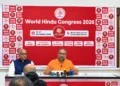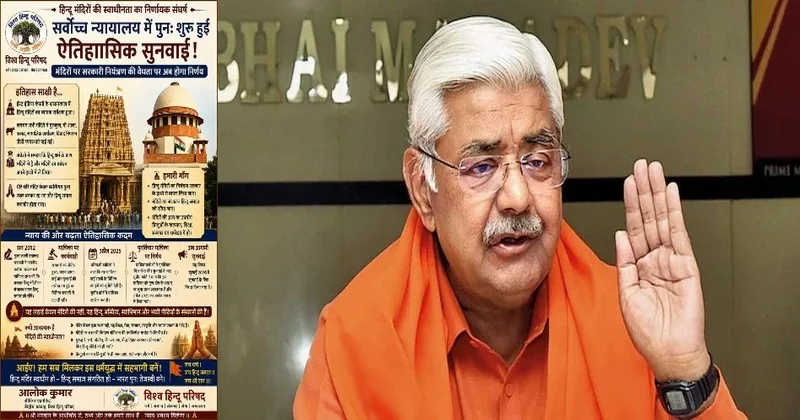
New Delhi: “During the rule of the East India Company, British officials conducted extensive surveys of Hindu temples in Tamil Nadu and Bengal. These surveys reportedly revealed that almost every temple functioned not merely as a place of worship, but as a centre of social, cultural, educational, and community life, often housing Gurukuls and Gaushalas. Festivals, social ceremonies, and community dispute resolution were also deeply linked to temple institutions,” said Alok Kumar, International working president of Vishva Hindu Parishad (VHP) in a press release on May 21, 2026.
“It is argued that the British administration recognised temples as the core of Hindu civilisational life and gradually brought their management under state control in the name of administrative governance. Over time, many temples were reduced largely to centres of individual worship, while their broader social role weakened”, the press release reads.
“Unlike Gurudwaras, Churches, Mosques, Jain Sthanaks, and Buddhist Viharas, several Hindu temples across different states continue to remain under varying forms of government control. In many cases, temple revenues are regulated by state authorities, administrative officers are appointed by governments, and management powers remain with bureaucratic structures rather than traditional religious leadership. Seeking restoration of temple autonomy, revered saint Swami Dayananda Saraswati had filed a petition in the Supreme Court in 2012 demanding that the administration of Hindu temples be returned to Hindu society. The petition primarily challenged laws relating to temple administration in Tamil Nadu, Andhra Pradesh, Telangana, and Puducherry”, the press release further reads.
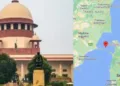
“Notices were issued to the concerned governments, and responses were placed on record. Although the matter was listed multiple times over the years, hearings were repeatedly deferred. In April 2025, the matter came up before the Supreme Court, where opposing counsel argued that different states had different laws governing temple administration, and therefore the petitioners should challenge them separately before respective courts. Accepting this contention, the Court dismissed the petition that had remained pending for nearly 13 years”, reads the press release.
“Subsequently, the petitioners sought a review of the dismissal order. Following hearings in the matter, the Supreme Court, in its order dated May 18, 2026, accepted that the petition required adjudication on merits and recalled the April 2025 order dismissing the case. The matter is now scheduled for hearing in July 2026”, the press release further reads.
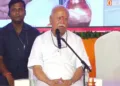
Speaking on the development, Alok Kumar stated that Hindu temples should be administered independently by Hindu society and that government control over temples must end completely. He asserted that temple resources should be utilised for Hindu society and expressed confidence that facts and constitutional arguments support the case.