CBSE makes three languages mandatory from class 9
June 30, 2026
  • Read Ecopy
  • Circulation
  • Advertise
  • Careers
  • About Us
  • Contact Us
Android AppiPhone AppArattai
Organiser
  • ‌
  • Bharat
    • Assam
    • Bihar
    • Chhattisgarh
    • Jharkhand
    • Maharashtra
    • View All States
  • World
    • Asia
    • Europe
    • North America
    • South America
    • Africa
    • Australia
  • Editorial
  • International
  • Opinion
  • RSS @ 100
  • More
    • Op Sindoor
    • Analysis
    • Sports
    • Defence
    • Politics
    • Business
    • Economy
    • Culture
    • Special Report
    • Sci & Tech
    • Entertainment
    • G20
    • Azadi Ka Amrit Mahotsav
    • Vocal4Local
    • Web Stories
    • Education
    • Employment
    • Books
    • Interviews
    • Travel
    • Law
    • Health
    • Obituary
  • Subscribe
    • Subscribe Print Edition
    • Subscribe Ecopy
    • Read Ecopy
  • ‌
  • Bharat
    • Assam
    • Bihar
    • Chhattisgarh
    • Jharkhand
    • Maharashtra
    • View All States
  • World
    • Asia
    • Europe
    • North America
    • South America
    • Africa
    • Australia
  • Editorial
  • International
  • Opinion
  • RSS @ 100
  • More
    • Op Sindoor
    • Analysis
    • Sports
    • Defence
    • Politics
    • Business
    • Economy
    • Culture
    • Special Report
    • Sci & Tech
    • Entertainment
    • G20
    • Azadi Ka Amrit Mahotsav
    • Vocal4Local
    • Web Stories
    • Education
    • Employment
    • Books
    • Interviews
    • Travel
    • Law
    • Health
    • Obituary
  • Subscribe
    • Subscribe Print Edition
    • Subscribe Ecopy
    • Read Ecopy
Organiser
  • Home
  • Bharat
  • World
  • Operation Sindoor
  • Editorial
  • Analysis
  • Opinion
  • Culture
  • Defence
  • International Edition
  • RSS @ 100
  • Magazine
  • Read Ecopy
Home Bharat

CBSE makes three languages mandatory from class 9 under NEP 2020, no board exam for third language

Students studying in Class IX from July 1, 2026 will now have to study three languages, with at least two being Indian languages, as part of the implementation of the National Education Policy (NEP) 2020 and the National Curriculum Framework for School Education (NCF-SE) 2023

WEBDESKWEBDESK
May 17, 2026, 11:30 am IST
in Bharat, Education
Follow on Google News
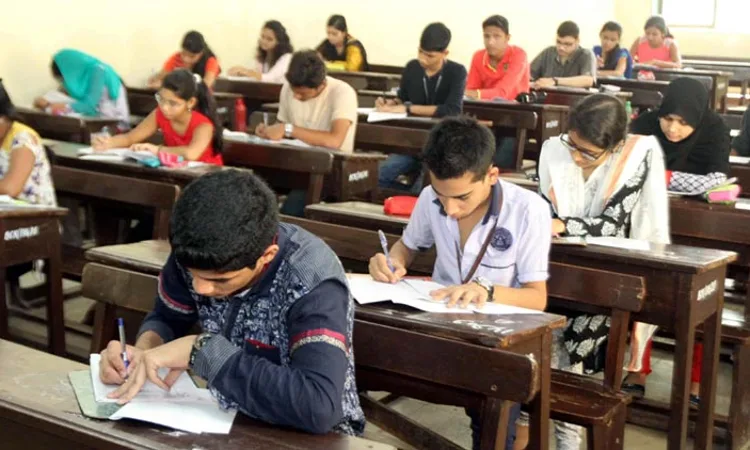
A representative image (Source: Live Law)

A representative image (Source: Live Law)

FacebookTwitterWhatsAppTelegramEmail

The Central Board of Secondary Education (CBSE) has announced a major change in the secondary education system by making the study of three languages compulsory for students from Class IX beginning July 1, 2026. The decision has been taken in line with the recommendations of the National Education Policy (NEP) 2020 and the National Curriculum Framework for School Education (NCF-SE) 2023, both of which emphasise multilingual learning and promotion of Indian languages.

According to a circular issued by the CBSE on May 15, students entering Class IX will now be required to study three languages, identified as R1, R2 and R3. The Board has made it mandatory that at least two of these languages must be native Indian languages. Schools affiliated with CBSE across the country will have to implement the new framework from the upcoming academic cycle.

No separate board exam for third language

One of the most significant aspects of the new policy is that there will be no separate CBSE Board examination for the third language, referred to as R3, in Class X. Instead, evaluation for the third language will be carried out entirely through internal assessments conducted by schools.

CBSE stated that the move is intended to reduce exam-related pressure on students while encouraging practical learning and language exposure rather than rote-based examination preparation. However, the Board clarified that students’ performance and marks in the third language will still be reflected in their official CBSE certificates.

The Board further assured students and parents that no student would be prevented from appearing in the Class X Board examinations due to the third language requirement.

How the new three-language system will work

Under the revised framework, students will choose three languages categorised as R1, R2 and R3. Schools can offer any language included in the official CBSE subject list. However, the Board has introduced specific conditions regarding foreign languages.

Students will be allowed to study a foreign language as their third language only if the other two selected languages are Indian languages. Additionally, foreign languages may also be chosen as an optional fourth language.

The policy is aimed at strengthening multilingual abilities among students while ensuring continued emphasis on Indian linguistic and cultural diversity, one of the central objectives of the NEP 2020.

Temporary use of class VI textbooks

CBSE has also shared implementation details for schools regarding teaching material for the third language. Since specialised secondary-level textbooks for many third-language options are not yet available, students in Class IX will temporarily use Class VI textbooks for the selected R3 language.

The Board advised schools to supplement these textbooks with local literature, regional learning resources and state-level educational material to ensure better language exposure and comprehension among students.

Recognising that several schools may face challenges in arranging qualified language teachers, especially for regional or less commonly taught languages, CBSE has permitted temporary alternative arrangements.

Schools have been allowed to adopt measures such as sharing teachers between nearby schools, using virtual teaching methods, hiring retired teachers or engaging qualified postgraduate candidates for language instruction.

The Board said these measures are intended to ensure smooth implementation of the policy without disrupting students’ learning process.

Special relaxations for certain students

CBSE has also announced that special relaxations will be provided to Children with Special Needs (CwSN), foreign students returning to India and schools located outside the country.

According to the Board, such cases will be handled individually depending on specific academic and practical requirements. The flexibility is intended to ensure that students facing exceptional circumstances are not adversely affected by the new language policy.

Part of larger NEP 2020 reforms

The three-language framework forms part of broader educational reforms introduced under the National Education Policy 2020, which seeks to promote multilingualism, strengthen foundational learning and reduce excessive dependence on high-pressure examinations.

The NEP had earlier proposed encouraging students to learn multiple Indian languages while preserving flexibility in language choices. The latest CBSE circular marks one of the most significant steps towards implementing those recommendations at the secondary school level.

The move is likely to impact lakhs of CBSE students across India and may also trigger discussions around language choices, implementation challenges and the availability of trained language teachers in schools.

Topics: CBSE three language policyCBSE third language mandatoryNEP 2020 language policyCBSE no board exam third languageCBSE language rules 2026
ShareTweetSendShareSend
✮ Subscribe Organiser YouTube Channel. ✮
✮ Join Organiser's WhatsApp channel for Nationalist views beyond the news. ✮
Previous News

Maharashtra Devasthan Inams Abolition Bill: Why Hindu organisations fear loss of centuries-old temple properties

Next News

PM Modi’s Historic Norway Visit: A win-win situation

Related News

No Content Available
Load More

Latest News

The Indian women's cricket team has qualified for the LA28 Olympics as the ICC confirmed the qualification pathway for cricket's historic Olympic return

Cricket’s return to the Olympic Games is a landmark moment: ICC Chairman Jay Shah

President Droupadi Murmu paid tribute to the heroes of the Santhal rebellion on the occasion of Hul Diwas

Hul Diwas: President Murmu pays tribute to heroes of Santhal rebellion, says their sacrifice will inspire forever

A representative image

Escalating unrest and civilian casualties in Pakistan Occupied Jammu and Kashmir: A 15 year overview

A representative image

Twelve years of pension reforms: Over 3.28 lakh PPOs issued through Bhavishya platform

Representative image made using AI

Religious festival or display of violence? 12 incidents of killings and attempts to kill Hindus during Muharram

A representative image

Nirbhay Chetna: Govt launches world’s largest gender sensitisation drive for women, targets 17.5 lakh representatives

A representative image made from AI

From Digital Consumer to Technology Powerhouse: How India is building technologies that are shaping Viksit Bharat 2047

Representative image

FCRA Amendment Bill 2026: Why evangelical groups are rattled over India’s oversight on foreign funding

Sir Dinshaw Maneckji Petit Birth Anniversary: Remembering Bombay's Textile Pioneer

Birth Anniversary of Sir Dinshaw Petit: The visionary who built Bombay’s textile empire

Guru Hargobind ji

Remembering Guru Hargobind Ji on Prakash Parv: Visionary who united spirituality with the sword of justice

Load More
  • Privacy
  • Terms
  • Cookie Policy
  • Refund and Cancellation
  • Delivery and Shipping

© Bharat Prakashan (Delhi) Limited.
Tech-enabled by Ananthapuri Technologies

  • Home
  • Search Organiser
  • Bharat
    • Assam
    • Bihar
    • Chhattisgarh
    • Jharkhand
    • Maharashtra
    • View All States
  • World
    • Asia
    • Africa
    • North America
    • South America
    • Europe
    • Australia
  • Editorial
  • Operation Sindoor
  • Opinion
  • Analysis
  • Defence
  • Culture
  • Sports
  • Business
  • RSS @ 100
  • Entertainment
  • More ..
    • Sci & Tech
    • Vocal4Local
    • Special Report
    • Education
    • Employment
    • Books
    • Interviews
    • Travel
    • Health
    • Politics
    • Law
    • Economy
    • Obituary
  • Subscribe Magazine
  • Read Ecopy
  • Advertise
  • Circulation
  • Careers
  • About Us
  • Contact Us
  • Policies & Terms
    • Privacy Policy
    • Cookie Policy
    • Refund and Cancellation
    • Terms of Use

© Bharat Prakashan (Delhi) Limited.
Tech-enabled by Ananthapuri Technologies