Kolkata: The West Bengal government has announced a series of civic and administrative measures aimed at addressing illegal parking, unregulated fee collection, public grievances, and growing waste management concerns in urban areas such as Kolkata and Asansol.
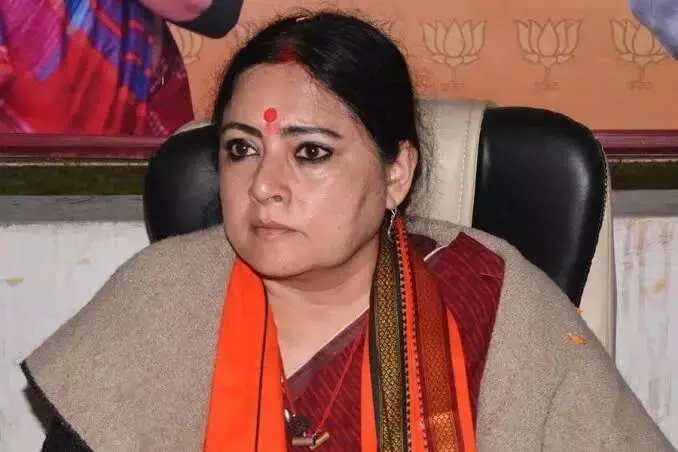
Speaking about the decisions taken by the state government, BJP leader and Bengal Minister Agnimitra Paul said the Urban Development and Municipal Affairs Department has taken a “principle decision” to regulate roadside parking across the state after years of alleged irregularities.
According to Paul, parking on both sides of roads, which she claimed had continued illegally for nearly 15 years, will now be restricted. Under the proposed system, vehicles will be allowed to park only on designated sides of roads, while parking on the opposite side will be prohibited in order to reduce congestion and improve traffic movement.
VIDEO | Kolkata: Bengal Minister Agnimitra Paul says, “We have taken 2-3 important decisions. In our Urban Development and Municipal Affairs departments, we have taken the principle decision that parking on both sides of the road, which has continued illegally for 15 years, will… pic.twitter.com/bBbWCKjkRa
— Press Trust of India (@PTI_News) May 14, 2026
She further alleged that illegal parking fee collections had become widespread in many parking zones, with taxes from these collections allegedly not being deposited with the government. The state, she said, now intends to crack down on such practices to ensure that all revenues generated through parking operations are properly routed to government accounts.
“Parking fees are being collected illegally in parking lots, and taxes from these collections are not being paid to the government. These illegal collections must be stopped immediately so that the entire tax amount goes to the government,” Paul said.
The minister also announced changes related to public grievance systems and emergency support services. She clarified that the existing helpline infrastructure was originally designed not only for women but also for children, and said the government now plans to integrate both services more effectively.
Under the new proposal, both the women’s helpline and child helpline numbers will remain active simultaneously so that citizens facing emergencies or distress situations can access assistance more efficiently.
Paul said the government is also planning to establish dedicated call centres under both the Women and Child Development Department and the Urban Development and Municipal Affairs Department. These centres would allow citizens to directly report grievances, civic complaints, and administrative issues.
In another significant announcement, the minister spoke about the growing problem of garbage accumulation and pollution in cities such as Kolkata and Asansol. Referring to what she described as years of poor waste management, Paul said the government is now introducing a geo-tagging based public participation model to improve sanitation response times.
As part of the initiative, the government has developed a mobile application through which residents can upload geo-tagged photographs of garbage dumps or uncleared waste locations. According to the minister, municipal authorities or corporations will be expected to respond and clean the reported site within two hours of receiving the complaint.
“Wherever there is pollution, we have seen over the last 15 years in Bengal, in Kolkata and Asansol, that garbage is lying everywhere and is not being cleaned. Now this responsibility is also being given to the public through geotagging,” she said.
At the same time, Paul appealed to citizens to cooperate with civic authorities by avoiding littering in public spaces. Stressing the importance of civic responsibility, she said maintaining cleanliness cannot depend solely on municipal action.
“Prevention is better than cure. Of course, cleaning is our responsibility, but we must also remain conscious about littering on roads,” the minister added.
The announcements come amid increasing public concern over traffic congestion, illegal parking networks, deteriorating urban sanitation, and civic infrastructure management in several urban centres across West Bengal.