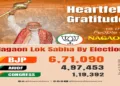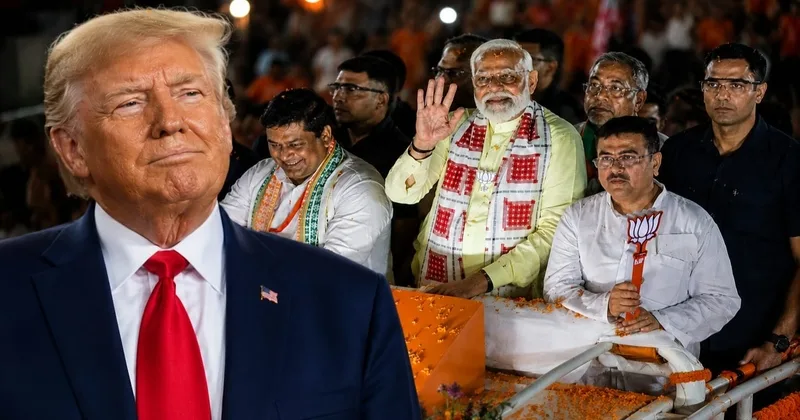
Washington/New Delhi:The Trump administration has once again exposed sharp inconsistencies in its foreign policy approach towards India and South Asia, even as Washington attempts to retain strategic influence in the Indo-Pacific amid growing geopolitical isolation over the Iran conflict and divisions within NATO. The contradiction became evident after the White House congratulated Prime Minister Narendra Modi following what it described as the Bharatiya Janata Party’s historic and decisive breakthrough victory in West Bengal. White House spokesman Kush Desai said that President Trump had conveyed admiration for Modi during their recent phone conversation and remarked that India was “lucky” to have him as its leader.
#WATCH | US President Donald J Trump says, "… I settled eight wars… Almost in every case, they sent letters thanking me and letters to the Nobel Committee… In the case of India…, the prime minister of Pakistan said, I saved from 30 to 50 million lives. But it could have… pic.twitter.com/OXTwkry9Dj
— ANI (@ANI) April 30, 2026
The unusually warm and politically loaded remarks from Washington regarding a state election in India have raised serious questions, especially because the West Bengal mandate remains an internal democratic matter of India. The direct interventionist tone of the White House appeared highly unusual for a foreign government, particularly from the United States, which routinely speaks about non-interference and democratic sovereignty in global affairs.
At the very same time, however, Trump again repeated his controversial claim that he had brokered peace between India and Pakistan during the 2025 military escalation linked to India’s Operation Sindoor, which targeted terror camps inside Pakistan. Speaking to the media yesterday, Trump claimed that the confrontation “could have been a nuclear war” and projected himself as the leader who prevented a larger catastrophe.
India has repeatedly refuted claims of any American mediation or brokering role during the India-Pakistan military engagement. Despite New Delhi’s categorical position, Trump has continued to publicly repeat the narrative, one that Pakistan itself has amplified internationally. Islamabad has even gone to the extent of nominating Trump for the Nobel Peace Prize over the alleged mediation effort. This dual messaging from Washington, congratulating Modi and the BJP in conciliatory language while simultaneously repeating Pakistan-backed claims regarding India-Pakistan diplomacy, has exposed the double face of the Trump administration’s foreign policy framework.
Washington’s strategic anxiety after Iran conflict
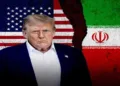
The conciliatory tone towards PM Modi and the BJP has emerged at a time when the Trump administration is facing increasing diplomatic and political pressure over the ongoing West Asia crisis involving Iran. The United States has struggled to secure broad international support for its military posture, while divisions within NATO and the reluctance of several European allies have weakened Washington’s global standing. Domestically, too, the Trump administration is under pressure as Democrats in the US Congress continue raising questions regarding war expenditure, the financial burden of military operations, and the economic impact on American citizens. With midterm elections approaching, the White House has increasingly shifted into a defensive political posture.
US President Donald Trump says, "Based on the request of Pakistan and other Countries, the tremendous Military Success that we have had during the Campaign against the Country of Iran and, additionally, the fact that Great Progress has been made toward a Complete and Final… pic.twitter.com/RyLrPTxp8J
— ANI (@ANI) May 6, 2026
In this context, Trump recently announced that the United States was halting “Project Freedom” as Washington sought a broader arrangement with Iran aimed at reducing tensions in West Asia. Trump stated that the move came following requests from Pakistan, a statement that once again highlighted Islamabad’s growing visibility within the administration’s regional calculations.
Simultaneously, US Secretary of State Marco Rubio declared that “Operation Epic Fury is concluded,” marking the end of more than two months of instability and unrest connected to the regional conflict.
Strait of Hormuz and India’s strategic relevance
The next major challenge before the Trump administration remains the reopening and stabilisation of the Strait of Hormuz, one of the world’s most critical maritime energy routes. The disruption of oil movement through the strait has created global economic anxiety, placing further pressure on Washington to restore normal shipping operations. Two days ago, US Treasury Secretary Scott Bessent openly called upon American allies and China to support a US-led maritime escort operation in the Strait of Hormuz. He argued that China, which purchases nearly 90 per cent of Iran’s energy exports, should use its influence to pressure Tehran into reopening the route. “Iran is the largest state sponsor of terrorism, and China has been buying 90% of their energy, so they are funding the largest state sponsor of terrorism,” Bessent said during an interview on Fox News.
Against this geopolitical backdrop, the White House’s praise for Modi and the BJP’s victory in West Bengal appears deeply strategic and conciliatory. Washington increasingly requires India’s cooperation for its broader Indo-Pacific calculations, maritime security concerns, and efforts to contain instability linked to Iran and regional energy routes.
Yet even while attempting to maintain goodwill with New Delhi, Trump continues to repeat Pakistan-backed narratives regarding India-Pakistan diplomacy and Operation Sindoor. The contradictory positions underline a larger lack of coherence in the Trump administration’s foreign policy approach, where tactical political messaging, domestic compulsions, and geopolitical anxieties appear to be driving parallel and conflicting narratives simultaneously.