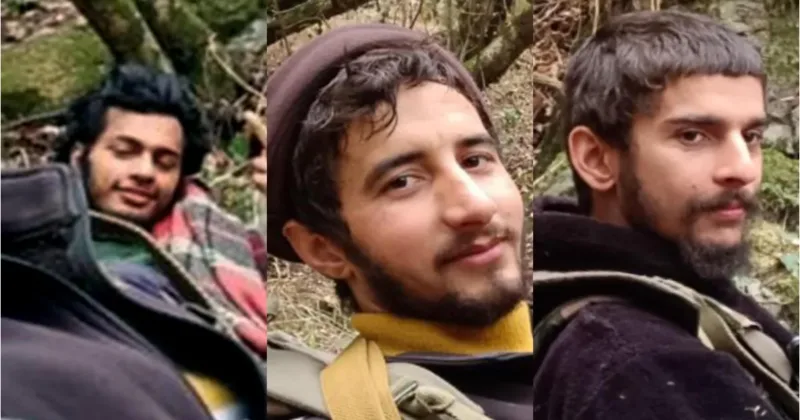
JAMMU: A little over a year ago, on April 21, local Kashmiri pony operator Bashir Ahmad Jothad met three-armed men near Hill Park in Pahalgam. Their weapons were visible, their speech had a Punjabi inflection and touch to it and they demanded a safe place and food “in the name of Allah”.
Instinctively, Bashir realised they were terrorists but got ready to help them for they had sought it in Allah’s name. He led them to the seasonal hutment of his nephew Parvaiz Ahmad in the forest.
Once inside the hut, where Parvaiz Ahmad, his wife Tahira and their infant child lived, the terrorists sat in the warm beds, covered with blankets. They asked Parvaiz and Bashir to hide their bags and pouches be hidden under the bedding. Tahira then prepared food, served it to them and they rested in the shelter for several hours.
During their stay, the terrorists allegedly spoke about Amarnath Yatra, nearby security camps, jihad and security-force movements, while repeatedly referring to their handler as “Ali Bhai”, according to the National Investigation Agency (NIA) chargesheet filed in the Jammu court.
NIA Allegations in Chargesheet
The prosecution has alleged in the NIA court that all this was based on the interrogation of some accused and putting all the facts together systematically. The prosecution has said that before leaving the shelter, the terrorists were given packed food, including rice, leftover cooked tomato sabzi, spices and a utensil. A piece of tarpaulin was also allegedly handed over to them, while one of the terrorists allegedly paid Rs 3,000 to Parvaiz Ahmad.
The NIA claimed that these facts showed that the accused were aware of the identity and intention of the armed men but still concealed their presence. Neither did they try to inform the police nor the CRPF or the Army camp nearby even after the terrorists had left. This showed their complicity in harbouring terrorists who carried out the heinous attack at Baisaran (Pahalgam) meadow.
On April 22, these armed terrorists moved towards Baisaran, where they struck killing 24 Hindu men after identifying them on the basis of their religion. Two others, a Nepali citizen and a local Kashmiri pony owner, also died in the firing by terrorists. The prosecution alleged that the attack bore the imprint of cross-border terror command, local concealment and carefully planned movement through dense forests and routes used by tourists.
Charges Framed Against Accused
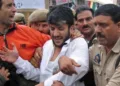
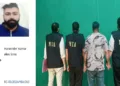
All this and more has been written in the case details submitted to NIA court of Prem Sagar who has now framed charges against the accused. The prime mover of all these plans has been identified by the prosecution as Pakistani handler Sajid Jatt. Sajid used many aliases like Langda, Numan Bhai and Usman Habib. Besides Sajid Jatt, other accused in the case include Bashir Ahmad Jothad, son of Lal Din, resident of Khaiyar, Anantnag, and Parvaiz Ahmad, son of Ghulam Hassan, resident of Batkote, Pahalgam.
The prosecution has claimed that the principal conspirator and handler was widely known as “Langda” due to loss of one leg and use of a prosthetic limb to walk and this has led to a limp. The NIA has also said that the M-4 US rifle used in this attack had earlier been used in the Gagangir (Ganderbal) attack on October 20, 2024. Another Pakistani Lashkar e Taiba (LeT) or The Resistance Front (TRF) cadre, Suleman alias Faisal Jatt, had participated in both attacks.
Gagangir Attack of October 2024
In the Gagangir attack, seven people had died, including a local Kashmiri doctor and six labourers working on a project site at Z Morh Tunnel. The tunnel is being built between Srinagar and Sonamarg to bypass avalanche-prone area near Gagangir to ensure smooth connectivity.
The forensic analysis of materials NIA teams seized from terrorists after Operation Mahadev showed similarity between a piece of tarpaulin recovered from Baisaran and a tarpaulin seized from Bashir’s hutment. It was further alleged that DNA found on pouches recovered during the operation matched with DNA of Bashir Ahmad Jothad and Parvaiz Ahmad, thereby linking them to material recovered from the terrorists.
The court, after considering the material put before it by the prosecution, said that although Bashir Ahmad Jothad and Parvaiz Ahmad did not participate in the actual execution of the attack, they prima facie were guilty of harbouring terrorists. As such, the charges against them were being frame under Section 19 of UAPA and for omission to report under Section 239 BNS.
Under Section 19 of the UAPA, it is said: Whoever voluntarily harbours or conceals, or attempts to harbour or conceal any person knowing that such person is a terrorist shall be punishable with imprisonment for a term which shall not be less than three years but which may extend to imprisonment for life, and shall also be liable to fine. This means that the minimum punishment is a prison term of three years but life imprisonment can also be awarded to people who harbour terrorists.
Against Al Saifullah Jatt, the court ordered framing of charges under Sections 103, 109, 147, 148, 149, 150 and 61(2) of BNS, Sections 7/27 of the Arms Act, and Sections 16, 17, 18, 20, 38, 39 and 40 of UAPA. The court noted that Jatt has been declared a proclaimed offender and directed that his charge memo be placed on file for trial in absentia under Section 356 BNSS.
The court further directed issuance of a non-bailable warrant against Al Saifullah Jatt through SSP Kulgam.