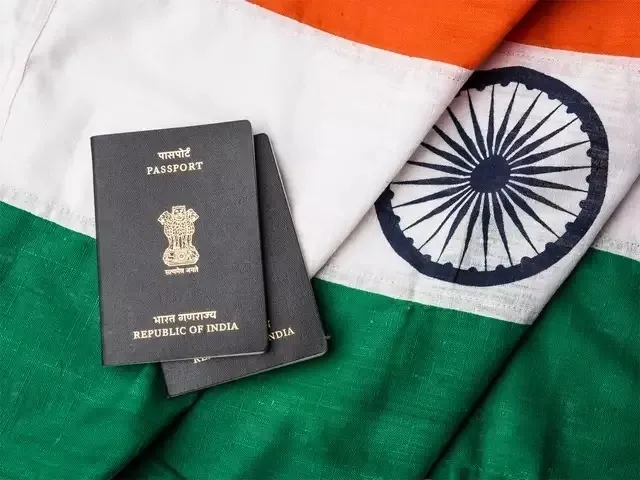
Government of India has notified the Citizenship (Amendment) Rules, 2026, bringing important changes to how citizenship-related services, especially Overseas Citizen of India (OCI) facilities, are managed. The new rules aim to remove long-standing confusion, simplify procedures and strengthen monitoring.
One of the most important changes is a clear rule regarding minors and dual passports. The government has now made it explicit that a minor child cannot hold an Indian passport and a foreign passport at the same time. This ends years of ambiguity on the issue and brings clarity to parents dealing with international citizenship matters.
The Ministry of Home Affairs introduced these changes through an official gazette notification, updating the earlier Citizenship Rules of 2009.
Clear ban on dual passports for children
The biggest highlight of the new rules is the strict prohibition on minors holding dual passports. According to the updated provisions, a child cannot, at any point, possess a passport of another country while also holding an Indian passport.
Earlier, the rules allowed parents to register the birth of a child and submit a declaration stating that the child did not hold a foreign passport. However, this system left room for confusion and possible misuse. The new rules remove this grey area by clearly banning dual passport holding for minors.
This step is expected to bring India’s policy in line with its long-standing position of not allowing dual citizenship. It also ensures better legal clarity and prevents complications in matters of nationality, travel and legal rights.
OCI applications go fully online
Another major reform introduced under the new rules is the complete digitisation of the OCI application process. All applications for OCI registration will now have to be submitted online through the official government portal.
This move is aimed at reducing paperwork, speeding up processing time and improving transparency. Earlier, applicants were often required to submit multiple copies of documents, which made the process time-consuming and complex.
With the new system, authorities will maintain digital records of all OCI cardholders, making it easier to track and manage applications. This is part of a broader push towards digital governance and efficient service delivery.
Introduction of e-OCI cards
The government has also introduced the concept of electronic OCI, or e-OCI. Under this system, applicants may receive either a physical OCI card or a digital version, depending on the process and requirements.
This change reflects the government’s effort to modernise documentation and reduce dependence on physical paperwork. Digital documents are easier to store, access and verify, making the system more user-friendly.
For applicants living abroad, this could significantly reduce delays and logistical challenges related to document handling.
New rules for renunciation of OCI status
The updated framework also brings changes to the process of renouncing OCI status. Individuals who wish to give up their OCI registration will now have to submit their declaration online.
In addition to the digital submission, they must also surrender their original physical OCI card to the nearest Indian Mission, Post or Foreigners Regional Registration Office.
This ensures that records are updated properly and prevents misuse of OCI status after renunciation.
OCI Status: A privilege, not a right
The government has once again made it clear that OCI status is not a fundamental right but a privilege granted to persons of Indian origin and their spouses. This means that the status can be withdrawn if the holder is found violating Indian laws.
OCI cardholders enjoy several benefits, including a lifelong visa to visit India for multiple purposes such as education, business or tourism. However, they do not have political rights. They cannot vote, contest elections or hold constitutional positions in India.
By reinforcing this distinction, the government aims to maintain a clear boundary between full citizenship and OCI status.
Faster immigration through biometric data
Another new feature introduced in the rules is the option for OCI applicants to join the Fast Track Immigration Programme. To avail this facility, applicants will need to provide their biometric data during registration.
This system is expected to make immigration checks quicker and smoother, especially for frequent travellers. By using biometric identification, authorities can improve security while also reducing waiting time at airports.
Applicants will have to sign a consent form agreeing to the collection and use of their biometric information.
Improved accountability and appeal system
The new rules also focus on strengthening administrative accountability. A clearer appeal system has been introduced for individuals who are not satisfied with decisions related to citizenship or OCI status.
This means that applicants will now have a defined process to challenge or review decisions, making the system more transparent and fair.
What this means for citizens and applicants
Overall, the Citizenship Rules 2026 mark a shift towards clarity, digitisation and stricter enforcement. For families with international connections, especially those with minor children, the rules bring clear guidance on passport and citizenship matters.
For OCI applicants, the move to an online system and introduction of e-OCI cards will likely make the process faster and more convenient.
At the same time, the government’s emphasis on compliance and monitoring indicates a tighter regulatory approach. Applicants will need to follow procedures carefully to avoid delays or legal complications.
The new Citizenship Rules 2026 aim to remove confusion, modernise processes and strengthen India’s citizenship framework. By banning dual passports for minors and digitising OCI services, the government is trying to create a more transparent and efficient system.
While the changes may require some adjustment, they are expected to bring long-term benefits in terms of clarity, speed and accountability.