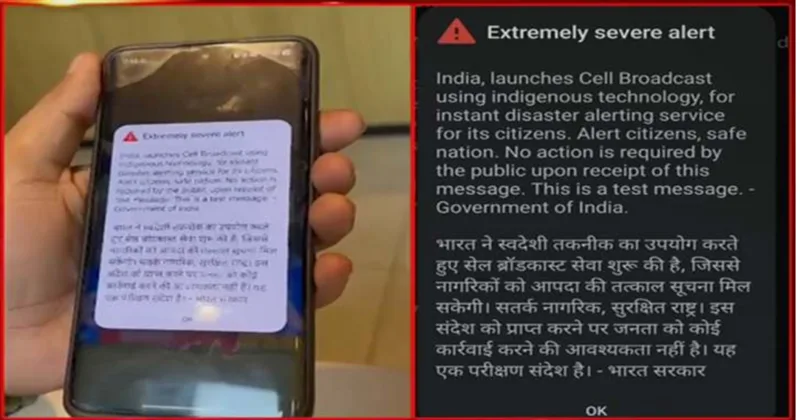
The alert, which appeared as a full-screen pop-up accompanied by a loud alarm, was intentionally designed to command immediate attention. It was sent across Delhi-NCR and several state and Union Territory capitals, though some regions—such as border areas and poll-bound states—were excluded from the test phase. Despite clearly stating that no action was required, the unexpected nature of the alert led to confusion and anxiety among users, many of whom took to social media seeking clarification.
However, the message and loud alarm was part of a disaster preparedness trial conducted by the National Disaster Management Authority(NDMA) to quickly alert the citizens, awaken and prepare them during unforeseen contingencies. The highlight of the message is, the disaster preparedness ecosystem and the messaging network is being built with indigenous technology, thus seeking self-reliance in the domain of disaster management and ensuring civilian safety.
NOT JUST AN "EXTREMELY SEVERE ALERT" BUT A CALL TO LET YOU KNOW YOUR SAFETY IS A PRIORITY. pic.twitter.com/yUVdWWYb9k
— Rahul Shivshankar (@RShivshankar) May 2, 2026
How Cell Broadcast Differs from SMS Alerts
At the core of this initiative is Cell Broadcast Service (CBS), a technology that fundamentally differs from traditional SMS-based alerts. Developed by C-DOT and implemented through the SACHET platform, the system enables authorities to transmit messages to all mobile devices within a defined geographic area simultaneously.
Unlike SMS, CBS:
- Does not depend on mobile numbers or subscriber databases
- Delivers messages instantly to all devices in range
- Overrides silent and Do Not Disturb modes
- Remains functional even during heavy network congestion
- These features make it especially effective during emergencies such as earthquakes, floods, cyclones and tsunamis, when communication networks are often overwhelmed.
Why some users missed the alert
While millions received the notification, others did not. Officials explain that only devices with Cell Broadcast test alerts enabled were eligible to receive the message. Users can toggle these settings through their phone’s safety and emergency alert options. Device compatibility, telecom operator support and phased regional rollout also contributed to variations in delivery.
More alerts expected as testing continues
The Ministry of Communications has indicated that this test is part of an ongoing process. Citizens may receive multiple alerts in the coming days as authorities evaluate mobile towers and network readiness across regions. These test messages could appear in English, Hindi, and regional languages, ensuring inclusivity and accessibility for diverse populations.
A system designed to save lives
The larger objective of the cell broadcast rollout is to create a nationwide early warning system capable of delivering real-time alerts during disasters. By bypassing traditional communication bottlenecks, the system ensures that critical information reaches people instantly—even in the most challenging conditions.
Officials emphasize that while Saturday’s alert required no response, future alerts in real emergencies will include actionable instructions. Citizens are encouraged to remain attentive and treat such notifications seriously.
India joins global leaders in emergency communication
With this initiative, India moves closer to adopting disaster communication standards seen in countries like the United States and Japan. The ability to instantly warn millions could significantly reduce casualties and improve emergency response outcomes.
What began as a moment of panic for many ultimately underscores a crucial advancement in public safety infrastructure. The nationwide alert test demonstrates not only the power of modern communication technology but also the government’s commitment to preparedness. As testing continues, the system is expected to evolve into a reliable safeguard—one that could make the difference between chaos and coordinated response in times of crisis.