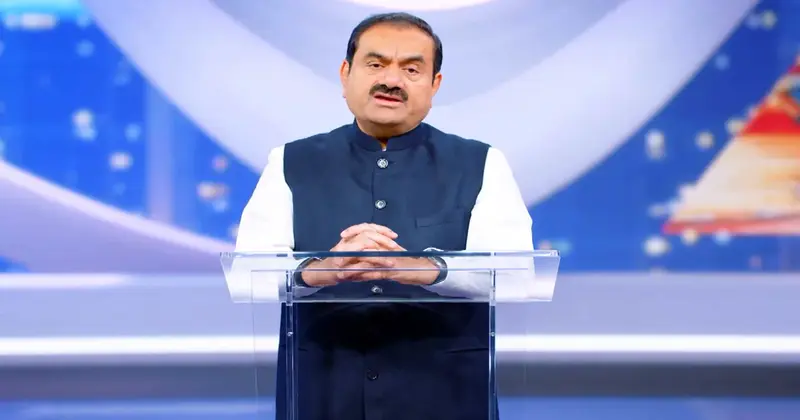
On the occasion of International Labour Day, Gautam Adani, Chairman of the Adani Group, delivered a deeply reflective and motivational address to the conglomerate’s workforce of over 400,000 employees. He emphasized on the dignity of labour and the collective role of individuals in shaping India’s future. He described the day as a celebration of hard work and called employees “nation-builders”, linking their efforts to the goal of making India a developed country (Viksit Bharat) by 2047.
The address carried both professional and personal significance for Adani, as it coincided with the 40th anniversary of his marriage to Priti Adani. Beginning the day on a spiritual note, the couple visited Kedarnath Dham, one of the holiest shrines dedicated to Lord Shiva. Adani described the visit as a moment of gratitude, for life, for the opportunity to serve the nation, and for the trust reposed in him by his colleagues. He also prayed for the well-being of employees and the continued progress of India.
Ramayana’s squirrel story as a metaphor for contribution
A key part of Adani’s speech was a reference to the Ramayana. He shared the story of a small squirrel that helped build Lord Ram’s bridge to Lanka by carrying tiny grains of sand and pebbles. When asked why its small effort mattered, the squirrel said it just didn’t want to be missing from such an important task. Adani elaborated on the story, noting how the vanars (monkey warriors) initially mocked the squirrel for its insignificant contribution. However, Lord Ram supported the squirrel, saying that while big stones built the bridge, the small grains filled the gaps and made it stronger.
Using this narrative, Adani delivered a clear message: no contribution is too small in the larger mission of nation-building. He urged employees to view their roles not merely as jobs but as essential building blocks in India’s development journey. He connected this philosophy to the vision articulated by Narendra Modi for a Viksit Bharat, underscoring that progress is a collective outcome of individual efforts.
आज का दिन मेरे लिए विशेष है, एक ओर विश्व श्रमिक दिवस है और दूसरी ओर मेरे विवाह की 40वीं वर्षगांठ।
इस पावन अवसर की शुरुआत मैंने अपनी जीवनसंगिनी प्रीति के साथ केदारनाथ धाम में भगवान महादेव के दर्शन और आशीर्वाद से की।
चार दशकों की इस यात्रा में, प्रीति का साथ मेरे लिए केवल जीवन… pic.twitter.com/J3yW5tsK1d
— Gautam Adani (@gautam_adani) May 1, 2026
Launch of ‘Apni Baat, Apno ke Saath’
He also announced a new internal dialogue initiative known as “Apni Baat, Apno ke Saath”(Our Thoughts, With Our Own). The platform is designed to foster open communication within the group. It enables the employees at all levels to share ideas, experiences, and feedback. Adani said the initiative shows that growth comes from continuous learning. He explained that understanding the past, managing the present, and preparing for the future are important for long-term success. He added that the dialogue series will help employees and promote transparency and teamwork.
During his address, Adani highlighted several flagship projects undertaken by the Group. He called them example of India’s rapid infrastructure and economic transformation. He spoke about Mundra Port, which has evolved from barren land into India’s largest commercial port. He also emphasised the importance of Vizhinjam Port, which is expected to position India as a global transshipment hub.
Adani drew attention to the massive renewable energy project at Khavda Renewable Energy Park and described it as a cornerstone of India’s clean energy ambitions. He also cited the development of the Navi Mumbai International Airport. He also mentioned the Ganga Expressway in northern India, which will improve connectivity across 12 districts and over 500 villages. The project is expected to cut travel time between Meerut and Prayagraj from more than 10 hours to nearly half, helping boost economic activity. He also spoke about the redevelopment of Dharavi, calling it one of the world’s most ambitious urban projects. He said the goal is not profit, but to give residents better living conditions, dignity, and more opportunities.
Three pillars of organisational transformation
Looking ahead, Adani outlined three major structural reforms that will guide the Group’s future growth. The first is the 3-Layer Model, which aims to simplify organisational hierarchy, accelerate decision-making, and create faster career growth opportunities, particularly for young professionals.
The second is the Partnership Model, under which the Group will collaborate with a select set of reliable partners who will take full responsibility for project execution. Adani illustrated this with the example of Hadhubhai Rabari, a partner who rose from a modest background as a camel herder to becoming a successful entrepreneur, highlighting the transformative power of opportunity.
The third pillar focuses on Learning and Development, including the establishment of the Adani Training Academy. This will create structured pathways for employees to upgrade their skills and transition from entry-level roles to leadership positions over time.
‘Panchtatva’: Five principles for workforce welfare
Adani also introduced five key principles, called Panchtatva, to improve employee welfare and engagement. These focus on local hiring, skill development, clear career growth, fair and timely pay and better living conditions for workers. In line with these principles, Adani announced the construction of air-conditioned housing facilities for 50,000 employees. He also revealed plans for a large-scale cloud kitchen in Mundra capable of serving up to one lakh nutritious meals daily. Emphasising the importance of dignity, he stated that such initiatives are not privileges but basic necessities for workers.