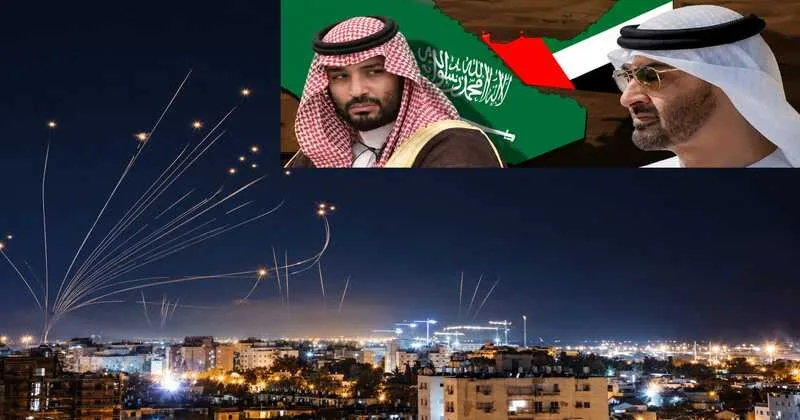
The reported deployment of Israel’s advanced Iron Dome air defence system to the United Arab Emirates marks a significant turning point in the West Asian geopolitics, reflecting not just the intensity of the ongoing Iran war but also a deeper strategic realignment across the Gulf. As tensions escalated following coordinated US and Israeli strikes on Iran in late February, the UAE emerged as one of the worst-hit regional actors, facing an unprecedented barrage of Iranian missiles and drones. According to a report by Axios, Israel dispatched an Iron Dome battery along with military personnel to operate it on Emirati soil, marking the first time the system has been deployed outside Israel or the United States. The move reportedly followed direct talks between Israeli Prime Minister Benjamin Netanyahu and UAE President Mohammed bin Zayed Al Nahyan, underlining the urgency and scale of the threat.
Emirati authorities revealed that since February 28, Iran has launched approximately 550 ballistic and cruise missiles, along with more than 2,200 drones targeting the UAE and other US-aligned Gulf states. The deployment of the Iron Dome system, supported by Israeli troops, is thus not merely tactical but emblematic of a broader shift in alliances and threat perceptions across the region.
Iran war and Gulf vulnerability: UAE at the frontline
The UAE’s exposure to Iranian retaliation has underscored its vulnerability despite its economic and military strength. Traditionally seen as a stable commercial hub, cities like Abu Dhabi and Dubai now find themselves within the operational radius of Iranian missile capabilities. Israel’s Iron Dome, renowned for intercepting short-range rockets, was deployed alongside pre-emptive Israeli Air Force strikes targeting missile launch sites in southern Iran. This dual strategy of defence and deterrence highlights Israel’s expanding security footprint in the Gulf. The Iran-UAE escalation also reveals how quickly political sensitivities have shifted.The presence of Israeli troops on Emirati soil, once unthinkable, has now been normalised under the logic of collective security. Emirati officials have openly acknowledged that any country contributing to its defence amid such threats would be welcomed.
Pakistan–Saudi Defence Pact and UAE’s strategic drift
A critical backdrop to this evolving scenario is the deepening defence cooperation between Saudi Arabia and Pakistan. Over the past decade, Pakistan has increasingly positioned itself as a key military partner to Saudi Arabia, offering training, troop support, and strategic backing amid regional tensions with Iran. However, this growing Riyadh–Islamabad axis has coincided with a noticeable cooling of UAE–Pakistan relations. Abu Dhabi has grown wary of Pakistan’s alignment choices, particularly its reluctance in past conflicts to fully back UAE-led initiatives. Reports indicate that Pakistan repaid its debt in full, settling $3.45 billion owed to the United Arab Emirates by April 24, 2026. The payment included $1 billion to the Abu Dhabi Fund for Development on April 23, along with $2.45 billion cleared earlier, following Abu Dhabi’s demand for immediate repayment—highlighting a growing rift in bilateral financial ties
The UAE’s strategic divergence is also reflected in its decision to exit traditional oil frameworks like parts of the OPEC production alignment mechanisms, prioritising economic autonomy and diversified partnerships. This shift reduces its dependence on traditional Gulf alliances and opens space for new security collaborations, including with Israel.
Deepening UAE–India–Israel Axis: A new security architecture
Parallel to its distancing from Pakistan, the UAE has significantly strengthened ties with India and Israel, forming what many analysts describe as a new trilateral axis in West Asia. Economic cooperation, intelligence sharing, and defence ties have deepened rapidly, particularly following the Abraham Accords that normalised UAE–Israel relations. India’s growing strategic presence in the UAE—through trade, infrastructure investment, and diaspora influence, has complemented this shift. Meanwhile, Israel’s advanced defence technology and intelligence capabilities make it an indispensable partner in countering Iranian threats. UAE presidential advisor Anwar Gargash recently acknowledged that Iran’s aggressive actions would inevitably enhance Israel’s regional role. He also noted that rebuilding trust between Abu Dhabi and Tehran would take “ages and ages,” signalling a long-term rupture.
The deployment of Israel’s Iron Dome in the UAE is not an isolated military decision, it is the clearest signal yet of a transforming regional order. As the Iran war reshapes threat perceptions, traditional alliances are giving way to pragmatic partnerships driven by security imperatives. With Pakistan leaning towards Saudi Arabia, the UAE is charting an independent path, strengthening ties with India and Israel while distancing itself from older dependencies. The result is a more fragmented but strategically fluid West Asia, where defence cooperation is increasingly dictated by immediate threats rather than historical loyalties.