The idea of the Buddhist Circuit in India is more than a tourism initiative; it is a living bridge between history, spirituality, and international relations. Rooted in the life and teachings of Gautama Buddha, this circuit connects some of the most sacred sites associated with Buddhism, including Lumbini, Bodh Gaya, Sarnath, and Kushinagar. While these places hold immense religious significance, they also represent a unique opportunity for India to project its cultural and spiritual heritage as a form of soft power diplomacy. In an increasingly interconnected world where influence is not only measured through economic or military strength, India’s civilizational depth offers a compelling narrative of peace, compassion, and shared human values.
India’s soft power has always been deeply embedded in its culture, traditions, and philosophies. Among these, Buddhism occupies a special place because of its universal appeal. The teachings of Buddha transcend national boundaries, resonating with millions of people across Asia and beyond. Countries like Sri Lanka, Thailand, Japan, Vietnam, and Myanmar share a profound connection with Buddhist philosophy, making the Buddhist Circuit a natural platform for India to strengthen diplomatic ties.
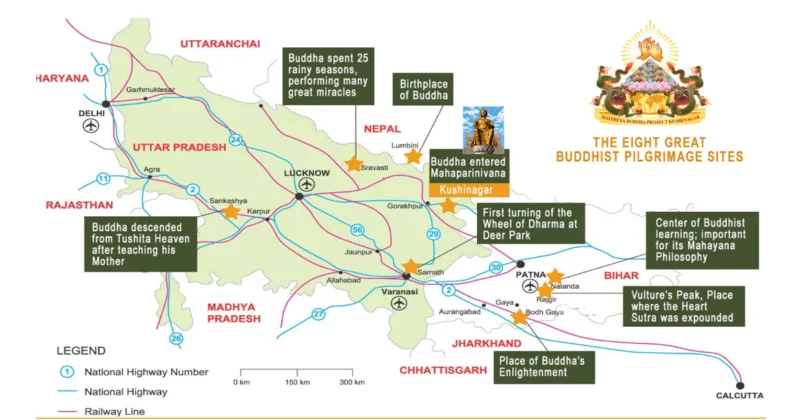
The Buddhist Circuit is not merely a collection of pilgrimage sites; it is a narrative journey through the life of Buddha. Bodh Gaya, where Buddha attained enlightenment under the Bodhi tree, stands as the spiritual heart of this circuit. Sarnath marks the place where he delivered his first sermon, setting in motion the wheel of Dharma. Kushinagar, where he attained Mahaparinirvana, completes this sacred geography. Each location is imbued with a sense of serenity and reflection, offering visitors not just a glimpse into history but an opportunity for inner transformation. By preserving and promoting these sites, India reinforces its identity as the birthplace of Buddhism and a custodian of its legacy.
In recent years, the Indian government has made concerted efforts to develop the Buddhist Circuit as a world-class tourism experience. Improved infrastructure, better connectivity, and international collaborations have significantly enhanced accessibility for pilgrims and tourists alike. Initiatives such as special tourist trains, multilingual guides, and digital platforms have made the journey more inclusive and engaging. These developments are not just about increasing tourist footfall; they are strategic moves to deepen cultural diplomacy. When visitors from across the globe walk through these sacred sites, they engage with India’s heritage in a deeply personal way, fostering goodwill and mutual understanding.
The role of Buddhism in India’s diplomatic outreach is particularly significant in Asia. Many Asian nations consider Buddhism an integral part of their cultural identity, even if it did not originate within their borders. India’s ability to connect with these countries through a shared spiritual heritage creates a sense of cultural intimacy that formal diplomatic channels often struggle to achieve. High-level visits, cultural exchanges, and international Buddhist conferences have further strengthened these bonds. The Buddhist Circuit thus becomes a space where diplomacy is practiced not through negotiations but through shared reverence and cultural continuity.
Another dimension of the Buddhist Circuit’s importance lies in its potential for economic development. The regions associated with Buddhist heritage are often located in economically underdeveloped areas. By promoting tourism in these regions, India not only preserves its cultural assets but also creates opportunities for local communities. Hotels, transport services, handicrafts, and cultural performances all benefit from increased tourist activity. This model of development aligns with the broader philosophy of inclusive growth, ensuring that the benefits of globalization reach even the most remote corners of the country.
At the same time, the Buddhist Circuit carries a profound message for the modern world. In an era marked by conflict, environmental challenges, and social divisions, the teachings of Buddha offer a timeless vision of harmony and balance. Concepts such as non-violence, mindfulness, and compassion are more relevant than ever. By promoting these values through the Buddhist Circuit, India contributes to a global discourse on peace and sustainability. This moral leadership enhances its soft power, positioning the country as not just an economic or political actor but a guiding voice for ethical living.
The international appeal of the Buddhist Circuit is also reflected in the growing interest of global travellers seeking meaningful experiences. Modern tourism is increasingly shifting from leisure to purpose-driven journeys. People are looking for destinations that offer spiritual enrichment, cultural immersion, and personal growth. The Buddhist Circuit perfectly aligns with these aspirations. Walking through ancient monasteries, meditating under sacred trees, and listening to the chants of monks create an atmosphere that transcends ordinary travel. This experiential dimension strengthens India’s image as a destination that nurtures both the mind and the soul.
Furthermore, the Buddhist Circuit serves as a reminder of India’s historical role as a centre of learning and cultural exchange. Ancient universities like Nalanda and Vikramashila attracted scholars from across Asia, fostering an environment of intellectual and spiritual dialogue. Reviving this legacy in contemporary times adds another layer to India’s soft power strategy. Educational collaborations, research initiatives, and cultural programs centred around Buddhist studies can further enhance India’s global engagement.
The digital age has also opened new avenues for promoting the Buddhist Circuit. Virtual tours, online exhibitions, and social media campaigns have made these sacred sites accessible to a global audience. Storytelling through digital platforms allows India to share the richness of its Buddhist heritage in innovative ways. This blend of tradition and technology ensures that the message of Buddhism reaches younger generations, keeping the legacy alive in a rapidly changing world.
An equally significant yet often understated dimension of the Buddhist Circuit is its role in fostering people-to-people connections. Pilgrims, scholars, and travellers from diverse cultural and linguistic backgrounds come together in these sacred spaces, creating a quiet yet powerful dialogue of shared humanity. Whether it is a monk from Thailand meditating alongside a visitor from Japan or a scholar from Sri Lanka engaging in discourse with Indian students, the circuit becomes a living testament to the unifying power of spiritual traditions. These interactions transcend formal diplomacy and nurture long-lasting bonds of friendship and cultural understanding.
Moreover, the Buddhist Circuit subtly reinforces India’s image as a responsible global custodian of shared heritage. By preserving sacred sites, promoting sustainable tourism practices, and encouraging intercultural respect, India demonstrates how ancient traditions can coexist harmoniously with modern aspirations. This approach resonates deeply in a world searching for balance between development and preservation. As visitors carry their experiences back to their home countries, they become informal ambassadors of India’s values, further amplifying its soft power influence in a manner that is organic, enduring, and profoundly human.
Despite its many achievements, the full potential of the Buddhist Circuit is yet to be realized. Continued investment in infrastructure, preservation, and international marketing is essential to maintain its growth trajectory. Collaboration with neighbouring countries, particularly Nepal, where Lumbini is located, can further strengthen the circuit’s appeal as a transnational spiritual journey. Such partnerships not only enhance tourism but also reinforce regional cooperation and cultural unity.
In essence, the Buddhist Circuit is a powerful symbol of India’s soft power diplomacy. It reflects the country’s ability to draw upon its ancient heritage to address contemporary challenges and opportunities. By offering a message of peace, compassion, and interconnectedness, India engages with the world in a manner that is both timeless and forward-looking. The circuit is not just about retracing the footsteps of Buddha; it is about rediscovering values that can guide humanity toward a more harmonious future.
As the world continues to grapple with uncertainty and change, the quiet strength of India’s spiritual traditions stands as a source of inspiration. The Buddhist Circuit, with its serene landscapes and profound history, invites people from all walks of life to pause, reflect, and reconnect with deeper truths. In doing so, it transforms diplomacy into a shared journey of understanding and respect. This is the essence of soft power at its finest—an influence that flows not from force, but from the enduring beauty of ideas that unite humanity.