
After the CPM lost the Thiruvananthapuram Municipal Corporation to the BJP, tensions have escalated over a worsening water crisis in the city. The CPM has accused the BJP-led civic body of failing to provide adequate water supply. However, counter-claims suggest that the crisis is linked to actions by the Kerala Water Authority (KWA), a state-controlled agency, rather than the municipal administration.
KWA inaction during Attukal Pongala
According to allegations raised within the corporation council and by BJP representatives, the KWA has been restricting water supply across several parts of the city while simultaneously projecting the shortages as a failure of the BJP-led municipal corporation. It is further alleged that such actions are aimed at creating a perception of inefficiency and incapability in the elected civic body, thereby misleading residents.
The situation came into sharp focus in March during the Attukal Pongala festival, often referred to as the “Women’s Sabarimala”, which sees participation from an estimated 2.5 to 4 million women. Despite reports that water supply was restricted by the KWA during this period, the municipal corporation led by BJP arranged alternative supply and bore the expenses. The KWA, however, was accused of remaining largely inactive.
Pipe Bursts and leakages by KWA
The crisis continued into the peak summer months, with several areas, including Kazhakkoottam and Attukal, reportedly facing acute shortages. KWA officials cited reasons such as weak valves and pipe bursts. However, during protests by BJP councillors, it was claimed that water flow resumed immediately after closed valves were reopened, raising questions about the nature of the disruptions.
The issue escalated further during a corporation council meeting, where the CPM-led Left Democratic Front (LDF) and the Congress-led United Democratic Front (UDF) disrupted proceedings over the “dry Thiruvananthapuram” situation. The BJP-led administration maintained that bulk water supply falls under the jurisdiction of the KWA and the state government, while the corporation’s role is limited to distribution.
Subsequently, BJP councillors staged a protest at the KWA office. During the confrontation, officials reportedly stated that local political objections had delayed pipeline works. However, following the protests, water supply was restored, intensifying allegations that administrative mechanisms were being used to create artificial scarcity.
Beyond the water crisis, BJP leaders have alleged broader attempts to disrupt municipal governance. These include claims that certain employees are not complying with instructions from elected representatives, delaying public services, and obstructing administrative functioning. There are also allegations regarding missing files linked to past corruption cases during the previous LDF rule.
Review on Municipal Assets
The BJP administration has also initiated measures to review municipal assets, including buildings and rental revenues, claiming that irregularities existed under previous administrations. Allegations include unauthorised occupation of municipal properties and deviations from standard rental procedures.
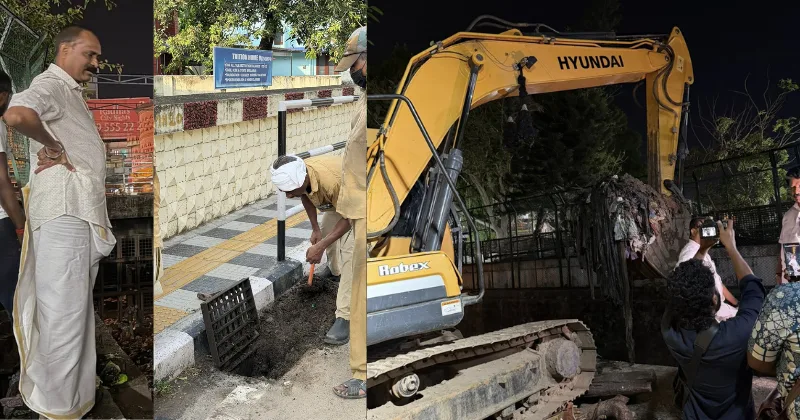
In addition, the BJP leadership claims to have introduced reforms in areas such as pre-monsoon drain cleaning, which they state is now being carried out ahead of schedule, unlike previous practices. Measures have also reportedly been taken to address issues such as stray dogs and improve civic management.
The developments have turned the water crisis into a larger political battle, with both sides accusing each other of administrative failure. While the CPM continues to blame the BJP-led corporation, the latter maintains that the root cause lies with the functioning of the Kerala Water Authority under the state government.