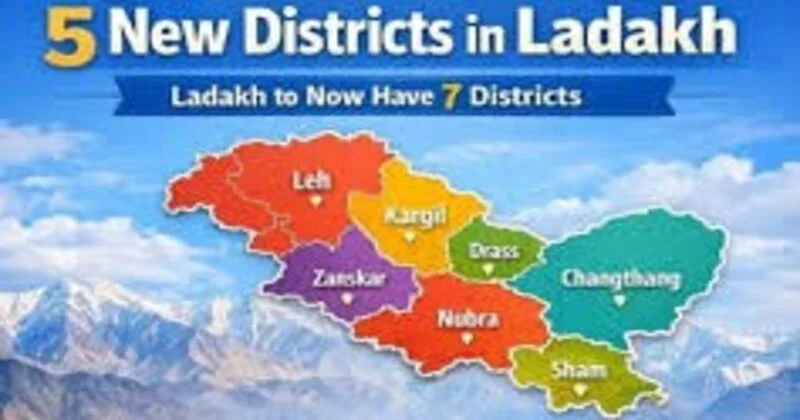
In a major administrative overhaul, Lieutenant Governor Vinai Kumar Saxena approved the creation of five new districts in Ladakh, taking the total from two to seven. So far, the Union Territory(UT) of Ladakh had only two districts, Leh and Kargil. In the new set-up, three districts have been carved out of Ladakh and two from Kargil.
The newly formed districts—Sham, Nubra, Changthang, Zanskar and Drass—aim to improve governance, service delivery and meet long-pending public demands, especially in remote areas. The first three named hereinabove, Sham, Nubra and Changthang are in present Leh district. Zanskar and Drass are parts of Kargil district presently.
The new districts have been carved out and notified on the eve of Union Home Minister Amit Shah’s visit to Ladakh starting April 30. “The development is aligned with Prime Minister Narendra Modi’s vision of a developed and prosperous Ladakh”, Saxena said in the post, adding that this “transformative decision, already approved by the Ministry of Home Affairs in August 2024, under the leadership of Minister of Home Affairs Amit Shah, would strengthen grassroot governance, decentralize administration & ensure faster delivery of public services to the people of Ladakh, especially those in remote and far-flung areas.
The decision follows approval by the Ministry of Home Affairs (MHA) in August 2024. Officials said the move will decentralise administration, reduce travel distances and ensure faster access to public services. Three districts—Nubra, Sham and Changthang—have been carved out of Leh, while Zanskar and Drass have been created from Kargil. Headquarters have been set at Diskit, Khaltse, Nyoma, Padum and Drass-Ranbirpura respectively. The creation of new districts is happening at a time when the road network as also other infrastructure is improving in entire Ladakh.
Consequent to the notification, the territorial limits of the seven districts, too, have been defined. Now, the Leh district will have 44 revenue villages, while Nubra will have 30 revenue villages and Changthang 24 revenue villages. Similarly, Kargil district will have 80 revenue villages, while Sham district will have 27 revenue villages, Zanskar 26 revenue villages, and Drass 19 revenue villages.
Presently, Leh and Kargil districts have two Autonomous Hill Development Councils. However, term of the Leh Council expired in October last year as fresh elections couldn’t be held on time. LAHDC-Kargil is in place as it has its term till October 2028. According to political observers, it is not clear whether the MHA gives autonomous hill district councils to all seven districts or some new kind of arrangement is made. Leh and Kargil Councils have 30 seats each, including 26 elected and four nominated.
The transformation in terms of creation of additional infrastructure started happening post-2013 when the Chinese intruded into Depsang plains. The reorganisation also defines new territorial limits, with revised distribution of revenue villages across all seven districts. There will now obviously be seven Deputy Commissioners and seven Superintendents of Police to head the new districts. This will necessitate the posting of a lot more IAS and IPS officers into Ladakh in the coming days.
Saxena termed the decision “historic”, stating it would usher in inclusive and balanced development, in line with Prime Minister Narendra Modi’s vision for a prosperous Ladakh. The move is also expected to generate employment through new administrative infrastructure and boost local economic opportunities. Authorities said the decision followed detailed consultations and field assessments by a committee constituted to examine district formation.