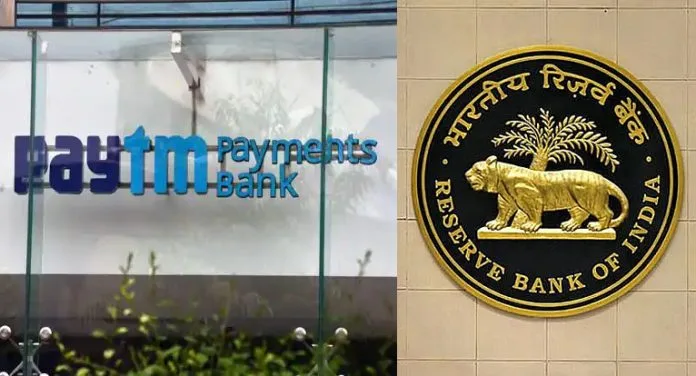
In a major development in India’s financial sector, the Reserve Bank of India (RBI) has cancelled the banking licence of Paytm Payments Bank, effectively bringing an end to its operations as a banking entity. The order, issued on April 24, 2026, comes after years of regulatory scrutiny, repeated warnings, and escalating restrictions over compliance failures.
The move is being seen as one of the strongest enforcement actions by the central bank in recent years, underlining its emphasis on regulatory discipline and depositor protection in India’s rapidly evolving digital banking ecosystem.
Why RBI cancelled the licence?
According to the RBI’s official order, Paytm Payments Bank failed to meet the essential conditions required to continue operating under a banking licence as stipulated in the Banking Regulation Act, 1949. The central bank stated that the “affairs and management” of the bank were not being conducted in a manner that protected the interests of depositors or served public interest.
The RBI invoked provisions under Section 22 (3)(c) and Section 22 (3)(g) of the Act, noting that the bank had not complied with licensing conditions and that allowing it to continue operations would serve “no useful purpose.”
In a strongly worded observation, the regulator said the bank’s management conduct was “prejudicial to the interests of depositors,” a serious charge in the financial regulatory framework. This formed the basis for the cancellation of the licence.
The Reserve Bank of India (RBI) has cancelled the banking licence issued to Paytm Payments Bank Limited under Section 22(4) of the Banking Regulation Act, 1949 (‘BR Act’) effective from close of business on April 24, 2026. Consequently, Paytm Payments Bank Limited is prohibited… pic.twitter.com/B746of2bah
— ANI (@ANI) April 24, 2026
A bank under scrutiny since 2018
The action did not come abruptly. Paytm Payments Bank had been under the RBI’s watch for several years, with concerns dating back to 2018. Early inspections flagged multiple compliance gaps, particularly related to Know Your Customer (KYC) norms.
One of the key issues highlighted was the linking of a single PAN card to multiple accounts, raising concerns about potential misuse and circumvention of regulatory safeguards. The RBI also found instances where transactions exceeded prescribed limits, increasing risks related to money laundering.
An audit conducted in 2018 revealed deficiencies in customer onboarding processes, with lapses in verification protocols. As a result, the bank was directed to halt the addition of new customers until corrective measures were implemented.
Escalation of regulatory action
Over time, regulatory pressure intensified. In March 2022, the RBI imposed restrictions on the bank, directing it to stop onboarding new customers due to “material supervisory concerns.” This marked a turning point, signalling deeper issues in compliance and governance.
The situation worsened in 2023 and 2024. In October 2023, the RBI imposed a monetary penalty of ₹5.39 crore for continued non-compliance with regulatory guidelines. Among the concerns were lapses in maintaining operational independence from its parent company, One 97 Communications.
In January 2024, the central bank imposed severe operational restrictions, barring the bank from accepting fresh deposits and effectively freezing most of its core banking activities. These curbs, initially scheduled for February 2024 and later extended to March 15, allowed customers time to withdraw or utilise their funds.
Despite these measures, the bank continued to operate under heavy restrictions, ultimately leading to the complete cancellation of its licence in 2026.
Impact on Paytm’s business ecosystem
The RBI’s action has had significant ripple effects on Paytm’s broader ecosystem. Shares of One 97 Communications witnessed volatility, reflecting investor concerns over regulatory uncertainty.
Operationally, Paytm had to rapidly reconfigure its payment infrastructure. Services such as wallets, FASTag, and merchant settlements faced disruptions, prompting the company to forge new partnerships with banks like Axis Bank and Yes Bank to ensure continuity.
The transition involved migrating millions of users and merchants to alternative banking channels, increasing operational costs and affecting user experience. During this period, competitors such as Google Pay and PhonePe gained market share.
What it means for users
For customers, the RBI has sought to reassure that their deposits remain safe. The central bank has stated that Paytm Payments Bank has sufficient liquidity to repay all depositors as part of the winding-up process.
Users are allowed to withdraw or utilise their existing balances without restrictions. Importantly, the RBI’s action is limited to the banking entity and does not directly impact Paytm’s broader digital services.
The company has clarified that services such as UPI payments, mobile recharges, QR-based payments, and payment gateway operations will continue uninterrupted. This is because these services are operated through partnerships with other banks and are not solely dependent on Paytm Payments Bank.
Additionally, other verticals such as Paytm Money and Paytm Gold remain unaffected.
Understanding Payments banks and the regulatory framework
Paytm Payments Bank was established in 2015 as part of India’s payments bank initiative, aimed at promoting financial inclusion. Payments banks are allowed to accept small deposits and facilitate payments but are not permitted to lend.
This model requires strict adherence to regulatory norms, particularly in areas such as KYC compliance, risk management, and operational independence. Any lapses in these areas can pose systemic risks, especially given the scale at which digital banking platforms operate.
The cancellation of Paytm Payments Bank’s licence sends a clear message about the RBI’s regulatory stance. It reinforces the principle that innovation in the financial sector must operate within the framework of compliance and accountability.
The central bank’s action underscores that even large, widely used platforms are not exempt from regulatory scrutiny. It also highlights the importance of governance standards, especially in entities handling public deposits.
With the banking licence now cancelled, Paytm Payments Bank will undergo a winding-up process under regulatory supervision. The focus will remain on ensuring an orderly settlement of customer deposits and liabilities.
For the broader fintech sector, the development serves as a case study in balancing rapid growth with regulatory discipline. As digital financial services continue to expand, adherence to compliance norms is likely to remain a central theme in policy and enforcement.