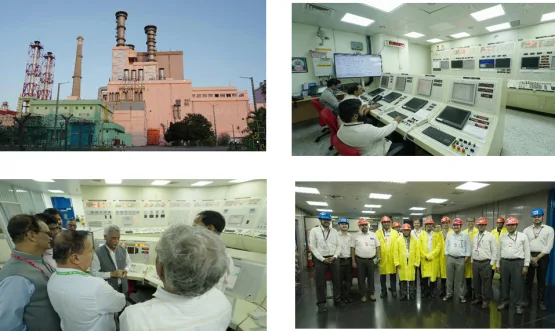
There are moments when a nation quietly changes its own destiny. One such moment arrived on the evening of April 6, 2026, inside the Kalpakkam Nuclear Complex in Tamil Nadu. The Prototype Fast Breeder Reactor (PFBR) – indigenously designed, wholly Indian-built, and carrying on its shoulder’s decades of scientific aspiration – attained first criticality. A sustained nuclear chain reaction began. And with that, India officially entered the second stage of the three-stage nuclear programme that Dr. Homi Jehangir Bhabha had envisioned more than half a century ago.
Let us be clear about what this means. Once fully operational, India will become only the second country in the world – after Russia – to run a commercial fast breeder reactor. That is not a small footnote in history. It is a statement of technological self-respect.
The odds were never small
For decades, the world did not make it easy for India. After the 1974 Pokhran test, nuclear isolation became a reality. Technology denial regimes, sanctions, and diplomatic pressure were the norm, not the exception. For a country with limited uranium reserves but one of the largest thorium reserves on the planet, the path to energy security was never going to be through handouts. It had to be through homegrown science, stubborn engineering, and patient statecraft.
That is precisely what the Modi government inherited, and what it has now advanced with unusual clarity of purpose.
The PFBR is not a conventional thermal reactor. It uses Uranium-Plutonium Mixed Oxide (MOX) fuel recovered from reprocessed spent fuel of Pressurised Heavy Water Reactors. The core is surrounded by a blanket of Uranium-238, where fast neutrons convert fertile material into fissile Plutonium-239. In simple language, this reactor breeds more fuel than it burns. And it is designed, eventually, to turn Thorium-232 into Uranium-233 – the fuel that will power India’s third and most consequential stage of nuclear energy.
That is not incremental progress. That is a leap.
Why this matters for your electricity bill and India’s climate pledge
Today, India’s total nuclear power capacity stands at 8.78 gigawatts, generating about 3.1 percent of the country’s electricity. That share has remained stable for years – not because nuclear lacks potential, but because the pathway was deliberately long and deliberate. The PFBR changes that geometry.
With indigenous 700 MW reactors, 1,000 MW reactors developed through international cooperation, and now the 500 MWe fast breeder reactor entering the picture, India’s installed nuclear capacity is projected to reach nearly 22.38 GW by 2031-32. That is almost a threefold increase in less than a decade.
But the real story is longer-term and more ambitious. The Nuclear Energy Mission, announced in the Union Budget 2025-26, targets 100 GW of nuclear power by 2047. A dedicated allocation of Rs 20,000 crore has been made for Small Modular Reactors (SMRs). At least five indigenously designed SMRs are to be operational by 2033.
And the newly enacted SHANTI Act, 2025 – the Sustainable Harnessing and Advancement of Nuclear Energy for Transforming India Act – has done something no previous government had the political bandwidth to attempt. It has opened the door for limited private participation in the nuclear sector under strict regulatory oversight. That is a quiet but profound reform.
Against all odds, with full clarity
Let us be honest with the reader. This achievement did not happen despite the Modi government. It happened because the government understood that energy security is not a slogan – it is a strategic asset. International cooperation was expanded, with civil nuclear agreements signed with 18 countries. Domestic research institutions like the Indira Gandhi Centre for Atomic Research (IGCAR) and the Bhabha Atomic Research Centre (BARC) were given sustained backing. The BSMR-200, the SMR-55, and even a high-temperature gas-cooled reactor for hydrogen generation are now in active development.
None of this makes for dramatic television. But it makes for serious governance.
The opposition, predictably, has had little to say. Some have questioned costs. Others have raised safety concerns, as they must in a democracy. But here is the unspoken truth: India cannot achieve net zero by 2070 without nuclear power. It cannot power its manufacturing ambitions without baseload clean energy. And it cannot remain strategically independent while depending on imported fossil fuels indefinitely.
The PFBR is not just a reactor. It is an answer to all three challenges at once.
A turning point, not an endpoint
Kalpakkam is not the final destination. It is the bridge. Stage 2 is now live. Stage 3 – thorium-based reactors at scale – is the real prize. And that prize is now visibly within reach.
What makes this moment particularly Indian is that it did not come from haste or headline-chasing. It came from persistence. From scientists who worked through anonymity. From policymakers who did not waver. And from a political leadership that refused to treat nuclear energy as a toxic subject.
As the PFBR begins commercial operation in the coming months, and as India prepares to expand its nuclear fleet like never before, one thing should be clear to every citizen: this country is no longer waiting for permission to secure its energy future.
The chain reaction has begun. And this time, it is entirely our own.