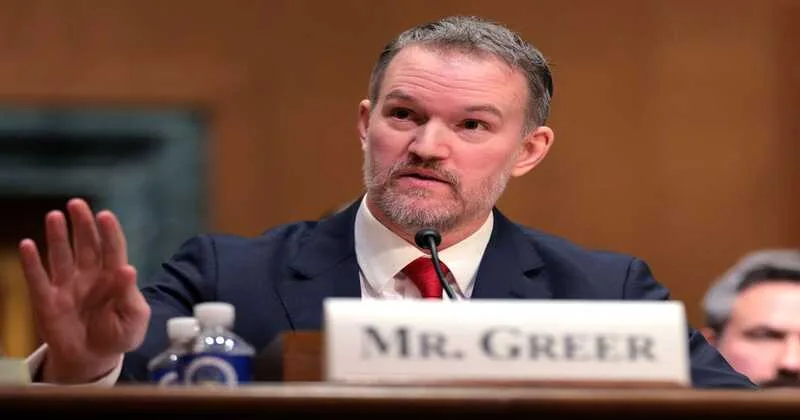
Washington: The United States Trade Representative Jamieson Greer has described India as a tough negotiating partner, highlighting long-standing differences over agricultural market access at the conclusion of recent India–US trade talks. Speaking before the US Congressional Ways and Means Committee, Greer noted that India has consistently maintained protective measures in its agricultural sector.
“India is a tough nut to crack… they’ve protected their agricultural markets for a very long time,” Greer told the Committee. His remarks came after discussions with a 12-member Indian delegation led by Darpan Jain, Additional Secretary in the Commerce Ministry.
Greer’s observations were made in response to concerns raised by US lawmakers regarding exports of distillers’ dried grains (DDG), soybean meal, and ethanol, key components used in animal feed. “As part of this deal, they want to protect a lot of that. There are things, though, where I think we can find mutual agreement. DDGs (distillers dried grains) is a good example of this,” he said, responding to US lawmakers’ questions on exports of livestock feed, soybean meal and ethanol. While acknowledging continuing disagreements in agricultural trade, he indicated that both sides are exploring areas of convergence, particularly in sectors such as DDG, where limited agreements may be achievable.
The comments come in the backdrop of the India–US bilateral trade agreement framework announced on February 2, which marked a significant step toward structured economic engagement. Despite sector-specific differences, negotiations are progressing with a shared objective of expanding bilateral trade to $500 billion by 2030, reflecting the strategic importance both countries attach to deepening economic ties.
Background: Ongoing talks and strategic trade push
Negotiations between New Delhi and Washington have been advancing through multiple rounds of structured engagement, reflecting a broader push to strengthen economic cooperation. A recent three-day visit by an Indian delegation led by Darpan Jain involved detailed consultations with US counterparts on key aspects of the proposed agreement. According to MEA spokesperson Randhir Jaiswal, the discussions have remained constructive, with both sides working towards a balanced and forward-looking trade deal that accommodates mutual priorities. The targeted expansion of bilateral trade to $500 billion by 2030 represents more than a doubling of current trade levels, which stood at approximately $212 billion in 2024.
Union Commerce Minister Piyush Goyal has indicated that the first tranche of the agreement is nearing finalisation, with remaining discussions focusing on mechanisms to ensure better market access for Indian goods in the US.
The talks are also taking place alongside evolving US tariff policies, including potential revisions under Section 301 expected in June. While certain sectors, particularly agriculture, continue to present challenges, both sides remain engaged in resolving differences through sustained dialogue, signalling a shared commitment to advancing the trade partnership in a pragmatic and mutually beneficial manner.