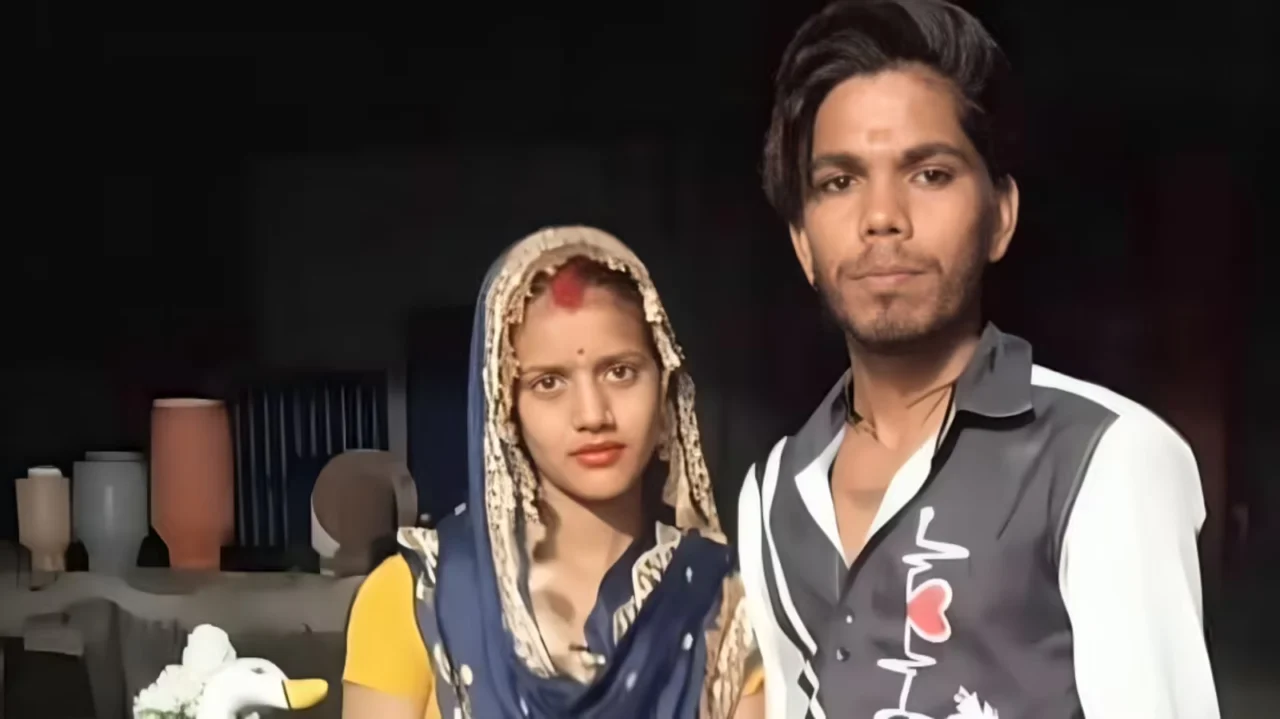
A deeply distressing incident from Bareilly has brought to light the tragic end of a young man’s life, driven by emotional turmoil following a marital dispute within an interfaith marriage. The deceased, identified as Vinay, who became Imran after converting his religion for marriage, was found hanging in his rented accommodation, sending shockwaves across the locality and raising serious questions about the circumstances that led to his death.
According to police and family accounts, the 25-year-old had moved to Bareilly nearly five years ago from Bilaspur in Rampur district in search of employment. He was living in a rented house in the Mohanpur Thiriya area, where he met Muskan. Their relationship gradually developed into an interfaith marriage, with family members alleging that Vinay agreed to convert his religion at Muskan’s insistence. He later adopted the name Imran and married her through a nikah ceremony.
The couple went on to build a life together and had two daughters. Vinay, now known as Imran, earned his livelihood by driving an e-rickshaw, reportedly arranged with the help of his in-laws. For a period, their life appeared stable.
However, tensions reportedly surfaced in the relationship. On the day before the incident, a serious argument broke out between the couple, allegedly over his work routine. The dispute escalated, and Muskan left the house with their children and went to her parental home. For Vinay, who had already distanced himself from his own family after his conversion, this separation appears to have triggered deep emotional distress.
When he returned home and found his family missing, he learned that Muskan had left. According to relatives, he was unable to cope with the situation. That night, he made several phone calls to his family members, including his father Vijay Prajapati and his mother.
During these conversations, he reportedly expressed deep regret over his life choices. Family members claim he apologised repeatedly and specifically spoke about his decision to leave his family and convert his religion for the relationship. His final words reflected guilt and emotional breakdown. He is also said to have spoken to his mother-in-law before the incident.
The next morning, his body was discovered hanging in his rented room by the landlord, who informed the police. Authorities reached the spot, initiated an investigation, and sent the body for postmortem. Police have stated that the case is being treated as a suicide, with all angles, including domestic discord and psychological stress, under examination.
While Vinay’s family has highlighted his emotional distress and regret over conversion, a statement attributed to Muskan’s mother presents a different perspective. It reportedly claims that Vinay’s late-night work routine contributed to tensions. However, these claims have not been independently verified.
The incident has raised several questions locally. Was there sustained pressure in the interfaith marriage? Did the circumstances surrounding his conversion contribute to long-term emotional strain? Could timely intervention have prevented the tragedy? The role of Muskan and her family in the events leading up to the incident is also being discussed, though no official conclusions have been drawn.
The case has also sparked a wider conversation about the emotional and social pressures often associated with interfaith marriages, especially when they involve major life changes such as religious conversion and distancing from one’s family.
In Vinay’s case, his decision to convert reportedly led to a separation from his family, who later shifted back to Bilaspur. Though he maintained occasional contact, the emotional strain appears to have persisted.
Adding to the gravity of the situation is the fact that the couple has two young daughters, whose future now remains uncertain.
Similar Case Raises Further Concerns
In a separate but somewhat similar development from Bagalkote, the death of a 19-year-old girl has also triggered controversy. The deceased, identified as Bhumika Tippannavar, was found hanging at her residence. Her family has alleged harassment by a man from the Muslim community, claiming that he pressured her into a relationship.
According to her relatives, the accused allegedly called and messaged her repeatedly and insisted on meeting her, creating sustained pressure. The family has accused him of forcing her into the relationship, ultimately leading to her death. Police have registered a case and stated that all angles are being investigated.
The case has drawn reactions from local groups, with some alleging coercion and possible religious pressure, while authorities have urged caution, stating that the investigation is still in its early stages.
Both incidents, though separate, highlight the complex and sensitive nature of relationships involving emotional, social, and sometimes religious dimensions. In the Bareilly case, Vinay alias Imran’s reported regret over conversion and his emotional distress before death have become central to the narrative. At the same time, unanswered questions remain about the circumstances that led to his final step.
As investigations continue in both cases, authorities are expected to rely on evidence, call records, and testimonies to establish the facts. For now, these incidents stand as stark reminders of how personal conflicts, emotional vulnerability, and strained relationships can sometimes lead to tragic consequences.