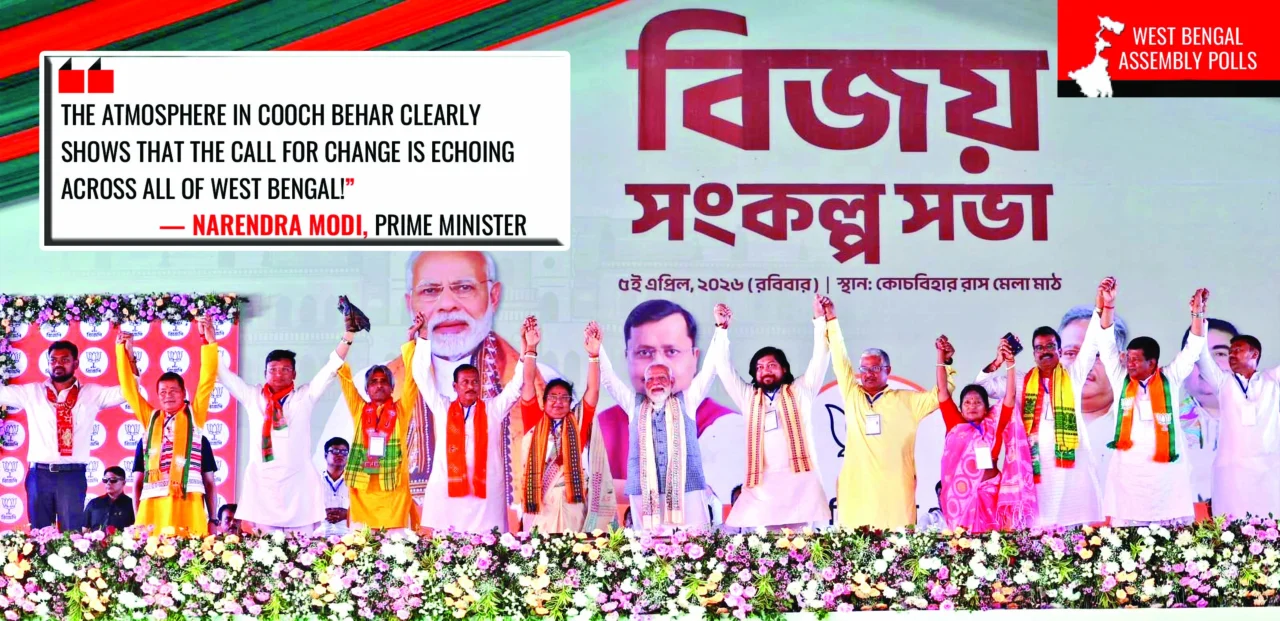
Bathed in the vibrant hues of political fervour and the restless whispers of change, West Bengal stands on the threshold of a defining democratic moment. As the State inches closer to the much-anticipated 2026 West Bengal Legislative Assembly election, a quiet yet unmistakable anticipation courses through its towns, villages, and bustling urban corridors. From the misty tea gardens of the North to the fertile riverine plains of the South, people appear poised at the edge of a possible political shift—waiting, watching, and preparing to exercise their franchise with renewed resolve.
In this crucial electoral season of 2026, the demand for a flawless and transparent electoral roll has emerged as a central concern—viewed not merely as an administrative requirement, but as the very foundation of democratic credibility. For many, the integrity of this process will determine not just participation, but trust itself.
This election, observers note, is not confined to the arithmetic of votes and seats; it carries the deeper resonance of a collective aspiration—to usher in a new political culture rooted in accountability, efficiency, and what is often invoked as “good governance.” A significant section of the electorate increasingly looks towards the Bharatiya Janata Party as a possible catalyst for such transformation, hoping for systemic reforms and institutional steadiness.
Corruption Impeded Progress
The backdrop, however, is layered with discontent. Critics of the incumbent All India Trinamool Congress Government often point to alleged corruption and administrative shortcomings that, in their view, have impeded progress in key sectors such as education, healthcare, employment, industry, and economic planning. These concerns—whether shaped by perception or lived experience—have steadily woven themselves into the state’s evolving political narrative.
As the countdown to the ballot intensifies, West Bengal finds itself suspended between continuity and change. The election ahead is not merely about who governs, but about how governance itself is reimagined—echoing the aspirations of millions who seek a more transparent, responsive, and forward-looking political order.
In West Bengal, North Bengal stands out as a distinct and important sub-region. Often called a “mini India,” it reflects a rich mix of people, cultures, and geographical features. Comprising eight districts, the region has its own identity that sets it apart from the rest of the State.
Geographically, North Bengal is highly significant. It shares borders with two Indian States and three neighbouring countries—Nepal, Bhutan, and Bangladesh—making it a sensitive and strategically important area. The narrow Siliguri Corridor, known as the “Chicken’s Neck,” which lies near Siliguri in Darjeeling district, serves as the main gateway to India’s North Eastern States and is crucial for both connectivity and national security.
Lacking in Vikas
North Bengal is also rich in natural beauty and resources. The Northern part, including the hills and the Dooars, is famous for the majestic view of Kanchenjunga, vast tea gardens, cinchona plantations, and dense forests. These areas attract tourists from across the country and beyond. In the South, districts like Malda are known for mangoes and silk, while Uttar Dinajpur district and Dakshin Dinajpur district are recognised for their agricultural produce, especially quality rice.
The region is home to a diverse population. Most people are Hindus, including communities such as Gorkhas, Adivasis, Koch, Rajbanshi, Mech, Rava, and Toto. There are also Muslims and sections of converted Christians. This diversity adds to the rich cultural and historical fabric of North Bengal.
However, despite its natural wealth and resources—along with rivers like the Ganges and the Teesta River—the region continues to face challenges. Industries like tea, tourism, and timber exist, but many people feel that proper development has not taken place. Issues such as lack of employment opportunities, gaps in education, and slow economic growth remain major concerns. A sense of neglect and deprivation is often felt among the people, along with an ongoing identity crisis. This dissatisfaction has also shaped the political mood of the region. Many people have expressed their unhappiness with the governance of the All India Trinamool Congress, alleging that long-standing demands have not been fulfilled.
Ascent of Bharatiya Janata Party
Since 2019, this sentiment has been reflected through elections. The Bharatiya Janata Party made strong gains by winning seven out of eight Lok Sabha seats in North Bengal and securing a lead in many Assembly segments from Cooch Behar to Malda. In the 2021 Assembly elections, the BJP won 30 out of 54 seats in the region. The All India Trinamool Congress secured 19 seats, mainly from Muslim-dominated areas, while one Independent candidate won from Kalimpong. These results clearly indicated a shift in political preference and a growing desire for alternative leadership.
As North Bengal moves towards another important election, the region stands at a turning point. People are weighing their past experiences against future hopes, looking not just for a change in Government, but for real development, recognition, and a better quality of life.
From the perspective of the Bharatiya Janata Party, the political mood in North Bengal has been steadily evolving since 2021, shaped by a continued sense of neglect and underdevelopment. Party leaders argue that key issues—such as lack of industrial growth, unemployment, and gaps in education and healthcare—remain largely unresolved under the All India Trinamool Congress Government. This ongoing dissatisfaction, they believe, is gradually consolidating public support in their favour.
They point to their strong performance since 2019 as a major factor behind growing confidence in the region. Electoral gains in the Lok Sabha elections and a significant presence in the 2021 Assembly polls helped the party strengthen its organisational base across North Bengal, particularly in districts from Cooch Behar to Malda. According to party leaders, this groundwork has further deepened their reach at the grassroots level.
At the same time, issues of identity and regional aspirations continue to play a crucial role. Many people in North Bengal, they claim, still feel politically neglected and seek greater recognition and representation. The party maintains that it has consistently highlighted these concerns and positioned itself as a voice for the region.
The strategic importance of North Bengal also remains central to their narrative. With its proximity to international borders and the Siliguri Corridor near Siliguri, the region holds critical value in terms of national security and connectivity. Party leaders argue that a stronger focus on infrastructure and security is essential, and they present their governance approach as better equipped to address these challenges.
Another factor, they believe, is their growing appeal among diverse communities, including Gorkhas, Rajbanshis, and Adivasis. This broader social outreach, according to them, is likely to translate into increased electoral support compared to 2021. Leaders also point to rising anti-incumbency against the ruling party, citing allegations of corruption and unfulfilled promises. They argue that public frustration has grown over time, reinforcing the demand for change and better governance.
North Bengal: Key Battleground
In this context, North Bengal is seen as a key battleground that could shape the overall electoral outcome. Party leaders believe the region will play a vital role in determining the results, with its political mood potentially acting as a catalyst for a broader shift across the state. If this trend continues, they expect it to contribute significantly towards securing a majority in the 294-seat Assembly.
For them, North Bengal is no longer just a regional factor—it is emerging as the starting point of a larger political transformation, where local aspirations may ultimately drive a state-wide mandate for change in 2026. Cooch Behar, often described as a “City of Beauty” because of its royal heritage linked to the Koch dynasty, has over the last two decades also earned a reputation for political volatility. The district was once a stronghold of the Left and continued to remain so even after Mamata Banerjee led the All India Trinamool Congress to power in 2011. Gradually, between 2014 and 2016, the Trinamool Congress strengthened its position in the district, but the political landscape began to shift significantly after that period.
Major Turning Point
A large section of the Rajbanshi community started moving towards the Bharatiya Janata Party, citing changing ground realities and dissatisfaction with existing governance. The district’s location, close to Bangladesh and adjacent to Assam, has always influenced its political and social dynamics. A major turning point came with the implementation of the India-Bangladesh Land Boundary Agreement under the leadership of Narendra Modi, which integrated 51 Bangladeshi enclaves into Indian territory. This development had a deep impact on local sentiment and contributed to the BJP’s growing support base. The shift became evident in the 2021 Assembly elections when the BJP won seven out of nine seats in the district.
Now, as West Bengal approaches another Assembly election, the situation in Cooch Behar appears tense yet unusually quiet. From remote villages to residential areas near Sagardighi and even around the royal palace, many voters seem reluctant to speak openly about their political choices. This silence reflects an undercurrent of fear and uncertainty that has spread across different sections of society.
It is evident that political and religious polarisation has sharpened over the years, influencing electoral outcomes in the region. In 2021, the Bharatiya Janata Party secured four out of twelve seats, and given the current political climate, its tally may increase in 2026. In the event of a multi-cornered contest, the BJP could gain additional seats, particularly in constituencies where the Hindu population ranges between 40 to 45 per cent.
At the same time, the Indian National Congress is making visible efforts to regain its lost ground in Malda and Murshidabad. There is a possibility that Congress may reopen its account in Malda, while the All India Trinamool Congress could face challenges in retaining certain seats in the district, known for the historic Gaur, closely associated with Sri Chaitanya Mahaprabhu, the ancient capital of Bengal.
A similar political mood appears to be flowing from Malda to Siliguri, a cosmopolitan city, and further across the Hills, Terai, and Dooars, including the tea belt regions. Communities such as the Rajbanshi, Adivasi, and Gorkha populations seem inclined towards change, expressing dissatisfaction with the present ruling dispensation. Notably, the Trinamool Congress has ceded three seats to its ally, the Bharatiya Gorkha Prajatantrik Morcha, while the BJP has fielded its own candidates, including former Indian hockey captain Bharat Chetri from Kalimpong.
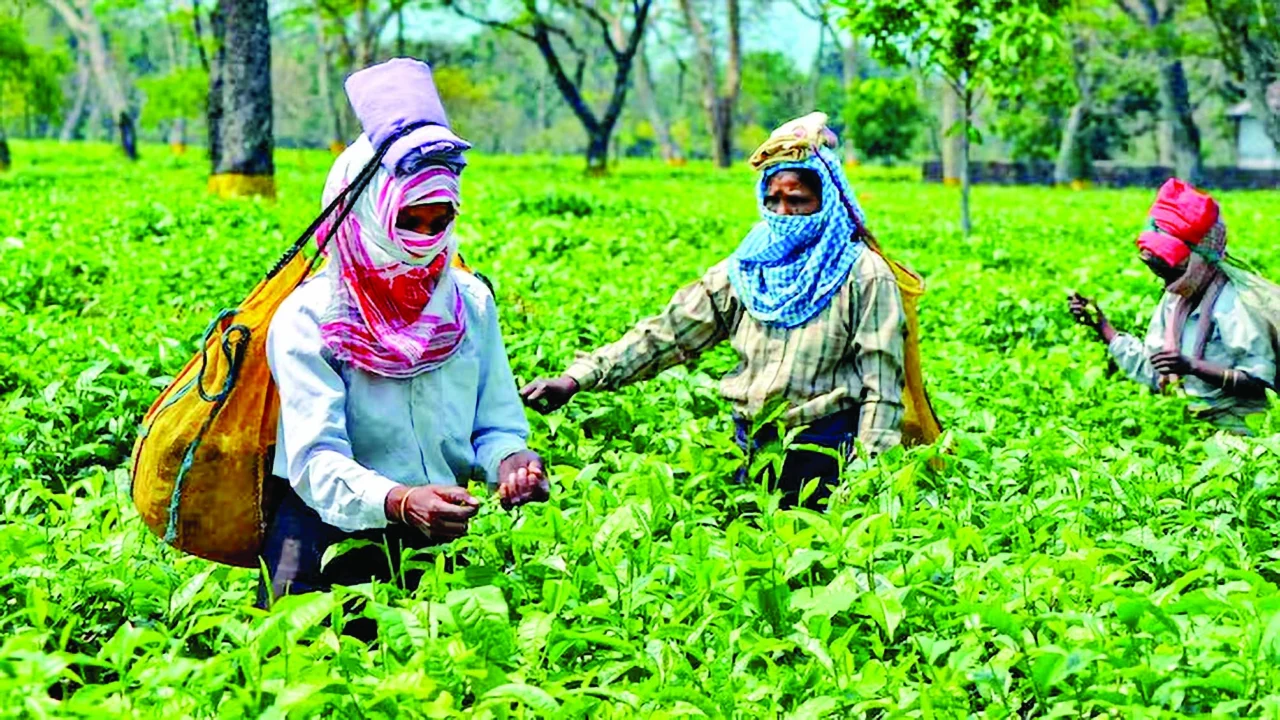
Meanwhile, tea garden workers across Darjeeling Hills, Terai, and Dooars continue to raise concerns over unresolved issues such as land rights, minimum wages, and access to basic welfare benefits. Among Adivasi communities stretching from the tea belt to the Barind region of Malda, there is also a visible sense of discontent, particularly following the controversy involving Droupadi Murmu during her visit to Siliguri for an International Santal Conference.
And so, as North Bengal quietly hums with anticipation, the air feels a little different this time—like the soft glow before sunrise. Voters, carrying their hopes and grievances alike, seem ready to script a new chapter through the ballot. If the current momentum holds, the saffron camp may find itself blooming brighter across the region, not with noise but with a steady, growing confidence. In this unfolding story of democracy, the people of North Bengal appear poised to turn the page with calm resolve and a hopeful smile on April 23—where every vote may gently, yet firmly, shape the winds of change.