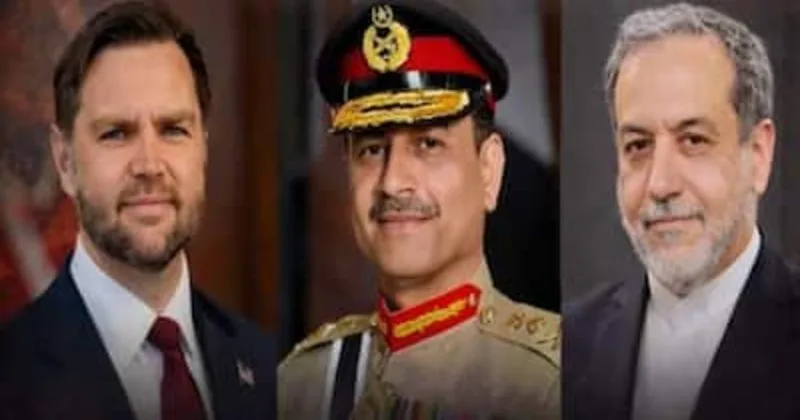
ISLAMABAD: U.S. and Iranian delegations failed to secure an agreement after prolonged peace negotiations in Islamabad, dealing a setback to efforts aimed at stabilising a fragile ceasefire. The talks, hosted by Pakistan, also underscored Islamabad’s inability to mediate effectively or ease tensions between the two adversaries. The United States and Iran remained divided after nearly 21 hours of continuous discussions that concluded on Sunday. The failure to reach a deal threatens to unravel the tenuous ceasefire agreed earlier in the week and prolong a conflict that has already lasted over six weeks, claimed thousands of lives, and disrupted global energy markets. Both sides traded blame for the breakdown, highlighting deep-rooted mistrust and sharp disagreements over core issues, including Iran’s nuclear ambitions and control over strategic waterways.
Talks collapse after marathon negotiations
The negotiations in Islamabad marked the first direct engagement between Washington and Tehran in more than a decade, and the highest-level contact since the 1979 Islamic Revolution. Despite the historic nature of the meeting, expectations of a breakthrough proved premature. U.S. Vice President JD Vance, who led the UD delegation, acknowledged the failure shortly before departing Pakistan. “The bad news is that we have not reached an agreement, and I think that’s bad news for Iran much more than it’s bad news for the United States of America,” Vance told reporters. Pakistani officials had hoped their diplomatic intervention could facilitate a breakthrough. However, the outcome reflected not only entrenched differences between Washington and Tehran but also Islamabad’s limited capacity to bridge the divide. Following the talks, the U.S. delegation departed immediately, while Iranian officials were scheduled to leave later the same day, according to Pakistani sources.
U.S. ‘Red Lines’ vs Iran’s ‘Excessive’ demands
A central sticking point remained the United States’ insistence on firm guarantees that Iran would neither develop nuclear weapons nor retain the capability to rapidly produce them. “We need to see an affirmative commitment that they will not seek a nuclear weapon, and they will not seek the tools that would enable them to quickly achieve a nuclear weapon,” Vance stated, reiterating Washington’s non-negotiable “red lines”. From Tehran’s perspective, however, these conditions were unacceptable. Iran’s semi-official Tasnim news agency described the U.S. demands as “excessive,” suggesting they hindered meaningful progress.
Iranian officials maintained that while some common ground had been found, major disagreements persisted over its nuclear programme and control of the Strait of Hormuz,.a critical maritime route through which roughly 20% of global energy supplies pass. A spokesperson for Iran’s foreign ministry noted that the negotiations unfolded in an atmosphere of deep mistrust. “It is natural that we shouldn’t have expected to reach agreement in just one session,” the spokesperson said, indicating that further dialogue may be necessary despite the current impasse.
Strait of Hormuz and regional stakes
Control and access to the Strait of Hormuz emerged as one of the most contentious issues. Tehran has blocked the passage since the conflict began, significantly affecting global oil flows and contributing to rising energy prices. Iran has demanded not only control over the strait but also the right to levy transit fees on vessels passing through it. Additionally, it has called for the release of frozen assets held in foreign banks, including in Qatar, as well as compensation in the form of war reparations. A senior Iranian source had earlier indicated that Washington had agreed to release some of these funds, but a U.S. official firmly denied any such commitment.
Despite the tensions, there were tentative signs of movement. Shipping data showed that three fully laden oil supertankers passed through the strait on Saturday, marking the first such transit since the ceasefire began. Nevertheless, hundreds of vessels remain stranded in the Gulf, awaiting safe passage during the limited two-week truce window. Notably, Vance did not address the reopening of the strait during his remarks, leaving uncertainty over one of the conflict’s most critical economic dimensions.
Ceasefire at risk amid broader conflict
The ceasefire, agreed earlier in the week, was intended as a temporary measure to de-escalate hostilities that began on February 28 with coordinated airstrikes by the United States and Israel on Iranian targets. Pakistan’s Foreign Minister Ishaq Dar urged both sides to uphold their commitment to the truce despite the failure of negotiations. However, the absence of a broader agreement raises concerns that hostilities could resume once the ceasefire expires. Complicating matters further is the wider regional dimension of the conflict. Iran has insisted that any lasting ceasefire must extend beyond its own confrontation with the United States to include fighting involving its allies, particularly in Lebanon.
However, Israel, an ally of Washington,.has continued its military operations against Hezbollah militants, making it clear that those engagements are not covered under the U.S.-Iran ceasefire arrangement. Meanwhile, U.S. President Donald Trump appeared to downplay the urgency of reaching a deal. Speaking during the negotiations, Trump remarked, “We’re negotiating, whether we make a deal or not makes no difference to me, because we’ve won”. His comments reflected a shifting U.S. position, though core objectives remain unchanged, ensuring free navigation through the Strait of Hormuz and significantly curbing Iran’s nuclear enrichment capabilities.
Pakistan’s mediation falls short
The failure of the Islamabad talks also highlights Pakistan’s inability to play a decisive mediating role despite hosting the high-stakes meeting. The city, home to over two million people, was placed under heavy security lockdown during the negotiations, with thousands of paramilitary personnel and troops deployed. While Islamabad succeeded in bringing both parties to the table, it ultimately could not reconcile their divergent positions or secure even a preliminary framework for continued dialogue. A Pakistani source described the negotiations as volatile, noting that “there were mood swings from both sides and the temperature went up and down during the meeting”, reflecting the fragile and unpredictable nature of the discussions.
With no agreement in place and only a temporary ceasefire holding back further escalation, the path forward remains uncertain. Both Washington and Tehran appear entrenched in their positions, and the collapse of the Islamabad talks suggests that any future breakthrough will require more sustained and possibly multilateral diplomatic efforts. For now, the world watches closely as tensions linger, global markets remain sensitive, and the risk of renewed conflict continues to loom.