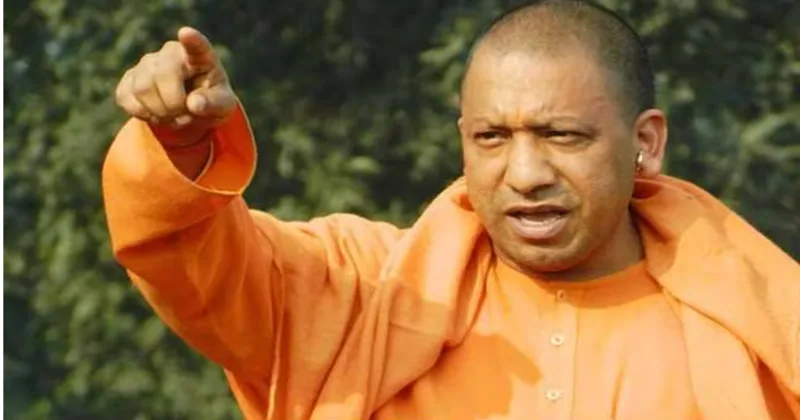
Addressing an event in Lucknow, Chief Minister Yogi Adityanath has alleged that before 2017, liquor mafia networks exercised control over nutrition and food distribution systems in the state. He highlighted that the situation has significantly improved under the current administration, with transparency and accountability replacing what he described as a corrupt and exploitative system. CM Adityanath claimed that prior to 2017, the distribution of nutrition under welfare schemes, particularly those linked to anganwadi services, was allegedly influenced by liquor mafias. According to him, these networks had deep-rooted connections that enabled them to secure government contracts and control supply chains.
He further stated that the quality of food distributed during that period was often substandard and unfit for consumption. The system was compromised to such an extent that even departments responsible for women and child development were affected. The remarks come as part of the government’s broader narrative of administrative reform since the Bharatiya Janata Party (BJP) came to power in the state in 2017.
Highlighting the changes introduced after 2017, CM Yogi said that his government dismantled the alleged mafia control and introduced a transparent mechanism for the appointment of anganwadi workers and the distribution of nutrition supplies. He said that the recruitment processes have been streamlined to ensure fairness, with reduced scope for middlemen and corruption.
The Chief Minister also emphasised improvements in food quality and monitoring systems. He said that around 35 lakh children in Uttar Pradesh are now receiving protein-rich, calorie-balanced meals daily under government schemes.
During the event, CM Adityanath distributed smartphones and growth monitoring tools to anganwadi workers, highlighting the government’s push towards digitisation in welfare delivery. These tools are expected to improve real-time tracking of child nutrition and health indicators, thereby enhancing service delivery.
Officials said the use of technology will help ensure accountability at every stage, i.e., from procurement to distribution, reducing the chances of leakages in the system.
Recruitment Drive Announced
In a major announcement, the Chief Minister Yogi said that the government plans to recruit over 5,000 anganwadi workers and more than 60,000 helpers during the current year. He also indicated that structural reforms are underway to eliminate corruption in recruitment processes. Alleging that earlier systems involved financial exploitation, he said that some workers were forced to pay commissions during appointments, despite receiving modest salaries. To address this issue, the state government is planning to establish a dedicated corporation to oversee recruitment and ensure a “graft-free and exploitation-free system.”
CM Adityanath also directed officials to ensure that farmers in the state are not subjected to harassment. During a public outreach initiative, he reviewed complaints submitted by citizens and instructed authorities to take prompt action on genuine grievances. He reiterated that public trust is the government’s “biggest capital” and stressed the need for responsive governance.
The Chief Minister’s remarks are being seen in the context of ongoing political discourse in Uttar Pradesh, where issues of governance, corruption, and welfare delivery remain central. While the government has highlighted its achievements in improving transparency and efficiency, opposition parties have often questioned such claims and demanded independent verification.
The state government’s focus on digitisation, transparent recruitment, and expanded workforce is expected to strengthen the delivery of welfare schemes. However, the success of these initiatives will depend on effective implementation and sustained monitoring. As Uttar Pradesh continues to implement large-scale social programmes, the emphasis on accountability and technology-driven governance is likely to remain a key policy priority.