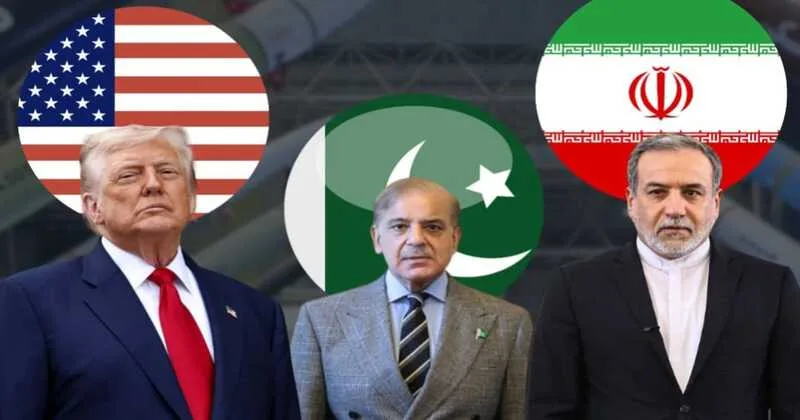
Iran has firmly denied media reports claiming that its negotiating team had travelled to Islamabad, Pakistan, for talks with the United States, describing the claims as entirely unfounded, according to Tasnim News Agency. Tasnim News Agency is a semi-official Iranian news outlet that is closely associated with the Islamic Revolutionary Guard Corps (IRGC).
Quoting an informed source late on Thursday, Tasnim reported that neither Iran’s Foreign Minister Abbas Araghchi nor Parliament Speaker Mohammad Baqer Qalibaf had left the country. Both officials were said to be in Tehran, continuing their official responsibilities amid ongoing regional developments.
The source clarified that reports circulating in certain media outlets about an Iranian delegation arriving in Islamabad to engage in negotiations with American officials were completely false. It further emphasised that under the current circumstances, negotiations remain suspended. According to the source, talks would not resume unless the United States fulfilled its commitments regarding a ceasefire in Lebanon and unless Israeli military actions in the region ceased. Until those conditions are met, Tehran has maintained that diplomatic engagement with Washington is effectively on hold.
The denial follows a report published by The Wall Street Journal, which claimed that an Iranian delegation had arrived in Islamabad late Thursday to participate in negotiations.
Iran’s Fars News Agency also rejected the report, reiterating that Tehran has no intention of attending peace talks with the United States until a ceasefire is established in Lebanon. Citing a knowledgeable source, the agency confirmed that no Iranian negotiating team had travelled to Islamabad, reinforcing the position earlier reported by Tasnim. Meanwhile, Qalibaf warned that time was running out for the United States and Israel to honour commitments related to a ceasefire and to halt attacks on Lebanon. Iranian officials suggested that such reports may be part of attempts to create confusion and undermine Tehran’s diplomatic stance. While acknowledging Pakistan’s efforts to mediate between the two sides, Iranian authorities reiterated that any future engagement would be conditional upon the fulfilment of Iran’s stated demands for a durable and meaningful resolution, rather than temporary or symbolic arrangements.
Pakistan prepares for high-stakes talks
Amid the backdrop of these developments, Pakistan has declared two local holidays in Islamabad on short notice, covering Thursday and Friday, ahead of the anticipated talks between the United States and Iran. The notification, issued late Wednesday by the Islamabad district administration, did not specify a reason for the holidays. However, such measures are commonly implemented in the capital for security and logistical purposes ahead of high-profile diplomatic engagements.
The holidays apply specifically to the Islamabad Capital Territory. Authorities clarified that essential services, including police, hospitals, and utilities such as electricity and gas, would continue to operate without disruption.
In a public advisory, the deputy commissioner’s office urged residents to plan their activities accordingly, noting that while general administrative operations would be suspended, critical services would remain functional.
Pakistan has been preparing to host what are being described as high-stakes negotiations involving representatives from Washington and Tehran, focused on the broader conflict in West Asia. The White House has indicated that US Vice President JD Vance will lead the American delegation for the talks expected to take place over the weekend in Islamabad. The sudden declaration of holidays has added to speculation regarding the scale and sensitivity of the diplomatic engagement, even as uncertainty persists over Iran’s actual participation.
Israel voices strong reservations
Earlier, Israel’s Ambassador to India, Reuven Azhar, sharply criticised Pakistan’s role in the diplomatic process.
In a pointed assessment, Azhar expressed Israel’s lack of trust in Pakistan, accusing it of supporting terrorism and downplaying its relevance beyond a limited facilitative role in the talks. He suggested that any perception of American trust in Pakistan should not be overstated, describing Islamabad’s involvement as largely technical in nature.
Azhar also criticised Pakistan’s condemnation of Israeli military operations in Lebanon, reiterating that Israel would continue to take necessary measures to safeguard its national security interests. He further clarified that Israel does not support any proposal involving the deployment of Pakistani troops as part of a peacekeeping force in Gaza. Highlighting security concerns, he pointed to alleged links between Hamas and organisations such as Lashkar-e-Taiba, reinforcing Israel’s reservations about Pakistan’s participation in regional security frameworks.
According to Azhar, Israel places its trust solely in the United States in the current geopolitical context and does not view Pakistan as a credible or reliable partner in peace efforts. His remarks come at a time when Islamabad is attempting to position itself as a mediator in the evolving diplomatic engagement between Washington and Tehran.
Confusion and Diplomatic Uncertainty
The contrasting narratives, Pakistan’s preparations for talks and Iran’s categorical denial of participation, have contributed to a climate of uncertainty surrounding the proposed negotiations.