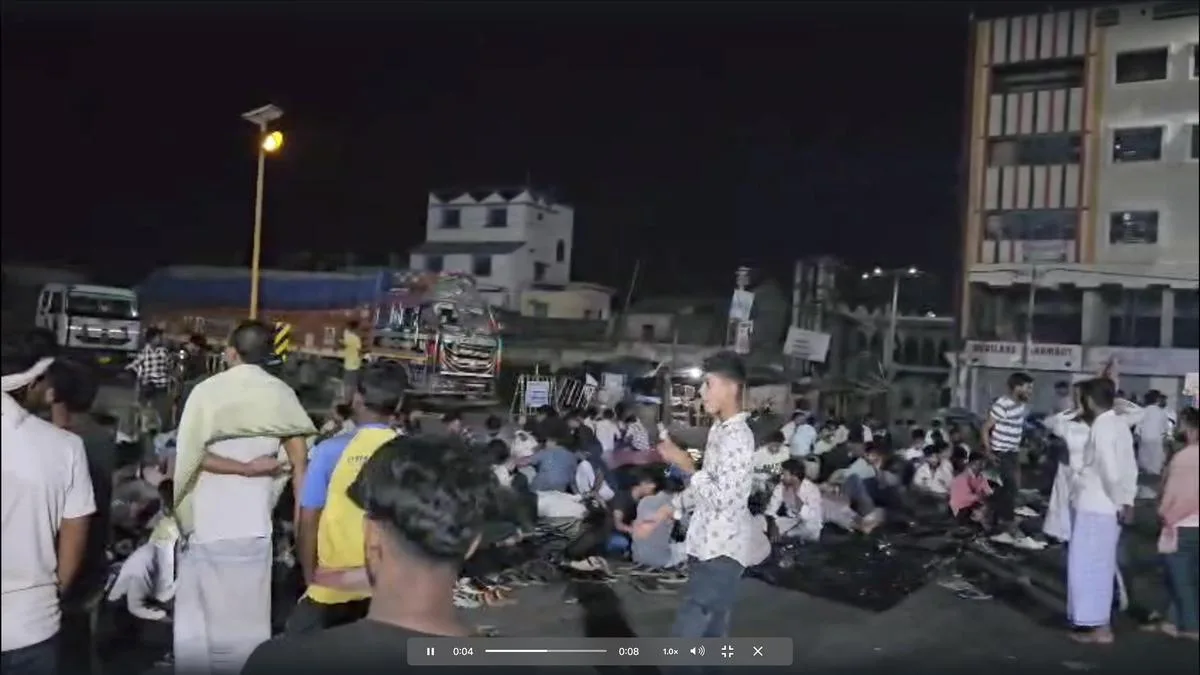
The investigation into the Malda judicial hostage incident during the West Bengal elections has revealed that the violence may not have been spontaneous, but part of a meticulously planned conspiracy with possible cross-border radical connections.
According to reports within the National Investigation Agency, preliminary findings indicate that radicalised groups played a covert yet decisive role in instigating and executing the incident. What initially appeared to be an impulsive outbreak of mob violence is now being seen as a strategically coordinated operation designed to escalate tensions and disrupt the electoral process.
One of the most striking revelations in the probe is the use of e-rickshaws as a tool for mobilisation. Investigators have found that announcements were made through these vehicles to gather crowds at specific locations.
Officials believe that this method was not incidental but part of a calculated strategy to rapidly assemble people and trigger confrontation. This seemingly simple tactic may have acted as the tipping point, converting an otherwise manageable situation into a large-scale volatile episode.
Recognising the gravity of the case, the NIA has constituted two specialised teams led by officers of Superintendent of Police and Deputy Superintendent rank. These teams are working under the close supervision of senior officials to ensure a comprehensive and time-bound investigation.
The agency is examining every layer of the incident, including planning, execution, communication channels, and possible external influences.
A major focus of the probe is the possibility of cross-border involvement. Investigators are exploring whether the conspiracy extends beyond local actors and is linked to radical elements operating across borders.
The agency is also revisiting previous incidents of unrest in Malda and Murshidabad to identify patterns. Officials suspect that a single, deeply embedded network may be behind repeated instances of violence in the region.
This line of investigation has raised serious concerns within security agencies about the presence of organised modules capable of influencing local unrest with external backing.
In an attempt to reconstruct the sequence of events, the NIA is conducting a detailed forensic examination of CCTV footage. However, a critical finding has further intensified suspicions.
Several CCTV cameras in sensitive areas were found to be non-functional during the incident. This anomaly, already highlighted in court submissions, is being viewed as possible deliberate sabotage aimed at destroying evidence and concealing the identities of those involved.
The investigation is now expected to expand beyond West Bengal. Sources indicate that the NIA may extend its probe to Bihar and Jharkhand to trace the origin of instructions allegedly received by the accused.
Officials believe that these states could hold crucial clues regarding the operational network, communication routes, and logistical support systems used in the conspiracy.
As the investigation unfolds, the Malda incident is increasingly being seen as more than just an isolated case of violence. Instead, it points towards a broader pattern of orchestrated unrest involving strategic planning, covert mobilisation, and potential radical backing.
Security agencies remain on high alert as further findings are expected to shed light on the full extent of the network behind the incident. The case, officials say, could have far-reaching implications for internal security and electoral integrity in sensitive regions.