New Delhi: Recent busts of multiple terror modules across India have revealed a worrying and evolving pattern in extremist operations. Unlike earlier networks where members were tied to a single organisation, investigators are now finding individuals linked to multiple terror outfits while primarily driven by a shared ideological framework.
In the Faridabad module, for instance, members were found to have links with Jaish-e-Mohammad. However, investigators noted that their core ideological alignment was with the Islamic State. This blending of affiliations marks a significant shift in how terror networks are structured and operate.
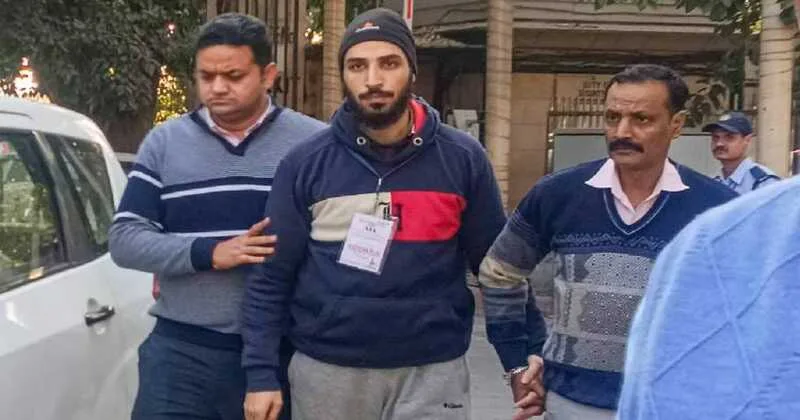
A similar trend emerged in the latest case involving arrests made jointly by the Delhi Police and the Maharashtra Anti-Terrorism Squad (ATS). Two individuals taken into custody were found to have connections with both the Islamic State and Jaish-e-Mohammad. Officials say such overlaps are no longer isolated incidents but part of a broader and deliberate strategy.
Shift from organised groups to ideology-driven cells
According to an Intelligence Bureau official, this emerging pattern reflects a calculated shift. Terror operatives are no longer strictly attached to a single organisation. Instead, they are increasingly inspired by a range of extremist ideologies and groups, allowing them to operate more fluidly.
This development signals a dangerous trend that individuals are coming together independently to form terror modules without direct command structures. These self-created groups function autonomously, making detection and disruption more challenging for security agencies.
The role of Pakistan’s Inter-Services Intelligence (ISI) is central to this transformation. Officials indicate that the ISI is now encouraging a model where recruits are not formally tied to specific organisations. Instead, they are allowed to choose their ideological and operational affiliations freely.
This approach offers multiple advantages. It provides plausible deniability for handlers, reduces operational risks, and is significantly more cost-effective. Importantly, it eliminates the need for direct involvement in establishing terror groups on foreign soil.
Propaganda, recruitment, and the role of social media
India’s zero-tolerance policy on terrorism, intensified after the Pahalgam attack, has made it difficult for external actors to establish structured networks within the country. In response, Pakistan has reportedly shifted tactics by deploying individuals who are not directly affiliated with terror groups to disseminate propaganda online. Following Operation Sindoor, intelligence agencies observed a sharp increase in propaganda activity from Pakistani social media handles. This strategy mirrors methods long used by the Islamic State, which has relied heavily on digital platforms for recruitment and radicalisation.
Officials explain that this propaganda ecosystem is designed to target vulnerable youth. Individuals are continuously exposed to jihadi literature and extremist content through social media and encrypted messaging platforms. Handlers closely monitor how this material is consumed and identify users who engage with it in similar ways.
Once a cluster of such individuals is identified, networking begins. These recruits are then subtly encouraged to connect with like-minded individuals, eventually forming self-contained modules. Notably, even the handlers spreading such content are often not formally associated with any single terror group.
Self-inspired attacks and emerging threat landscape
Investigations into several recent terror incidents outside Jammu and Kashmir reveal that most were carried out by self-inspired modules with no direct organisational links. The only common factor among the perpetrators was their ideological alignment, particularly with the Islamic State. One such case involved Jamesha Rubin, who plotted to blow up a mandir in Coimbatore. He was self-radicalised and influenced by Islamic State propaganda, much of which was propagated by Zahran Hashim, the mastermind of the Sri Lanka Easter bombings. Rubin reportedly raised funds for the attack largely on his own.
Similarly, the Rameshwaram Cafe blast in Bengaluru on March 1, 2024, was executed by two individuals, Mussavir Hussain and Abdul Mateen Talha, who were inspired by the Islamic State. In another instance, Mohammad Shariq and Syed Yasin, involved in the failed Mangaluru blast case, were also found to be driven by the same ideological influence. An official noted that none of these individuals had direct links with each other or with established terror organisations. Each case represented a standalone module, self-radicalised and self-motivated.
Under this evolving strategy, the ISI has reportedly instructed handlers not to pressure recruits into joining specific groups. Instead, propaganda is disseminated widely, allowing individuals to choose their preferred affiliations. This decentralised approach ensures flexibility and reduces traceability.
Officials warn that this model is likely to become more prevalent in the coming years. By relying on ideology rather than structured networks, terror outfits and their backers are adapting to increased surveillance and counter-terrorism measures, posing a complex and persistent threat to national security.